
UGR: why this index is essential for visual comfort
In a lighting project, the amount of light is not everything. Lighting that is too harsh can cause significant visual discomfort, even when illumination levels meet standards. It is precisely to measure this discomfort that the UGR index exists. Still little known to the general public, it nevertheless plays a decisive role in comfort, performance, and well-being, both in professional and residential spaces.
In this article, we explain what UGR is, how it is measured, which values to aim for depending on the spaces, and why it should be integrated from the design stage of a lighting project.
Contents

What is UGR?
UGR, standing for Unified Glare Rating, is an international index that allows the assessment of the level of light glare felt by a user in a given space. Unlike a simple subjective impression, UGR is based on a standardized calculation taking into account the luminance of the light fittings, their position in the field of vision, and the overall visual environment.
The lower the UGR value, the more comfortable the lighting. Conversely, a high UGR indicates potential visual discomfort, which can lead to eye strain, headaches, or reduced concentration.
UGR and glare: understanding visual discomfort

Glare is not only linked to overly strong light. It appears when very bright areas contrast excessively with their surroundings. A poorly positioned or insufficiently diffusing light fitting can cause discomfort, even if the luminous power is moderate.
The UGR lighting thus allows anticipating these situations by assessing the likelihood of discomfort under real usage conditions, especially in spaces where one looks for a long time in a fixed direction, such as an office, a work surface, or a screen.
How is the UGR index calculated?
The UGR calculation is based on a complex formula defined by the CIE (International Commission on Illumination). It notably includes the luminance of visible light fittings, their apparent surface, their position relative to the observer, as well as the background luminance of the room.
In practice, UGR is never evaluated “in absolute terms.” It is always associated with a specific configuration: type of room, ceiling height, placement of light fittings, and viewing angle. This is why the same light fitting can show different UGR values depending on its installation context.
Which UGR values for different spaces?

UGR values generally range between 10 and 30. The lower the index, the higher the visual comfort. In indoor lighting, a UGR above 22 is considered to start causing noticeable discomfort in spaces where concentration is required.
Lighting standards recommend different thresholds depending on the use of the premises. These recommendations are particularly important in professional LED lighting projects, but they are also worth applying in the home.
UGR in the home: a often underestimated criterion
In residential settings, UGR is rarely mentioned when choosing a light fitting. Yet, poorly controlled lighting can harm daily comfort, especially in living rooms, kitchens, and home offices.
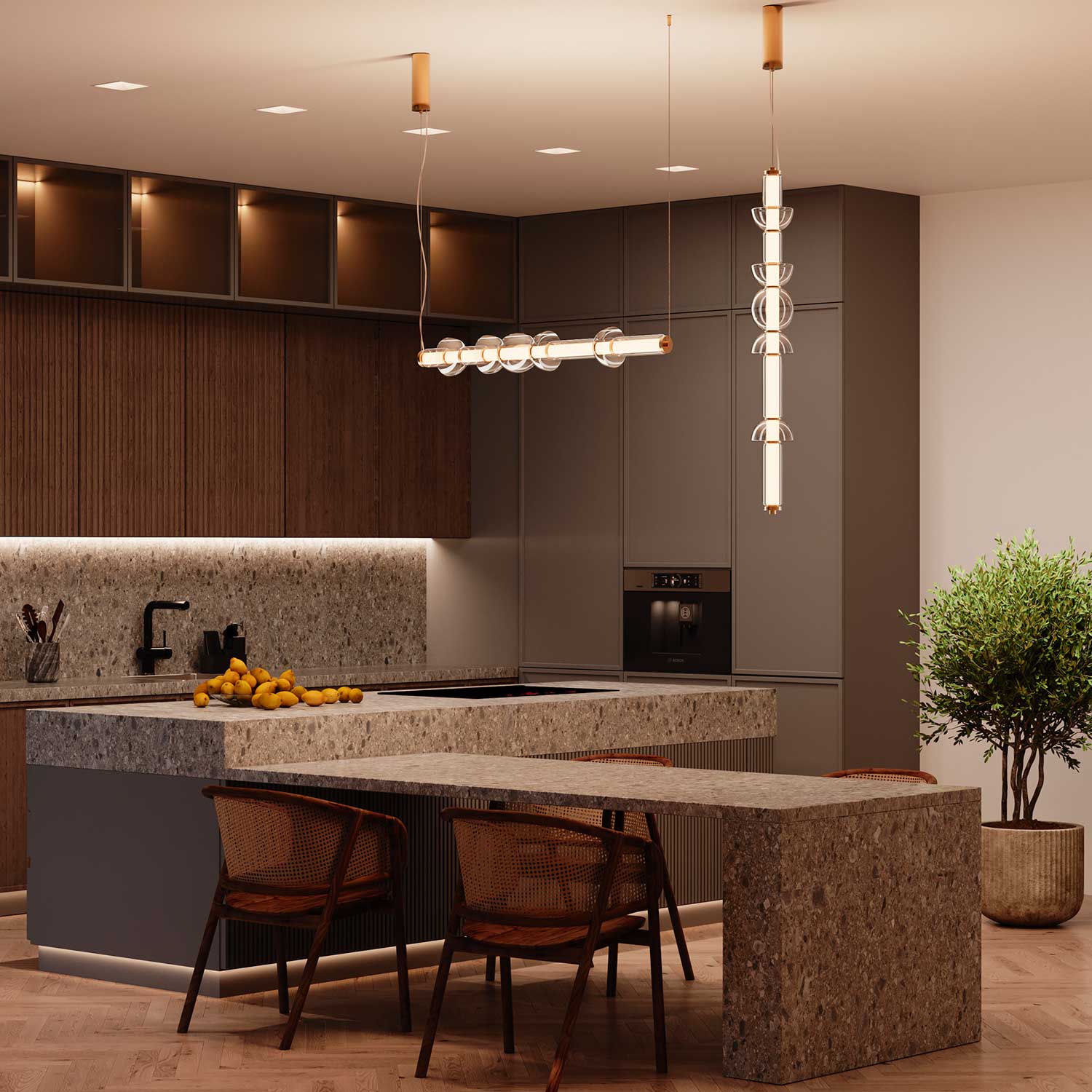
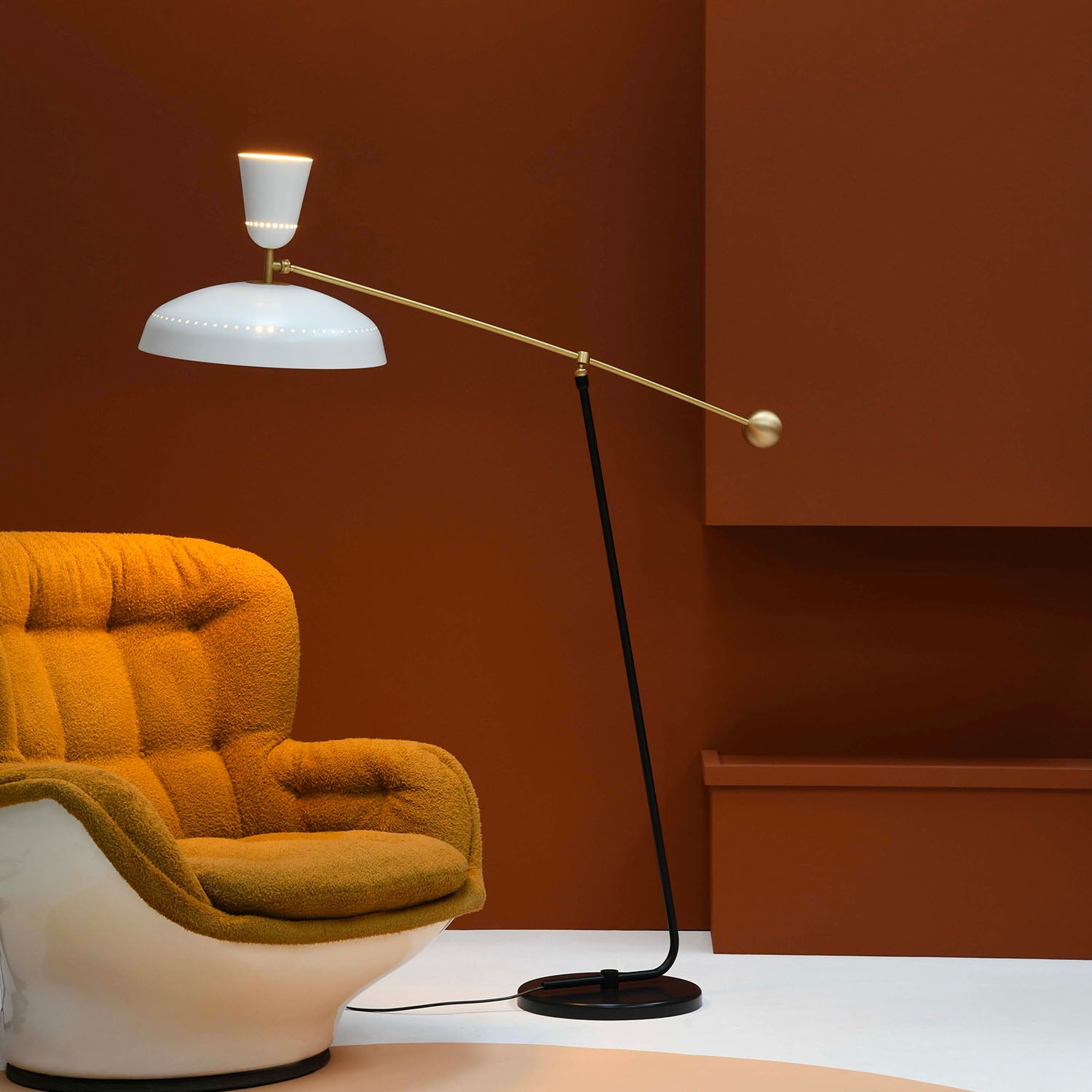
In a living room, a light fitting with a low UGR allows enjoying a pleasant atmosphere without direct glare, particularly when watching television or relaxing in the evening. In the kitchen, poor glare control can create annoying reflections on work surfaces and shiny areas.
For a home office, aiming for a UGR equal to or below 19 significantly improves visual comfort when working on a screen. This criterion then becomes as important as colour temperature or light intensity.
UGR and professional lighting
In professional environments, UGR is a central indicator. European standards impose precise thresholds to ensure users’ visual health and the quality of working conditions.
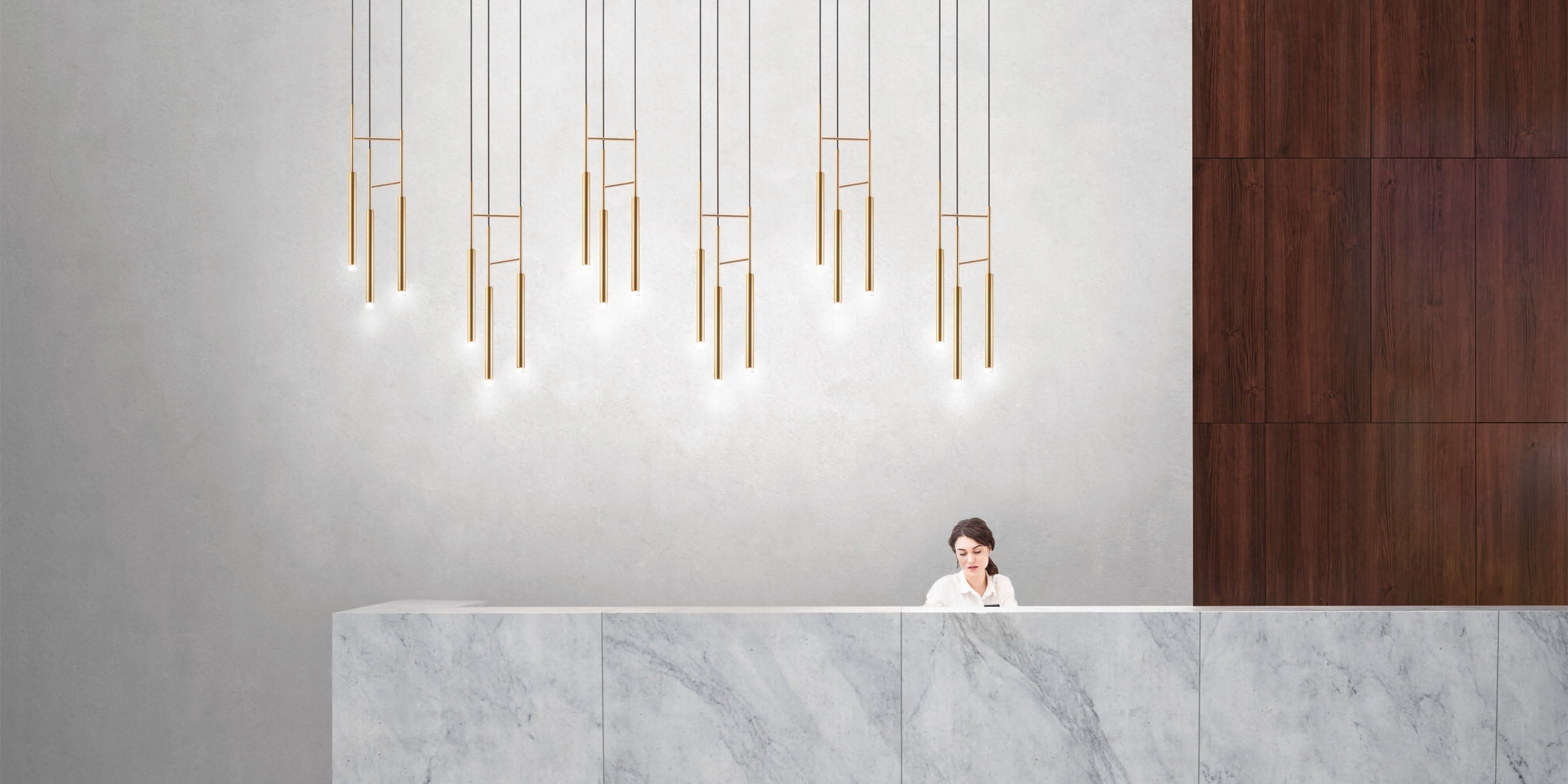
In offices, meeting rooms, and open-plan spaces, a UGR ≤ 19 is generally required. In schools, this value helps limit students’ visual fatigue. In shops and reception areas, a slightly higher UGR may be tolerated, provided customer comfort is preserved.
A poor choice of UGR in a commercial project can lead to reduced productivity, user complaints, and non-compliance with normative recommendations. This type of issue is among the common mistakes to avoid in professional lighting design, often linked to insufficient analysis of uses and visual constraints.
How to choose a light fitting with a good UGR?

To control UGR, several elements must be considered from the design stage. Light fittings equipped with opal diffusers, anti-glare grids, or efficient optical systems effectively reduce direct luminance.
It is also essential to consider placement: mounting height, orientation, spacing, and interaction with surrounding surfaces. A light fitting showing a low UGR on its technical sheet will give good results only if installed under the conditions specified by the manufacturer.
Finally, combining several indirect or supplementary light sources often reduces the sensation of glare while improving the overall quality of lighting.
Conclusion
UGR is much more than a technical indicator reserved for offices and architects. It is a true design tool to ensure optimal visual comfort, limit eye strain, and improve the daily lighting experience.
Whether for a residential or professional project, integrating UGR from the choice of light fittings helps avoid many mistakes and achieve lighting that is both efficient, pleasant, and controlled. For commercial and business environments, it is essential to rely on dedicated expertise: discover our support for professional lighting projects.


Leave a comment
This site is protected by hCaptcha and the hCaptcha Privacy Policy and Terms of Service apply.