
How to light a pergola?
Lighting a pergola allows you to extend the use of the terrace into the evening, create a pleasant atmosphere, and secure movement around the outdoor space. Whether attached to the house, freestanding, made of wood, aluminum, or bioclimatic, the pergola often becomes a true living room open to the garden.
Good pergola lighting is not just about installing a light source on the ceiling. You need to consider the use of the space, the table, the outdoor lounge, the passage areas, the level of humidity exposure, and the desired atmosphere. The light must be comfortable, well distributed, and suitable for outdoor use.
In this article, we explain how to light a pergola with outdoor ceiling lights, table lamps, accent lighting, and solutions adapted to the constraints of a covered outdoor space.
Summary
- Why should pergola lighting be designed differently?
- Define the pergola’s use before choosing the lighting fixtures
- Creating general lighting under the pergola
- Lighting a table under a pergola
- Lighting an outdoor living room under a pergola
- Add table lamps for a warmer ambiance
- Complement with an outdoor floor lamp around the pergola
- What IP rating should you choose to light a pergola?
- What color temperature should you choose under a pergola?
- Avoid glare around the table or outdoor lounge
- Common mistakes in pergola lighting
- Choosing your outdoor lighting with La Lumiere

Why should pergola lighting be designed differently?
A pergola is neither an indoor room nor a simple open outdoor space. It is somewhere in between: it partially protects, structures the terrace, and creates a living space in its own right. Its lighting must therefore consider both the comfort of a relaxation area and the constraints of an outdoor environment.
A pergola light fixture must withstand real installation conditions: humidity, temperature variations, dust, wind, water splashes, or indirect rain exposure depending on the setup. Even under a covered pergola, a light fixture is subject to a more demanding environment than indoors.
The challenge also comes from the structure itself. A pergola can create shaded areas, especially under the slats, beams, or roof. If the lighting is poorly placed, some parts of the terrace may remain dark while others become too bright.
You need to think of the lighting as a whole: general lighting, table lighting, ambient lighting, access lighting, and additional light points around the pergola.
Define the pergola’s use before choosing the lighting fixtures
Before choosing the lighting fixtures, you need to define the main use of the pergola. A pergola used for dining requires different lighting than a lounge area, a reading nook, a summer kitchen, or a reception terrace.
For a pergola with a dining table, the light must be strong enough to see plates, glasses, and dishes without dazzling the guests. For an outdoor lounge, the light can be softer, lower, and more diffuse. For a pergola near a pool or garden, you also need to consider the pathways around the space.
A successful outdoor pergola lighting therefore depends on the desired lifestyle. Some spaces require functional light for cooking, serving, or hosting. Others mainly seek an intimate atmosphere to enjoy the terrace in the evening.
It is often better to combine several sources rather than rely on a single central fixture. This allows adapting the ambiance according to the moment: meal, aperitif, reading, relaxation, or reception.

Creating general lighting under the pergola
General lighting makes the space readable and pleasant. It helps to see properly under the pergola, move around easily, and avoid overly dark areas. It can be provided by a ceiling light, an outdoor pendant, spotlights, or several sources distributed according to the structure.
Some outdoor ceiling lights for pergolas can be a relevant solution when you want reliable, consistent, and suitable general lighting for a covered area.
An outdoor pergola light fixture should be chosen according to the available height, the surface to be lit, and the style of the layout. Under a low pergola, bulky fixtures should be avoided. Under a taller pergola, a more prominent model can structure the space.
The general light does not necessarily have to be very strong. It should mainly be well distributed. Light that is too intense in the center of the pergola can create unpleasant contrasts with the edges of the terrace. Softer light, accompanied by secondary light points, often results in a more comfortable setting.
Lighting a table under a pergola
When a pergola shelters a dining table, the lighting should be designed around the meal. The table must be sufficiently lit so that people can dine comfortably, but the light should not be too direct in the guests' eyes.
An outdoor pendant light can be interesting if the pergola structure allows it. It creates a central point above the table and gives a real presence to the dining area. However, you must choose a model suitable for outdoor use and check the mounting height.
If a pendant light is not possible, an outdoor ceiling light, wall sconces, or auxiliary lamps can create a pleasant atmosphere around the table. The goal is to avoid a table that is too dark, but also not to turn the meal into overly technical lighting.
A warm and well-diffused light is often preferable for outdoor meals. It makes the atmosphere more pleasant, highlights natural materials, and creates a more welcoming ambiance.

Lighting an outdoor living room under a pergola
An outdoor living room under a pergola requires softer lighting than a dining area. Sofa, armchairs, coffee table, and cushions create a relaxing place where the lighting should support relaxation rather than produce overly functional light.
A pergola lighting intended for an outdoor living room can combine low general light, accent lamps, and some indirect light points. This layering creates a more intimate atmosphere while maintaining enough light to move around.
Avoid placing a light source too strong directly above the sofa. Seated people may be disturbed, especially if the light is visible in their line of sight. A side, indirect, or slightly offset light is often more comfortable.
The outdoor living room can also be enhanced by lighting walls, plants, a screen, a railing, or a nearby architectural element. This visually enlarges the space and adds more depth to the terrace.

Add table lamps for a warmer ambiance
Table lamps are very useful under a pergola. They add lower light points, closer to the activities, and create a warmer atmosphere than lighting placed only at height.
A table lamp for pergola can be placed on a coffee table, console, outdoor furniture, or side table. It provides a more intimate light, ideal for summer evenings or relaxing moments.
Table lamps also allow you to adjust the ambiance. They can complement an outdoor ceiling light, soften a dining area, or create a cozier corner in an outdoor living room. Their low light makes the space livelier and less uniform.
In a pergola, it is interesting to vary the light heights: a general source above, a table lamp at table height, possibly a light point on the ground or near a wall. This combination creates a more natural and comfortable atmosphere.
Complement with an outdoor floor lamp around the pergola
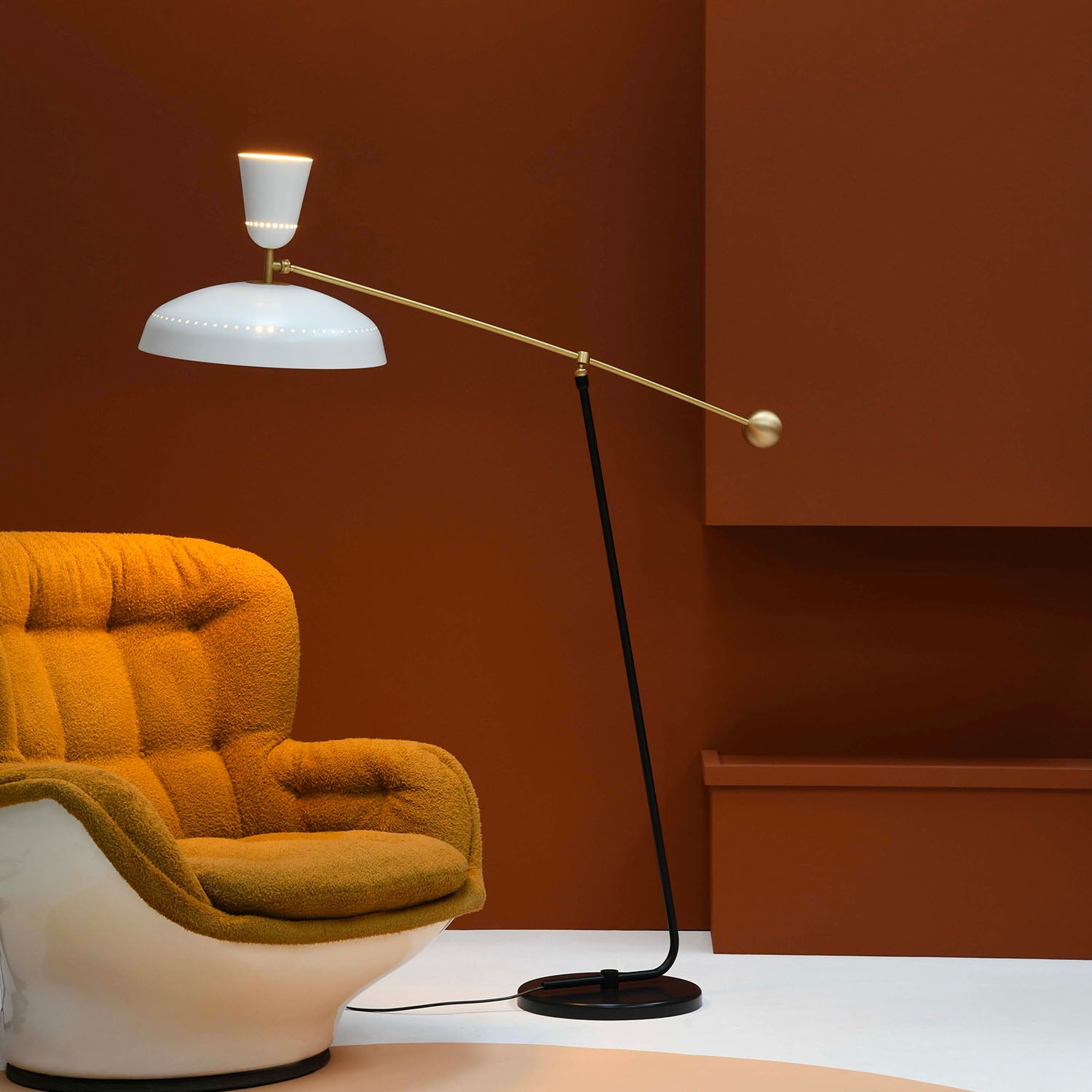
Around a pergola, the outdoor floor lamp can be an excellent solution to complement the lighting. It adds an independent light source, often more decorative, without directly altering the pergola structure.
A floor lamp can illuminate a seating area, a passageway, a garden access, or a space located on the edge of the terrace. It is especially useful when the pergola does not have enough electrical points on the ceiling or walls.
To choose this type of fixture well, you can consult our dedicated guide: which outdoor floor lamp to choose. It helps better understand the criteria to check according to use, IP rating, style, and installation area.
The outdoor floor lamp is also useful for creating a light transition between the pergola and the rest of the garden. Rather than having a very bright terrace and a completely dark outdoor area, it softens the visual transition.
What IP rating should you choose to light a pergola?
Under a pergola, a light fixture may seem protected, but it is still installed outdoors. You must therefore choose a model suitable for humidity, temperature variations, and the actual exposure level of the area.
The pergola IP rating helps assess the fixture’s protection against solid objects and water. The more the pergola is exposed to rain, wind, or splashes, the higher the protection rating should be.
For a well-covered and minimally exposed pergola, a suitable outdoor light fixture may be enough depending on the setup. For an open pergola, a bioclimatic pergola, an area near a pool, or a space exposed to water splashes, a higher protection rating must be chosen.
You should also check the exact location of the light fixture. A ceiling light placed in the center of a covered pergola is not exposed the same way as a lamp placed at the edge of a terrace or a fixture near a wall exposed to rain. The installation must always be adapted to the reality of the place.
What color temperature should you choose under a pergola?
Color temperature strongly influences the ambiance under a pergola. For an outdoor space intended for meals, relaxation, or evenings, warm light is generally more pleasant. It creates a soft, welcoming, and more comfortable atmosphere at the end of the day.
Too cold a light can give a technical or unwelcoming impression. It may suit certain functional areas, but it is rarely ideal for an outdoor space where you want to entertain or relax.
For a pergola, it is often better to favor warm light, without excess. It should allow proper visibility around the table or outdoor lounge while maintaining a pleasant atmosphere.
If the pergola is used for multiple purposes, a dimmable light or several complementary sources can be very useful. You can choose a brighter light during the meal, then a softer ambiance later in the evening.
Avoid glare around the table or outdoor lounge
Glare is one of the most common mistakes in pergola lighting. A source that is too powerful, too low, or too directly visible can quickly become uncomfortable, especially around a table or outdoor sofa.
For a table, avoid light shining directly into the guests’ eyes. A diffuser, an opaline source, indirect light, or a good mounting height can improve comfort.
In an outdoor lounge, you also need to consider the seated position. A person sitting in an armchair or on a sofa can be bothered by a fixture placed too low or by a source visible from their line of sight.
A successful pergola must remain pleasant over time. The light should allow you to see and enjoy the space without straining the eyes or creating harsh contrasts with the surrounding garden.

Common mistakes in pergola lighting
The first mistake is installing a single, overly strong light in the center of the pergola. This solution can illuminate the space, but it often creates a flat and uncomfortable atmosphere. It is better to combine several sources.
The second mistake is choosing a fixture not suited for outdoor use. Even under a pergola, humidity and temperature variations must be considered. The protection rating is therefore an essential criterion.
The third mistake is neglecting the edges of the terrace. A pergola well-lit in the center but dark around can create an unbalanced impression. Access points, steps, plants, and traffic areas must remain visible.
The fourth mistake is using light that is too cold. It can make the space less welcoming and give the terrace a more technical look. For a pergola, warm light is often more suitable.
Finally, avoid thinking only about the aesthetics of the fixture. Design matters, but usage, outdoor resistance, light diffusion, and visual comfort are just as important.
Choosing your outdoor lighting with La Lumiere
Lighting a pergola requires finding the right balance between ambiance, safety, and outdoor durability. The light should accompany meals, enhance the outdoor lounge, secure access points, and create a pleasant atmosphere in the evening.
At La Lumiere, we offer lighting fixtures suitable for outdoor spaces: ceiling lights, table lamps, floor lamps, wall sconces, and supplementary solutions for terraces, pergolas, gardens, and covered areas.
Before choosing, you need to define the main use of the pergola, the level of exposure to the elements, and the desired atmosphere. By combining several well-chosen sources, a pergola can become a true outdoor living space, comfortable from early evening until night.


Leave a comment
This site is protected by hCaptcha and the hCaptcha Privacy Policy and Terms of Service apply.