
Bakery lighting: highlighting breads, pastries, and display cases
Bakery lighting plays a crucial role in how products are perceived. Even before tasting bread, pastries, or cakes, customers discover them through light. A well-lit display window can entice customers to enter, while poorly chosen lighting can make products less appealing, dull colors, or create annoying reflections.
Successful bakery lighting must highlight textures, golden hues, shapes, and colors while creating a welcoming atmosphere. It must also remain comfortable for customers and practical for staff, who often work early mornings and long hours.
In a bakery, lighting must be planned by zones: exterior display window, counter, bread displays, refrigerated cases, pastries, checkout, circulation, and tasting area if there is one.
Summary
- Why is lighting essential in a bakery?
- Lighting the display window to invite customers inside
- Showcasing bread with warm and natural light
- Lighting pastries without distorting colors
- Lighting the counter and sales area
- Avoid reflections on refrigerated display cases
- What color temperature should be chosen in a bakery?
- Adapt the lighting according to the bakery zones
- Consider the comfort of customers and teams
- Common mistakes in bakery lighting
- Choosing your professional lighting with La Lumiere

Why is lighting essential in a bakery?
In a bakery, light directly influences the desire to buy. It draws the eye to the products, enhances colors, makes textures more visible, and contributes to the overall atmosphere of the store. Well-lit bread looks crispier, a pastry more golden, and a cake more refined.
Lighting should not only make the space bright. It must guide the customer journey: display window, entrance, counter, products, checkout, and exit. Each area must be clearly visible so the customer can easily choose without being bothered by shadows or reflections.
A bakery light fixture should be chosen according to the desired effect. Some fixtures are used to broadly illuminate the shop, others to draw attention to a display window, counter, or product range. Light becomes a presentation tool, just like furniture or layout.
Good lighting also enhances the bakery’s image. An artisanal shop, a premium bakery, a contemporary pastry shop, or a neighborhood store don’t necessarily need to convey the same atmosphere. The lighting must be consistent with the venue’s positioning.
Lighting the display window to invite customers inside
The display window is often the first point of contact between the customer and the bakery. It must be visible from the street, catch attention, and make people want to come closer. A bakery display lighting should therefore be strong enough to highlight the products without creating overly harsh light.
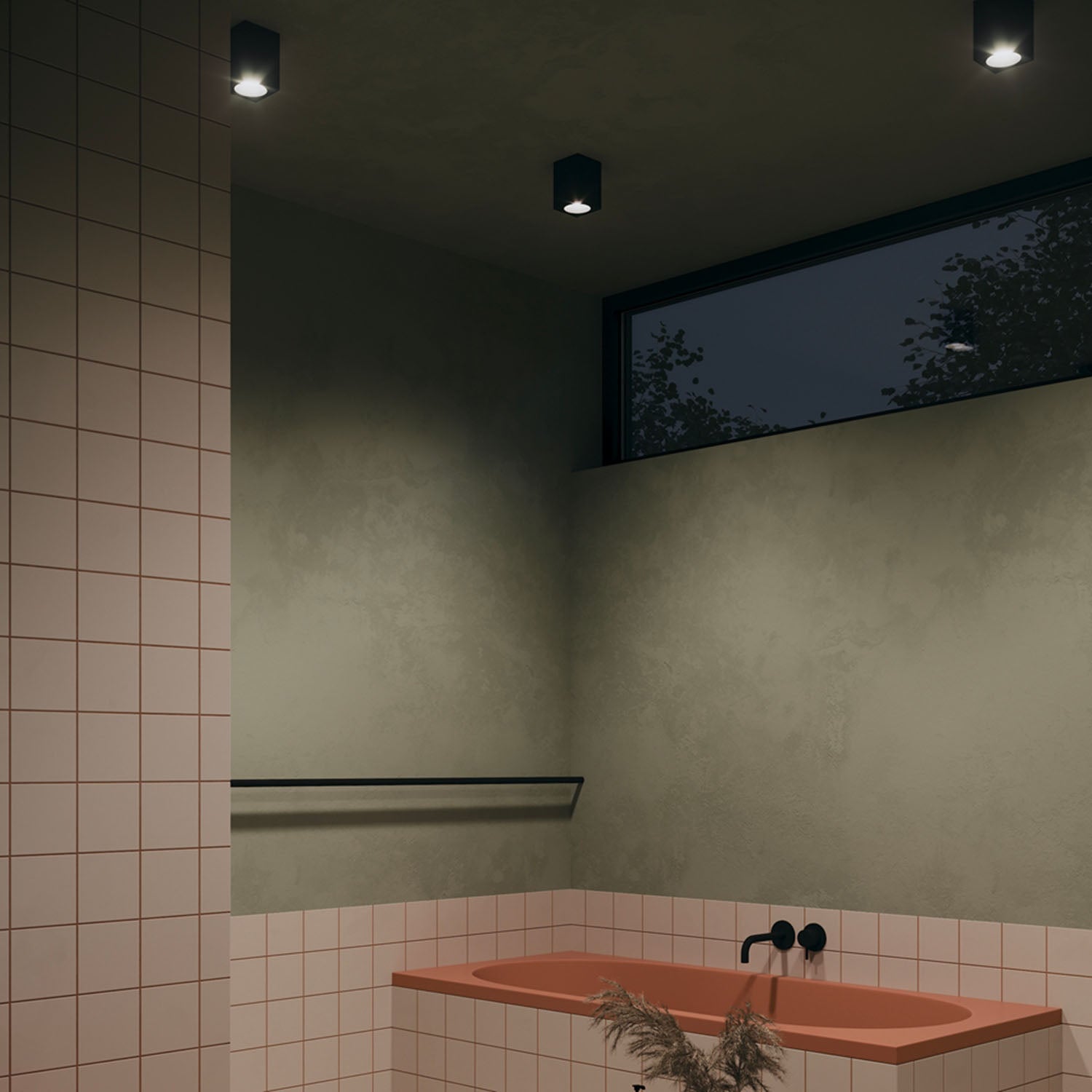
LED spotlights for bakery display cases can help direct light towards key products, provided the orientation is well controlled to avoid reflections on the glass.
The challenge is to light the display case without creating excessive reflections. From outside, a poorly directed light source can reflect on the glass and prevent a clear view of the products. It is therefore necessary to work on the angle, position, and intensity of the fixtures.
For a bakery display case, the light must reveal volumes: specialty breads, baguettes, brioches, pastries, tarts, entremets, or seasonal products. It should guide the eye to the most important products without lighting everything uniformly.
A well-lit display case can also work in the evening or early morning when natural light is low. It then becomes a visual landmark on the street and contributes to the store’s attractiveness.

Showcasing bread with warm and natural light
Bread requires lighting that enhances its crust, reliefs, and golden tones. Light that is too cold can make bread look paler, less warm, or less appetizing. Conversely, light that is too yellow can exaggerate colors and give a less natural result.
A bakery bread lighting must therefore find the right balance. It should highlight the golden crust, texture, flours, scoring, and shapes without altering the true perception of the product.
For bread shelves, it is useful to create light slightly directed towards the products. This prevents the breads at the back from being in shadow and adds depth to the display. The breads should be visible, but the light should not dazzle the customer when looking at the display.
Light can also help differentiate product ranges: traditional breads, specialty breads, seeded breads, whole grain breads, or artisanal products. Well-controlled lighting makes the selection clearer and more appealing.
Lighting pastries without distorting colors
Pastries require more precise lighting. The colors of fruits, creams, glazes, chocolate, or decorations must remain true. Poor lighting can make a strawberry look duller, chocolate too flat, or cream less appetizing.
A pastry lighting must therefore respect the colors while enhancing the product's appeal. It is important to avoid light that is too cold, which can harden textures, as well as light that is too warm, which can alter hues and give a less natural appearance.
In a pastry display case, the light must be homogeneous. If some products are strongly lit and others are in shadow, the customer will naturally be drawn to the bright areas, even if these are not the products you want to highlight.
It is also necessary to consider shiny products: glazes, toppings, chocolates, fruits, or sugary decorations. A source that is too direct can create strong reflections and hide details. More diffuse light often better reveals shapes and finishes.
Lighting the counter and sales area
The counter is the central area of the bakery. It is where the customer chooses, asks questions, pays, and interacts with the team. The lighting must therefore be both functional and flattering.
A bakery counter lighting must make the products readable but also properly illuminate faces. Too weak a light can give a dull impression, while too strong a light can become uncomfortable for customers and sellers.
Above the counter, the luminaires must be positioned carefully. They should not create annoying shadows on the products, nor dazzle the customer when looking at the display case or the person opposite them.
The counter can also be treated as a staging area. Slightly stronger lighting can draw attention to the products of the day, new items, signature pastries, or take-away offers.

Avoid reflections on refrigerated display cases
Refrigerated display cases are essential for pastries, sandwiches, drinks, or certain fresh products. But their glass can quickly create reflections if the lighting is poorly placed.
A spot that is too direct or a light source visible in the glass can hinder the reading of the products. The customer then sees more the reflection of the luminaire than the pastry or the displayed product. This reduces the effectiveness of the presentation.
To limit reflections, the orientation of the luminaires must be worked on. The light should illuminate the products without reflecting directly into the customer's eyes. The placement of the sources is therefore as important as their power.
In a bakery-pastry shop, the display cases must remain perfectly readable. Fresh products are often impulse purchases: if the customer does not clearly see the colors, textures, or details, they will be less tempted to order.
What color temperature should be chosen in a bakery?
Color temperature strongly influences the atmosphere of a bakery. Warm light creates a welcoming atmosphere and enhances the golden tones of bread and viennoiseries. More neutral light can be useful to better render the colors of pastries and fresh products.
For a successful bakery color temperature, extremes should be avoided. Light that is too cold can make the space less warm. Light that is too warm can distort colors, especially on pastries, fruits, and creams.
It is often better to create warm light in the general ambiance while maintaining more precise lighting on products that require good color rendering. The goal is to entice without misleading the customer's perception.
Consistency is also important. If the exterior window, the counter, and the refrigerated displays use lights that are too different, the whole can seem less harmonious. A bakery must remain welcoming, readable, and homogeneous.
Adapt the lighting according to the bakery zones
A bakery should not be lit uniformly. Each area has a specific role. The display window attracts, the counter sells, the shelves present the breads, refrigerated displays showcase the pastries, and the checkout completes the customer experience.
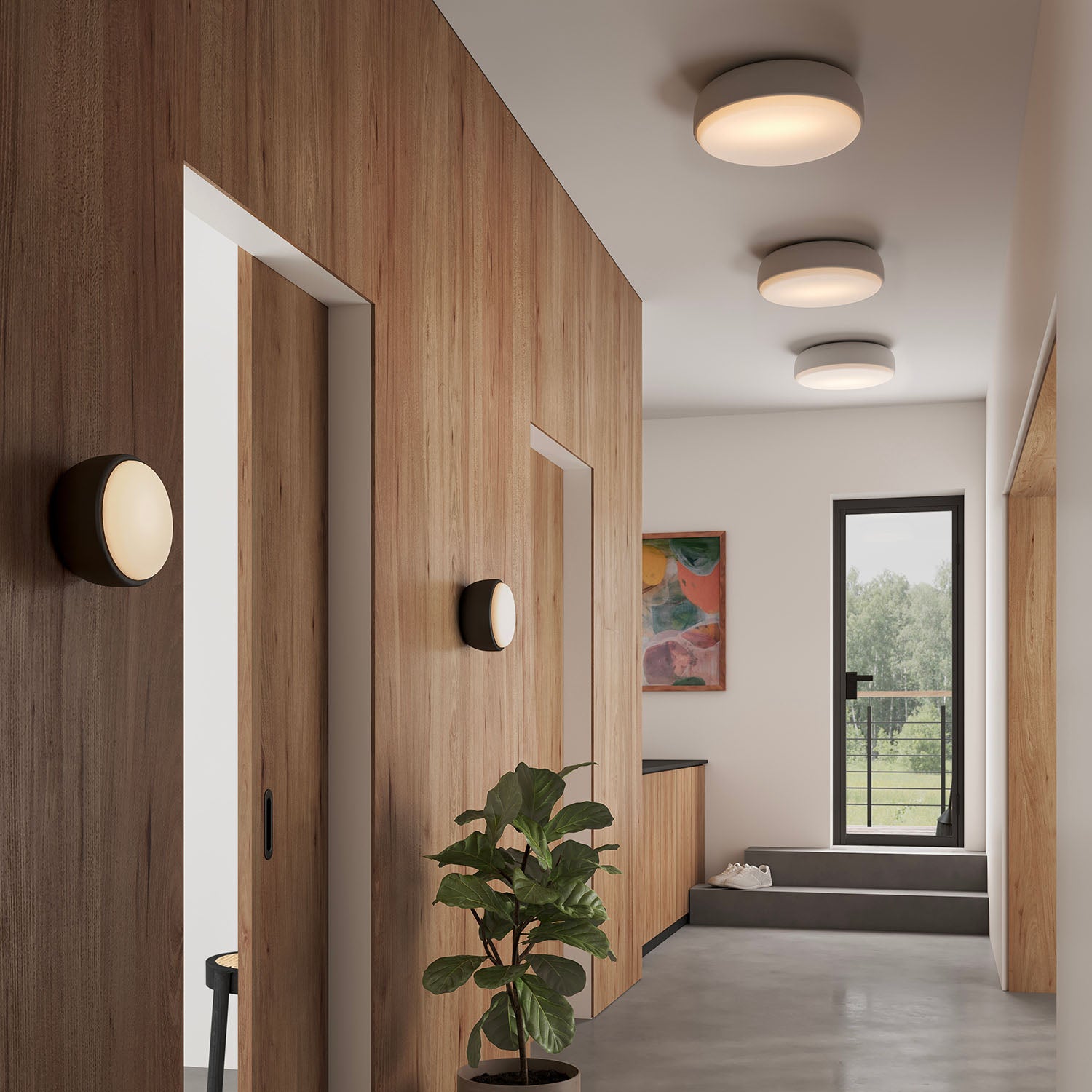
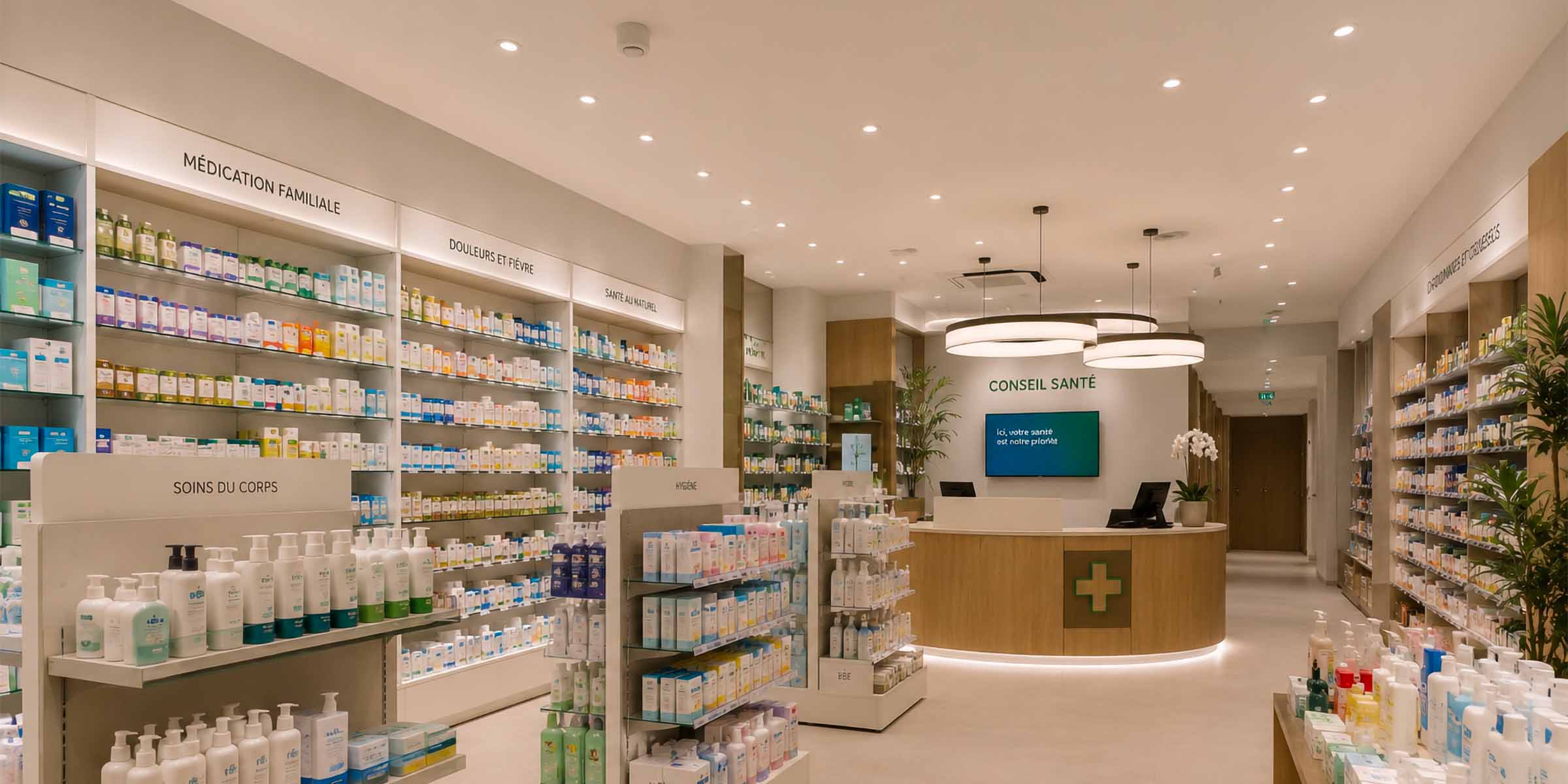
LED ceiling lights for bakery can create a consistent light base in the shop, especially for circulation areas, the checkout, or larger sales spaces.
An effective bakery shop lighting must prioritize spaces. The main products must be clearly visible. Circulation areas must remain clear. The checkout must be functional. Secondary zones should not disappear into the shadows.
It can be interesting to create light accents on certain areas: specialty breads, premium pastries, seasonal products, gift boxes, viennoiseries, or daily offers. This helps guide the customer's gaze and improves the reading of the offer.
In a tasting area, if the bakery has one, the light can be softer. The goal is no longer just to sell quickly, but to create a pleasant moment for on-site consumption.

Consider the comfort of customers and teams
A bakery is a place of passage, but also a workspace. Teams spend many hours there, often starting early in the morning. The lighting must therefore remain comfortable over time.
For customers, the light should make choosing simple and enjoyable. Products must be visible, prices readable, and movement smooth. Poorly distributed light can create shadows or make some products less attractive.
For the staff, the light must allow efficient serving, checkout, preparation, tidying, and cleaning. A poorly lit work area can be tiring, especially during busy hours.
Good professional lighting must therefore balance commercial presentation and daily comfort. It’s not just about creating a beautiful window display but making the entire bakery more pleasant to use.
Common mistakes in bakery lighting
The first mistake is lighting the entire shop the same way. A bakery needs depth: window display, counter, breads, pastries, checkout, and walkways should be considered separately.
The second mistake is using light that is too cold. It can give a more technical impression but rarely enhances breads and pastries. Products may look less golden, less warm, and less appetizing.
The third mistake is neglecting reflections on the windows. A beautiful pastry loses impact if the customer mostly sees the reflection of a poorly placed light fixture or light source.
The fourth mistake is choosing lighting fixtures solely for their style. In a bakery, design matters, but the light must also be precise, comfortable, and suitable for the food products shown.
Finally, avoid dark spots in the displays. Poorly lit bread or pastries can seem less appealing, even if they are of high quality.
Choosing your professional lighting with La Lumiere
Lighting a bakery requires finding the right balance between atmosphere, visibility, and product highlighting. The light should attract from the street, enhance the breads, respect the colors of the pastries, and make the customer experience more pleasant.
At La Lumiere, we assist professionals in choosing lighting fixtures suited to their projects: bakeries, pastry shops, food stores, restaurants, hotels, boutiques, or public spaces.
For a professional lighting project, it’s important to consider the entire customer journey: window display, counter, showcases, checkout, walkways, and any tasting area.
Good bakery lighting is not just about a bright shop. It should entice, guide the eye, showcase the products, and support the store’s image every day.

Leave a comment
This site is protected by hCaptcha and the hCaptcha Privacy Policy and Terms of Service apply.