
Gym lighting: performance, comfort, and safety
Lighting in a gym plays a crucial role in the user experience. It is not just about making the space bright: it influences the energy felt, the safety of movement, visual comfort, perception of equipment, and the overall image of the club.
A weight training room, a cardio zone, a group class studio, changing rooms, or a reception do not require the same lighting. Successful gym lighting must therefore be planned by zones, with light adapted to effort, use, and the desired atmosphere.
In a gym, successful lighting must energize without straining the eyes. It must be present enough to secure effort but controlled enough to remain comfortable throughout the session.
Summary
- Why is lighting essential in a gym?
- Adapting lighting according to training zones
- Weight training zone lighting: precision and safety
- Cardio zone lighting: energy and visual comfort
- Lighting a group class room
- Avoiding glare during exercise
- Managing mirrors and reflections in a gym
- What color temperature should be chosen for a gym?
- Lighting locker rooms, showers, and circulation areas
- Choosing fixtures suitable for intensive professional use
- Common mistakes in lighting a sports hall
- Choosing your professional lighting fixtures with La Lumiere

Why is lighting essential in a gym?
In a gym, light directly accompanies physical activity. It helps athletes orient themselves, use machines, handle weights, move between zones, and stay focused during effort. Insufficient lighting can make the space less pleasant but also less safe.
Light also contributes to the identity of the place. A premium gym, a private coaching studio, a weight training room, a boxing club, or a yoga space do not necessarily need to convey the same energy. The lighting must therefore support the club’s positioning while remaining functional.
A gym light fixture must be chosen based on ceiling height, surface area, machines, mirrors, passage zones, and the type of activity practiced. It’s not just about installing strong light, but creating an effective, comfortable, and coherent atmosphere.
Good lighting also helps showcase the equipment. Machines, free weights, floor coverings, mirrors, reception, and changing rooms appear more polished when the light is well distributed. This strengthens the professional image of the gym and improves the overall client experience.
Adapting lighting according to training zones

A gym should not be lit uniformly. Each area serves a different purpose and requires an appropriate level of light. A cardio zone does not have the same needs as a weight training space, a group class room, or a changing room.
In a dynamic training zone, the light must energize and ensure good visibility. In a calmer area, such as a yoga or Pilates studio, the lighting can be softer. In circulation areas, it must primarily secure movement and make obstacles visible.
An effective fitness room lighting is therefore based on a logical flow: reception, changing rooms, cardio area, weight training space, group classes, recovery, and exit. The client should move from one area to another without a too abrupt visual break.
This zone-based approach also helps avoid overly general lighting, which is often uncomfortable. A room fully lit with the same intensity can lack depth and not precisely meet athletes’ needs.
Weight training zone lighting: precision and safety
The weight training area requires precise, stable, and well-distributed light. Users handle weights, move between benches, adjust machines, and need to read settings. Poor lighting can create annoying shadows or make some areas less safe.
Weight training room lighting must allow clear visibility of floors, weights, handles, bars, benches, and circulation areas. Strong contrasts between bright and dark areas should be avoided as they can disrupt depth perception.
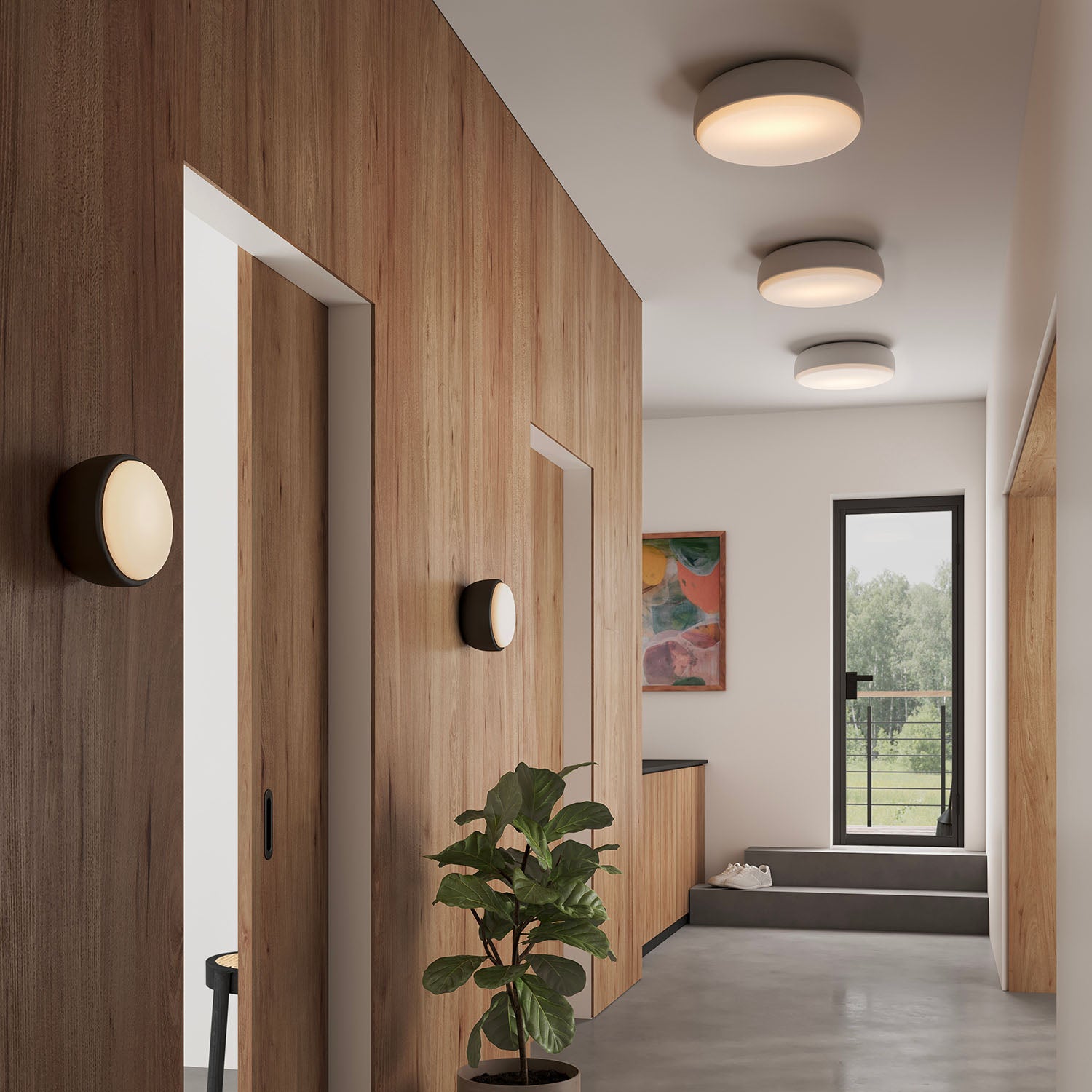
LED ceiling lights can be an effective solution to create a homogeneous base light. LED ceiling lights for gyms provide clean, consistent, and suitable general lighting for professional spaces.
In a weight training area, the light should not be merely decorative. It must accompany the movement, ensure safe use of equipment, and allow athletes to position themselves correctly in front of machines or mirrors.
Cardio zone lighting: energy and visual comfort

The cardio area requires energetic but comfortable light. Treadmills, bikes, rowers, or ellipticals are often used for several minutes, sometimes facing a screen, mirror, or window. The lighting must therefore support the effort without tiring the eyes.
An cardio zone lighting that is too harsh can become uncomfortable, especially when users stay on a machine for a long time. Conversely, light that is too dim can give a less dynamic and less motivating impression.
It is important to avoid light sources directly visible in the line of sight. On a treadmill or bike, the user often looks straight ahead. If a light fixture is reflected in a mirror or on a screen, it can quickly become annoying.
The cardio area can be slightly brighter and more dynamic than the relaxation spaces. The goal is to create an active atmosphere without turning the room into an environment that is too cold or too technical.
Lighting a group class room
A group class room must be able to adapt to several activities. Strength training, cycling, yoga, pilates, dance, stretching, or functional training do not always require the same lighting atmosphere.
Group class lighting must therefore be flexible enough. For a dynamic class, stronger light can stimulate the group's energy. For a calmer session, softer intensity can promote concentration and relaxation.
When possible, it is interesting to plan several lighting scenarios. A room can thus shift from an energetic atmosphere to a softer one depending on the type of class. This improves the customer experience and highlights the versatility of the space.
The instructor must also be considered. Their position must be clearly visible without being dazzled. Participants must be able to follow movements, see instructions, and move safely, even when the light is dimmer.
Avoiding glare during exercise

Glare is one of the most annoying defects in a gym. Users move, change posture, lie on benches, look at the ceiling, or face a mirror. A poorly positioned light source can quickly become uncomfortable.
Too direct spots, poorly placed LED panels, or sources visible in the field of vision can hinder effort. In some positions, especially during lying exercises, overly strong ceiling light can be very unpleasant.
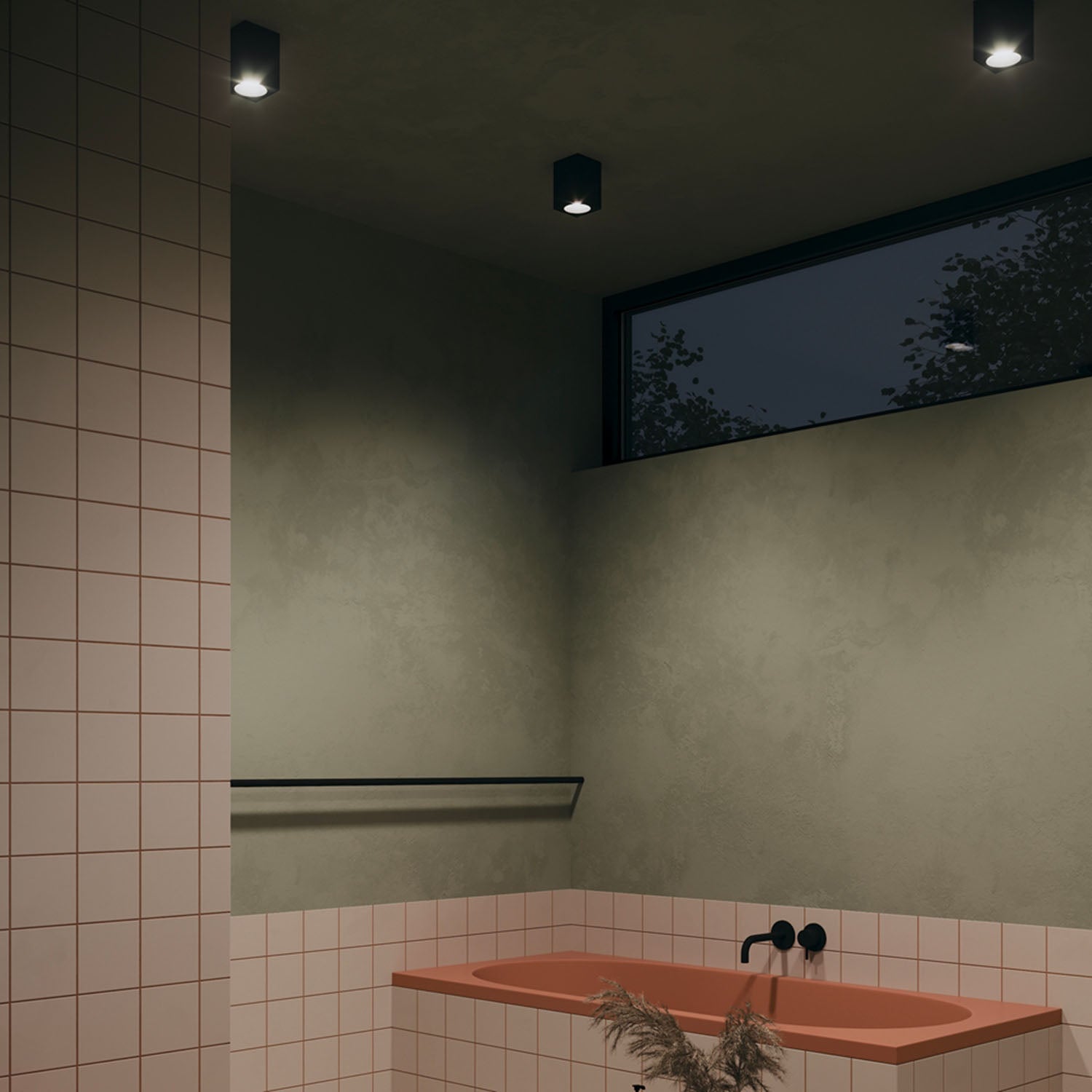
LED spots for fitness rooms can be useful to direct light to certain areas, provided their orientation is well controlled to avoid glare.
The light must secure the space without straining the eyes. For this, it is necessary to choose well-diffused fixtures, limit overly visible sources, and check their position relative to machines, mirrors, and exercise areas.
Managing mirrors and reflections in a gym
Mirrors are very common in gyms. They allow users to correct their posture, follow their movements, and create a sense of space. But they can also amplify the flaws of poorly placed lighting.
A fixture visible in a mirror can create a disturbing reflection. A spotlight aimed in the wrong direction can send direct light into the eyes. An overly bright ceiling can reflect on multiple surfaces and make the atmosphere uncomfortable.
In a room with mirrors, lighting must be planned according to reflection angles. The best placement is not only the one that lights the area best but also the one that avoids direct reflections in the athletes' field of vision.
The light must allow clear visibility of movements without causing visual discomfort. This is especially important in weightlifting areas, group class studios, and spaces where mirrors cover large wall surfaces.
What color temperature should be chosen for a gym?
Color temperature influences the perceived energy in a gym. Light that is too warm can create a pleasant atmosphere but sometimes too soft for a dynamic training space. Light that is too cool can seem active but also become harsh and impersonal if poorly balanced.
For professional sports lighting, a balance between dynamism and comfort must be sought. Cardio, weight training, and functional training zones can accept a more neutral light, as it promotes readability and energy. Locker rooms, reception, or relaxation areas can have warmer light.
Consistency remains important. If each zone has a very different color temperature, the entire club can seem fragmented. It is better to create a logical progression according to uses: more functional in effort zones, softer in reception and recovery areas.
In a gym, the light should encourage movement but remain comfortable over time. This is especially important for users who come several times a week and stay long in training areas.

Lighting locker rooms, showers, and circulation areas
Locker rooms, showers, and circulation areas should not be neglected. These are important zones in the customer experience, as they influence the perception of cleanliness, safety, and club quality.
A gym locker room lighting must be clear, comfortable, and reassuring. Users should be able to change easily, find their belongings, use lockers, and move around without shadowy areas. The light should be sufficiently present without being harsh.
In showers and wet areas, fixtures adapted to humidity and safety constraints must be chosen. The protection rating should be checked according to the location, especially near water points.
Circulation areas should naturally guide users to different zones: reception, locker rooms, machines, studios, exits, and technical areas. Good lighting facilitates orientation and reduces the risk of falls or collisions in passageways.
Choosing fixtures suitable for intensive professional use
A gym is a demanding environment. Fixtures often operate many hours a day, sometimes in very busy areas. They must therefore be reliable, easy to maintain, and suitable for professional use.
A LED gym lighting offers several advantages for this type of space: good luminous efficiency, quick start-up, user comfort, and the possibility of variation according to zones. However, the choice of fixture must take into account diffusion, glare, ceiling height, and maintenance.
Maintenance must also be considered. In a sports hall, lighting fixtures may be installed high up, above machines, or in hard-to-reach areas. It’s therefore best to choose reliable solutions that align with the daily operation of the space.
Visual robustness also matters. A professional lighting fixture must fit the club’s ambiance without appearing fragile or unsuitable for use. The light should support the identity of the place, whether it’s a premium club, a private studio, or a more athletic hall.
Common mistakes in lighting a sports hall
The first mistake is lighting the entire hall the same way. A cardio zone, a weightlifting area, a yoga studio, and locker rooms have different needs. Uniform lighting can lack precision and harm user comfort.
The second mistake is neglecting glare. Too direct light can disturb athletes, especially when lying down, facing a mirror, or moving. Visual comfort must always be considered.
The third mistake is ignoring mirrors. They can reflect light sources and increase glare. In a sports hall, the placement of lighting fixtures must be planned with reflective surfaces in mind.
The fourth mistake is selecting a color temperature only for its visual effect. Very cool light may seem energetic but can become uncomfortable if too intense. Too warm light may lack dynamism in training areas.
Finally, avoid choosing lighting fixtures solely for their aesthetics. In a sports hall, the light must be efficient, comfortable, safe, and suitable for intensive use.
Choosing your professional lighting fixtures with La Lumiere
Lighting a sports hall requires a comprehensive approach. You need to consider training zones, mirrors, machines, walkways, locker rooms, the desired ambiance, and operational constraints.
At La Lumiere, we assist professionals with their lighting projects: sports halls, coaching studios, fitness clubs, shops, hotels, restaurants, or public spaces. Each project may require a selection of lighting fixtures adapted to the area, uses, and location.
For support on a professional lighting project, our team can help you choose solutions that align with your goals: performance, visual comfort, safety, ambiance, and brand image.

Leave a comment
This site is protected by hCaptcha and the hCaptcha Privacy Policy and Terms of Service apply.