
Hair Salon Lighting: Color Rendering, Mirrors, and Customer Comfort
Lighting in a hair salon plays a crucial role in the quality of the client experience, but also in the precision of the work done by the hairdressers. Beautiful decor is not enough if the light distorts colors, creates reflections in mirrors, or tires the eyes throughout the day.
In a salon, light must meet several objectives: allow good visibility of the hair, respect color nuances, enhance the client’s face, create a pleasant atmosphere, and ensure good working comfort. A successful hair salon lighting must therefore be technical, aesthetic, and comfortable.
Styling stations, shampoo basins, reception, waiting area, checkout, mirrors, display cases, or coloring space: each zone requires a specific approach. The challenge is not just to light brightly, but to light correctly.
Summary
- Why is lighting essential in a hair salon?
- Color rendering: a key criterion for coloring
- What color temperature should you choose in a hair salon?
- Light the hairdressing stations without creating reflections in the mirrors
- Avoid shadows on the face and hair
- Creating a pleasant atmosphere for client comfort
- Lighting the reception, waiting area, and checkout
- Lighting the shampoo area: relaxation and functionality
- Choosing lighting fixtures suitable for intensive professional use
- Common mistakes in lighting a hair salon
- Choosing your professional lighting with La Lumiere

Why is lighting essential in a hair salon?
In a hair salon, lighting directly influences the perception of the place. From the entrance, it contributes to the salon’s image: premium ambiance, warm atmosphere, contemporary style, natural universe, or a more creative spirit. The light must invite people to enter, settle in, and trust.
But lighting should not only be decorative. It must also support the daily work of the teams. Cutting, styling, drying, observing a shade, doing highlights, or checking a color requires precise and comfortable lighting. Poor lighting can complicate professional gestures and distort the perception of the result.
A hair salon light fixture must therefore be chosen according to the area to be illuminated. The need is not the same in front of a mirror, above a shampoo basin, in a reception area, or in a technical space. Each part of the salon must be designed with an appropriate light level, direction, and ambiance.
A well-lit salon also gives a better impression of cleanliness, care, and professionalism. Materials, colors, chairs, mirrors, and products are better showcased. Light then becomes an integral part of the salon’s identity.
Color rendering: a key criterion for coloring
Color rendering is one of the most important aspects in a hair salon. When a client comes in for coloring, a blonde, highlights, a toner, or a shade change, the light must allow the tones to be perceived accurately.
Poor lighting can alter the perception of hair. A light that is too warm can yellow some blondes or excessively soften highlights. A light that is too cold can make tones duller, grayer, or less natural. In both cases, the client may perceive the result differently once they leave the salon.
The color rendering in hairdressing must therefore be taken very seriously. The light should allow distinguishing warm, cool, copper, golden, ashy, or natural shades with the highest possible fidelity. This concerns both the comfort of the hairdresser and the satisfaction of the client.
In a hair salon, a color should not only look good under the salon lights. It must be perceived consistently so that the client sees a faithful shade in other environments: daylight, home interiors, office, or evening lighting.
For coloring areas, it is therefore preferable to prioritize high-quality, stable, and well-distributed light. The goal is to avoid surprises during the final drying when the client sees the result in the mirror.

What color temperature should you choose in a hair salon?
Color temperature strongly influences the ambiance of a hair salon. It determines whether the light appears warm, neutral, or cool. This choice must be made carefully, as it affects both client comfort, hair rendering, and the salon's image.
A light that is too warm can create a pleasant atmosphere, but it can also alter the perception of colors. It can enhance golden reflections, soften contrasts, or make certain tones less precise. It is well suited for a waiting area or relaxation space, but it should be used cautiously at the styling stations.
A light that is too cold can give a more technical impression, but it can also make the salon feel less welcoming. It can harden faces, accentuate imperfections, and create a less comfortable ambiance for the client.
The color temperature in hair salons must therefore strike a balance between accuracy and comfort. For workstations, a neutral or slightly warm light can be suitable, provided that good color rendering is maintained. For the reception or waiting area, a softer light can enhance the salon's atmosphere.
Ideally, avoid too sharp contrasts between areas. If the reception is very warm and the hairdressing stations are very cool, the salon can lose coherence. A harmonious light progression helps maintain a professional and pleasant atmosphere.
Light the hairdressing stations without creating reflections in the mirrors
Mirrors are essential in a hair salon, but they often complicate lighting. They reflect light sources, multiply visual effects, and can cause glare if the luminaires are poorly placed.
A hair salon mirror lighting must be carefully planned. A source too visible in the mirror can bother the client sitting facing their reflection. A poorly directed spotlight can reflect directly into the eyes. A pendant light placed in the wrong spot can cause visual discomfort or disrupt the reading of the face.
For hairdressing stations, it is best to avoid light placed only behind the client or only above their head. This setup can create shadows on the face, alter the appearance of the hair, or make the work less comfortable for the hairdresser.
Ideally, the light should come from several directions without being harsh. Well-diffused general lighting can be complemented by more targeted light, but always controlled. The goal is to see clearly without glare.
Mirrors must also be considered from the very beginning of the lighting plan design. You need to ask what the mirror reflects: a direct light source, a dark area, a well-lit wall, or a decorative luminaire. This detail can greatly change the perception of the salon.

Avoid shadows on the face and hair
In a hair salon, poorly placed shadows can become very annoying. They can hide part of the face, darken the hair, hinder the observation of lengths, or alter the perception of a haircut.
A hairdressing station lighting should therefore avoid strong contrasts. If the light comes only from the ceiling, it can create shadows under the arches, nose, chin, or strands. If it comes only from one side, it can unbalance the appearance of the face.
To improve comfort, it is useful to combine uniform general lighting with complementary sources. The light must allow the hairdresser to see volumes, contours, reflections, and details correctly without tiring the eyes.
It is also important to consider the client's different positions. Sitting facing the mirror, slightly tilted at the wash basin, standing to check a length, or moving during drying: the light must remain comfortable in all these situations.
Good professional lighting is not necessarily spectacular. It is often discreet, well-distributed, and designed to support the action without causing discomfort.
Creating a pleasant atmosphere for client comfort
A hair salon is also a place of experience. The client may stay for a long time, sometimes over an hour, especially for coloring, treatment, a full cut, or blow-drying. The light must therefore be pleasant over time.
A professional hairdressing lighting should not tire the eyes. Sources that are too strong, too cold, or poorly directed can create discomfort, even if the salon appears bright at first glance.
Client comfort comes from soft, well-distributed light that is consistent with the salon's ambiance. Areas where the client waits, interacts, or relaxes can be warmer than the work areas. This creates a more pleasant experience without compromising the precision needed at the styling stations.
Lighting also contributes to enhancing the client. In front of the mirror, the light should be flattering, natural, and reassuring. Too harsh lighting can give a poor perception of the face or the result, even when the cut or color is successful.
In a salon, the light must serve both the professional and the client. It should allow precise work while creating a welcoming atmosphere.
Lighting the reception, waiting area, and checkout
The reception is the first area perceived by the client. It must be bright enough to identify the counter, read information, interact with the team, and perceive the salon's atmosphere. But it should not give a cold or administrative impression.
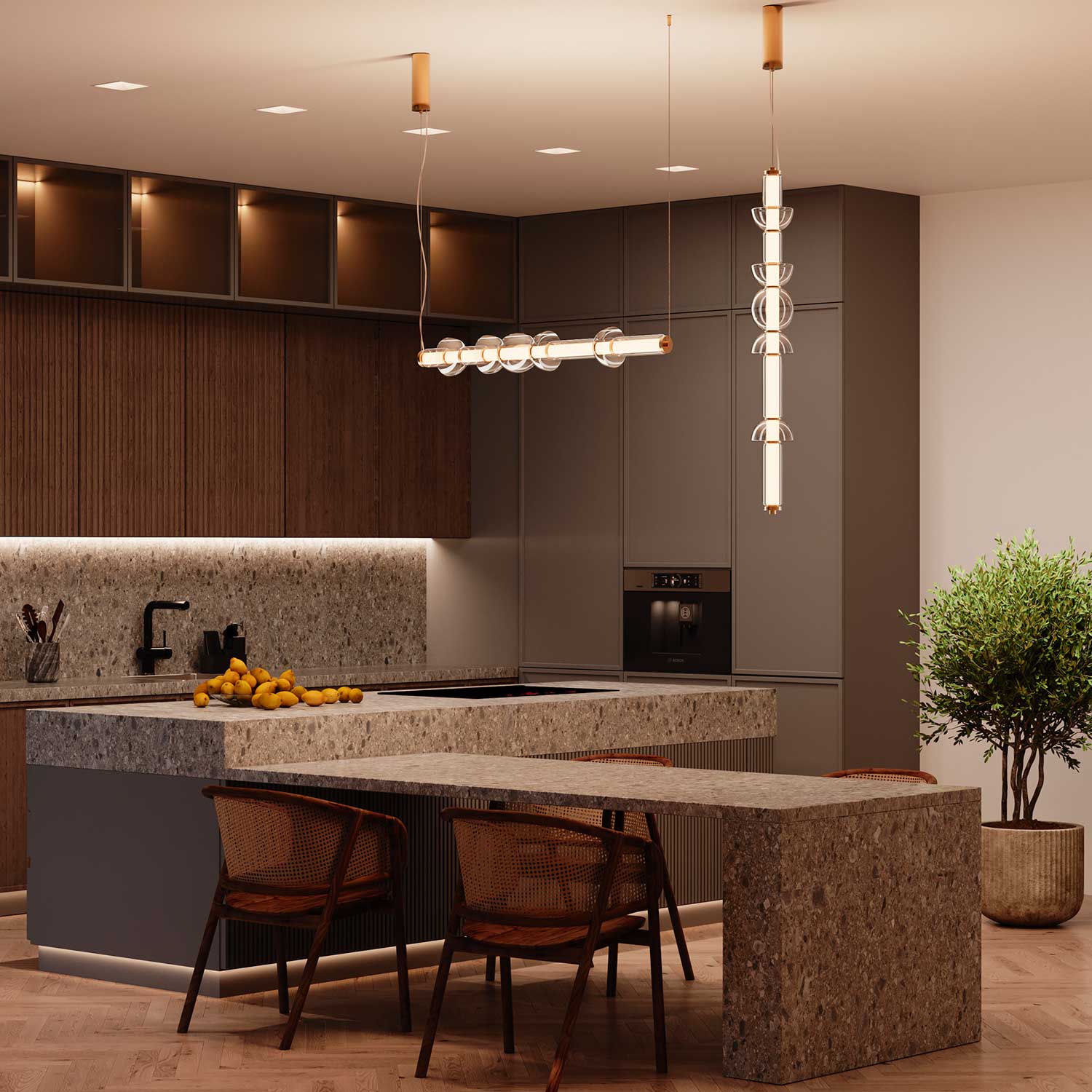
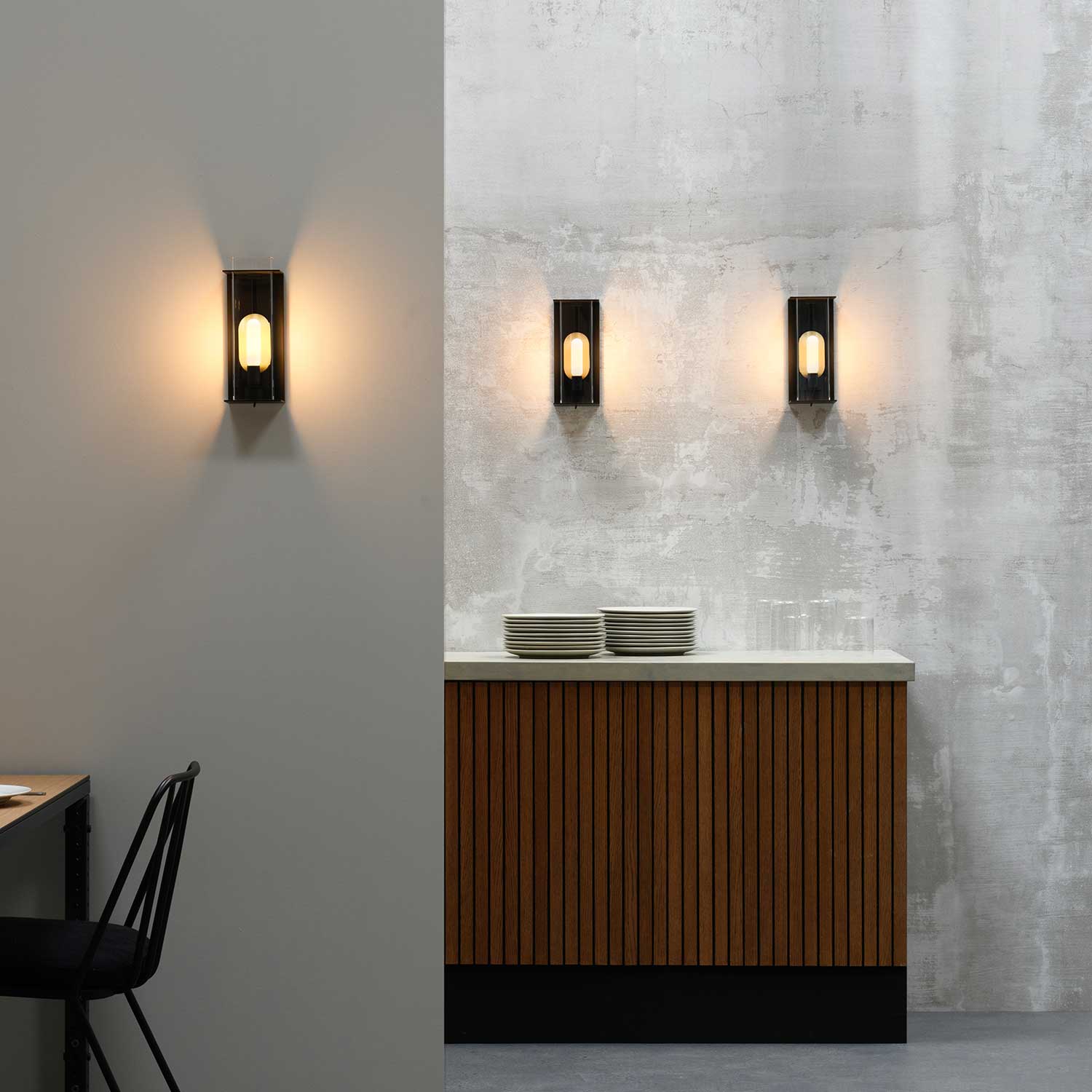
A reception lighting for hair salons can be more decorative than that of the workstations. Pendant lights, wall sconces, ceiling lights, or ambient lamps can help create a strong visual identity. The goal is to give a first impression consistent with the salon's positioning.
The waiting area must be comfortable. Light that is too direct can be unpleasant for a waiting client. Light that is too dim can give a neglected impression. A balance must be found between ambiance and readability.
The cash register or counter must remain functional. Payment, appointment booking, product advice, or schedule consultation require sufficient light. This area can be slightly brighter than the waiting area while remaining harmonious with the rest of the salon.
Lighting the shampoo area: relaxation and functionality
The shampoo area is a special space. The client is often in a reclined position, sometimes with eyes open toward the ceiling. A fixture that is too direct placed above the basin can therefore become very uncomfortable.
The shampoo area lighting should be softer than that of the styling stations. It must allow the professional to work properly while creating a relaxing atmosphere. This area is often associated with treatment, scalp massage, and a moment of relaxation.
It is best to avoid harsh light sources directly in the line of sight. Indirect, side, or well-diffused light is often more pleasant. The goal is to maintain good visibility without breaking the feeling of comfort.
The shampoo area can also be treated as a more intimate space, with a slightly softer ambiance than the rest of the salon. This helps differentiate the stages of the customer journey: reception, diagnosis, technique, treatment, styling, and finishing.
Choosing lighting fixtures suitable for intensive professional use
A hair salon is a place used all day long. The lighting fixtures must therefore be chosen for regular and intensive use. They must provide stable, comfortable light suitable for a professional environment.
The quality of light diffusion is important. A very decorative fixture that is too dazzling can become annoying on a daily basis. Conversely, a solution that is too technical can harm the salon’s atmosphere if not integrated carefully.
Maintenance must also be taken into account. A hair salon can generate dust, product residues, steam around the basins, or light splashes depending on the area. The lighting fixtures must be accessible, easy to clean, and suitable for their location.
The choice of lighting fixtures must also be consistent with the salon’s image. A premium salon, a natural salon, a barber shop, a colorist salon, or a downtown brand will not have the same aesthetic needs. The light must support this identity without compromising work comfort.

Common mistakes in lighting a hair salon
The first mistake is choosing lighting that is too cold. It can give a very technical impression but also harden faces and alter color perception. In a hair salon, precision is important, but it should not come at the expense of client comfort.
The second mistake is neglecting color rendering. A salon may seem well-lit but poorly reproduce hair shades. This is especially problematic for coloring, highlights, blondes, and subtle reflections.
The third mistake is poorly positioning the lighting fixtures relative to the mirrors. Direct reflections, visible sources, or poorly aimed spotlights can cause glare and disrupt the experience in front of the mirror.
The fourth mistake is lighting the entire salon the same way. Styling stations, reception, shampoo area, and waiting zone have different needs. Uniform lighting can make the salon less pleasant and less professional.
Finally, it is important not to focus solely on the style of the fixture. Design matters, but in a hair salon, the light must also be functional, comfortable, and true to colors.
Choosing your professional lighting with La Lumiere
Lighting a hair salon requires finding the right balance between technical precision, client comfort, and decorative ambiance. The light must allow hairdressers to work under good conditions while enhancing the salon and reassuring the client in front of the mirror.
At La Lumiere, we assist professionals in choosing lighting fixtures suited to their projects: hair salons, institutes, shops, hotels, restaurants, or public spaces. The goal is to select solutions consistent with the use, desired ambiance, and site constraints.
Good lighting in a hair salon is not just about a bright room. It must respect colors, avoid reflections, support the customer journey, and create an atmosphere where everyone feels comfortable, from the first appointment to the final result.

Leave a comment
This site is protected by hCaptcha and the hCaptcha Privacy Policy and Terms of Service apply.