
How do you create a headboard across the entire width of the wall?
A headboard does not necessarily have to stop at the dimensions of the mattress. By extending it across the entire width of the wall, it can instead become a true interior architecture feature: it frames the bed, incorporates bedside tables, conceals outlets and lighting, and immediately gives the bedroom more character. Wood, paint, fabric, slats, decorative panels, or simply a play of volumes: there are several ways to create a headboard across the entire width of the wall, provided you respect the proportions of the room and plan the whole design before carrying it out.
Contents
- Why extend the headboard across the entire wall?
- What dimensions should you plan for a wall-mounted headboard?
- Creating a headboard with paint
- Covering the entire wall behind the bed with wood
- Creating a fabric wall-mounted headboard
- Using wood slats or decorative panels
- Creating a headboard with a shelf or niche
- Integrating bedside tables into the headboard
- How do you integrate lighting into a headboard?
- Where should you plan for outlets and switches?
- Is this a good idea in a small bedroom?
- Mistakes to avoid

Why extend the headboard across the entire wall?
A wall-mounted headboard first gives greater importance to the bedroom’s main wall. With a classic 160 or 180 cm headboard placed against a large wall, there are often two side spaces occupied by bedside tables, lamps, and a few decorative elements. By working across the entire width, these different elements can instead become part of a single composition. The bed is no longer simply placed in front of the wall: it becomes the centre of a design built around it.
This solution is particularly appealing when the wall is very wide, when the bedroom lacks character, or when you want a look similar to that of a hotel room. It can also visually correct certain proportions: a horizontal composition can notably reduce the impression of height in a room and make the wall appear wider.
What dimensions should you plan for a wall-mounted headboard?

If the width is determined by the wall, the real question mainly concerns the height. There is no single dimension suited to every bedroom: it depends on the ceiling height, the bed, the bedside tables, and the desired effect. A low, wide headboard emphasizes horizontality and generally creates a contemporary look, while a covering that rises almost to the ceiling becomes much more architectural.
Before setting the height, you must also take the pillows into account. A headboard that is too low may almost disappear once the bed is made. Conversely, a very tall and massive panel can overwhelm a small bedroom. It is therefore preferable to draw the whole design on the wall before starting work, temporarily marking out its dimensions with masking tape. This allows you to judge the proportions from the bedroom entrance, not only from the bed.
Creating a headboard with paint
Paint is probably the simplest solution for creating a headboard across an entire wall without carrying out any carpentry. Rather than painting a rectangle the width of the mattress, you can apply a colour across the entire width of the wall up to a defined height. The resulting horizontal line visually connects the bed and the two bedside tables.
A deep shade such as brown, burgundy, olive green, or blue can enhance the enveloping effect, while a softer shade helps keep the bedroom bright. You can also extend the colour behind the bedside tables, wall lights, and switches so that all these elements form part of the same composition. This solution works particularly well when you want to transform the bedroom without reducing its surface area with an additional structure.
Covering the entire wall behind the bed with wood
Wood gives the headboard more substance. A veneered panel, a set of custom-built panels, or a covering made from the same wood as a wardrobe can create a particularly appealing sense of continuity. The wall behind the bed then becomes a true piece of furniture.
There is no need to cover the wall all the way to the ceiling. A horizontal wooden band spanning the entire width is enough to create a very prominent headboard while keeping the upper part painted. However, the choice of wood and colour should be consistent with the rest of the bedroom: flooring, doors, wardrobe, or furniture. Combining several very different woods in a small area can quickly make the overall design look confusing.
Creating a fabric wall-mounted headboard
For a softer atmosphere, the headboard can be made from padded panels covered in fabric. This solution adds texture and makes the area behind the pillows more comfortable. Rather than using a single panel, several modules can be assembled horizontally or vertically across the entire width of the wall.
The fabric then becomes an important material in the bedroom’s decor. A plain, subtly textured textile will generally create a more timeless result than a highly distinctive pattern. The panels can also be combined with wood or a shelf to avoid the impression of an entirely upholstered wall.
Using wood slats or decorative panels
Wood slats create rhythm behind the bed and can be used across the entire width or only in certain areas. They work particularly well when incorporated into a broader composition with suspended bedside tables, niches, or lighting.
Nevertheless, avoid adding slats merely to fill the wall. Their orientation, width, and repetition should relate to the other lines in the bedroom. Grooved, fluted, or moulded panels can also add texture with a more understated design. In every case, the material should serve the composition rather than become a decoration added independently of the rest.
Creating a headboard with a shelf or niche

Another option is to bring the lower part of the wall slightly forward to create a headboard with a shelf. This shallow depth provides space for a few books or objects, but above all it conceals part of the electrical installation and can potentially incorporate indirect lighting.
However, the shelf should remain shallow enough not to unnecessarily reduce the size of the bedroom. Nor should it become a long surface filled with objects. A few elements are generally enough to add depth. In a more elaborate design, niches can be integrated on either side of the bed to partially replace the bedside tables.
Integrating bedside tables into the headboard
This is one of the main advantages of a custom-made headboard. Instead of placing two independent pieces of furniture on either side of the bed, the bedside tables can be integrated directly into the composition.
For example, two suspended shelves keep the floor completely clear and enhance the impression of width. Small drawer units provide more storage while remaining visually connected to the headboard. In a large bedroom, the design can even extend to a wardrobe, dressing table, or low cabinet to create a single unit across the entire wall.
However, everyday use must be considered. The surface should remain accessible from the bed and provide enough space for a phone, a book, or a glass. A bedside table that is perfectly aligned with an architectural design but too far from the mattress will quickly become impractical.
How do you integrate lighting into a headboard?

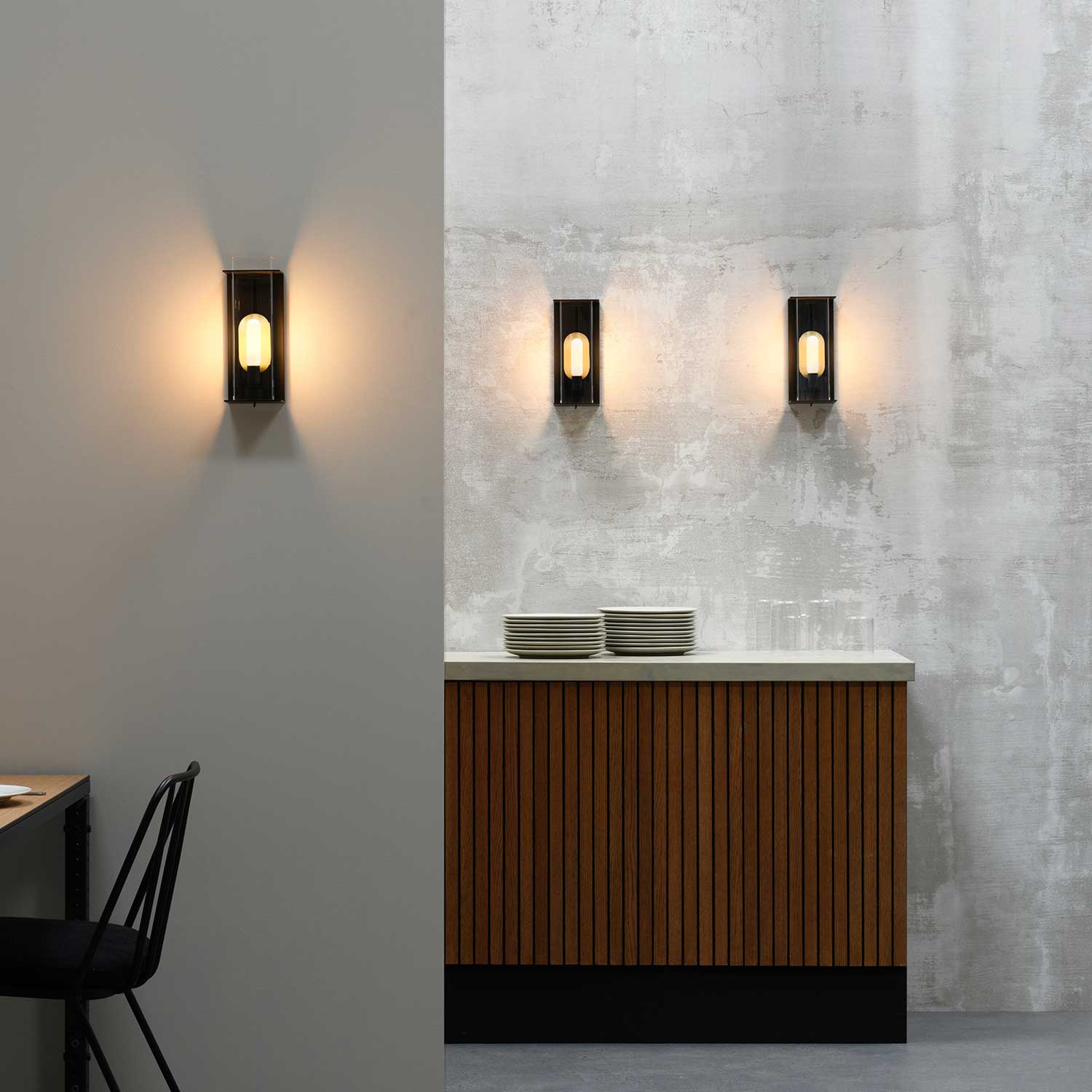
Lighting should be planned from the design stage of the headboard. For reading, two adjustable wall lights or reading lights installed on either side of the bed can direct light straight onto the pages without illuminating the entire bedroom. If the headboard includes a shelf or a recessed section, an LED strip can also be concealed behind or above the structure to create indirect lighting in the bedroom. The two functions can be combined: soft light for ambience and two independent reading lights. The important thing is to plan the power supplies and cable outlets before the carpentry is made, to avoid visible wires once the installation is complete.
To complete your design, discover all our reading wall lights, ideal for integrating directly into a headboard and enjoying comfortable lighting on either side of the bed.
Where should you plan for outlets and switches?
This detail should be addressed before the headboard is made, not afterwards. On each side, it may be useful to provide outlets for charging a phone or occasionally powering a device, as well as the controls needed for the lighting.
Their location should be determined based on the final position of the mattress and bedside tables. An outlet placed behind the headboard or hidden by the mattress becomes unusable. Conversely, fixtures that are too far away force you to get up to reach them. In a custom design, outlets and switches can be integrated directly into the panels or bedside tables for a much neater result.
Is this a good idea in a small bedroom?
A full-width headboard is not reserved for large bedrooms. It can even make a small room appear wider by creating a continuous horizontal line. You simply need to avoid structures that are too deep and materials that look too heavy.
In a small bedroom, a painted headboard or a thin panel combined with two suspended bedside tables can be particularly effective. By clearing the floor on either side of the bed, the room appears less cluttered. The design can also incorporate small shelves to eliminate traditional bedside tables entirely.
Mistakes to avoid with a full-width headboard
The first mistake is to think only about aesthetics without anticipating the bed itself. The thickness of the mattress, the pillows, the bedside tables, and the outlets greatly affect how the design is perceived once the bedroom is finished. The second is to combine too many effects: slats, fabric, niches, LEDs, colours, wood, and wall lights do not all need to be brought together on the same wall.
You should also avoid creating a disproportionate structure. A very thick headboard takes up precious centimetres in a small bedroom, while an excessively tall composition can feel overwhelming. Finally, the electrical installation must be anticipated from the outset. When the outlets, switches, and power supplies for the lights are integrated into the project, the result immediately looks much more polished.
Think of the headboard as a true wall design
Creating a headboard across the entire width of the wall ultimately goes much further than adding a simple decorative element behind the mattress. It can bring together the bed, bedside tables, lighting, outlets, and sometimes even storage in a single composition.
The most successful solution is not necessarily the most complex. A colour applied at the right height can sometimes transform the bedroom more than highly elaborate carpentry. Conversely, when storage needs or the architecture justify it, a custom-made design can make full use of the wall and give the bedroom a strong identity. The key is to think of the whole design as part of the room’s architecture rather than simply as an enlarged headboard.

Leave a comment
This site is protected by hCaptcha and the hCaptcha Privacy Policy and Terms of Service apply.