
How to light a bookshelf?
Lighting a bookshelf is not just about making the books visible. A bookshelf is often a strong element in a living room, office, entryway, or reading room. It can structure a wall, showcase objects, add rhythm to a room, and create a warmer atmosphere.
Good bookshelf lighting must therefore meet several objectives: facilitate reading the titles, highlight the shelves, avoid shadow areas, prevent glare, and blend harmoniously with the interior decor. Depending on the setup, adjustable spotlights, linear lighting, wall sconces, table lamps, or reading floor lamps can be used.
In this article, we explain how to light a bookshelf according to its shape, location, and use: wall-mounted bookshelf, custom furniture, open shelves, reading nook, or bookshelf integrated into a living room.
Summary
- Why light a bookshelf?
- Identifying the role of the bookshelf in the room
- Lighting a wall-mounted bookshelf
- Using adjustable spotlights to highlight the shelves
- Installing linear lighting or an LED strip
- Installing a wall light around a bookshelf
- Lighting a reading corner near a bookshelf
- Which color temperature should you choose?
- How to avoid shadows and glare?
- Common mistakes in bookshelf lighting
- Choosing your bookshelf lighting with La Lumiere

Why light a bookshelf?
A bookshelf is rarely just a storage piece. In many interiors, it becomes a decorative element in its own right. It holds books, but also objects, frames, vases, souvenirs, sculptures, or collectibles. Lighting helps to reveal this arrangement and prevents the bookshelf from becoming a dark mass in the room.
Without appropriate lighting, a deep bookshelf or one installed on a dark wall can quickly lose its depth. The shelves appear flat, objects disappear into the shadows, and books become less readable. Conversely, well-placed lighting adds depth, highlights the lines of the furniture, and creates a more refined atmosphere.
Lighting can also have a practical function. It helps to find a book more easily, to read near the bookshelf, or to create a quiet zone in a living room or office. It is this dual function, decorative and useful, that makes the subject interesting.
Identifying the role of the bookshelf in the room

Before choosing a light fixture, it is important to understand the role of the bookshelf. Is it mainly decorative? Is it used to store a large number of books? Is it integrated into an office? Does it frame a fireplace, a sofa, or a reading nook? Each situation calls for a different lighting solution.
In a living room, the bookshelf can contribute to the overall atmosphere. It then deserves soft lighting, capable of enhancing the wall without creating too technical an effect. In an office, it may require more functional lighting, especially if the books are frequently consulted. In an entryway or hallway, it can serve as a focal point and add depth to a passage space.
The depth of the shelves also matters. A shallow bookshelf is easier to light than a deep piece where the books at the back remain in shadow. The height of the furniture, the color of the shelves, and the presence of glass doors also influence the choice of lighting fixture.
A good bookshelf light fixture should therefore be chosen based on the actual use of the furniture, not just its style.
Lighting a wall-mounted bookshelf
A wall-mounted bookshelf lighting must take into account the width of the furniture, its height, and the depth of the shelves. The larger the bookshelf, the more you should avoid lighting it with a single central source. A single ceiling light risks creating uneven shadows, especially on the upper or lower shelves.
For a wall-mounted bookshelf, several options are possible. Adjustable spotlights can be directed towards the shelves from the ceiling. Linear lighting can run along the width of the furniture. Wall lamps can frame the bookshelf or provide ambient light on the sides.
The choice depends on the desired result. If you want to highlight certain objects, directional lighting will be more effective. If you want to create soft and even light, a linear solution may be more suitable. If the bookshelf is in a living room or reading corner, a wall lamp or additional lamp can add a warmer atmosphere.
It is important not to light only the center of the bookshelf. The ends, lower shelves, and deep areas should also be considered to achieve a balanced effect.
Using adjustable spotlights to highlight the shelves

Adjustable spotlights are a very effective solution for lighting a bookshelf, especially when you want to direct light to specific areas. They highlight books, decorative objects, a sculpture, a niche, or a specific part of the furniture.
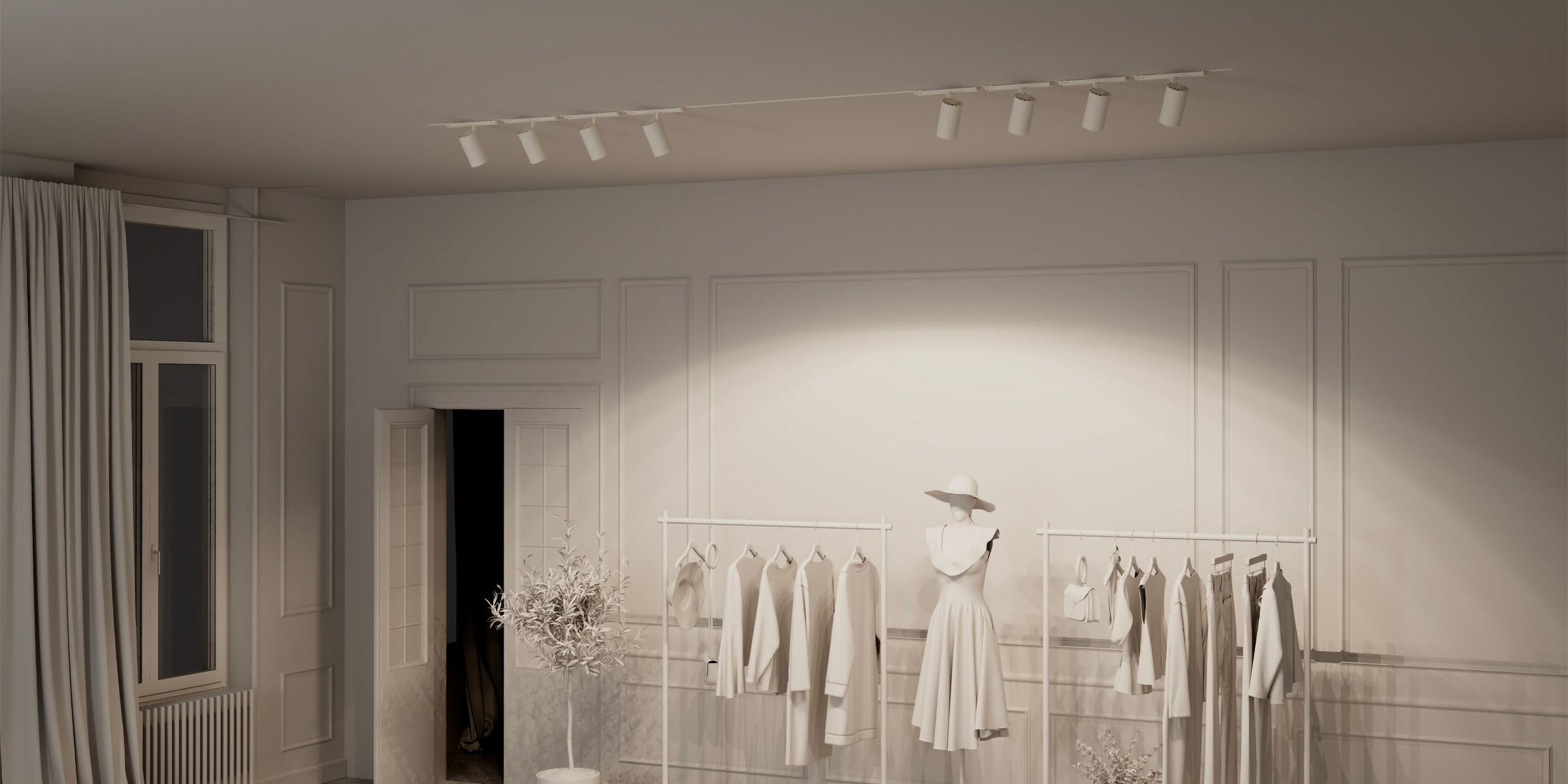
For a wall-mounted bookshelf, adjustable spotlights for bookshelves allow you to direct light towards the shelves, books, or decorative objects without lighting the entire room evenly. They offer more precision than a central ceiling light and create a more dynamic effect.
The distance between the spotlight and the bookshelf is important. If the spotlight is placed too close, it may create overly vertical light or highly contrasted areas. If it is too far, it can lose effectiveness. The orientation should be adjusted to illuminate surfaces without directing light directly into the eyes.
Spotlights are especially appealing in bookshelves integrated into a contemporary living room, office, private gallery, or professional space. They give a more architectural aspect to the lighting and allow for changing the effect if the shelf arrangement evolves.
Installing linear lighting or an LED strip
Linear lighting can be interesting when the bookshelf is long, regular, or very graphic. It helps follow the lines of the furniture and achieve more continuous lighting across several shelves. This solution is particularly suitable for contemporary bookshelves, custom furniture, or shelves that span the entire width of a wall.
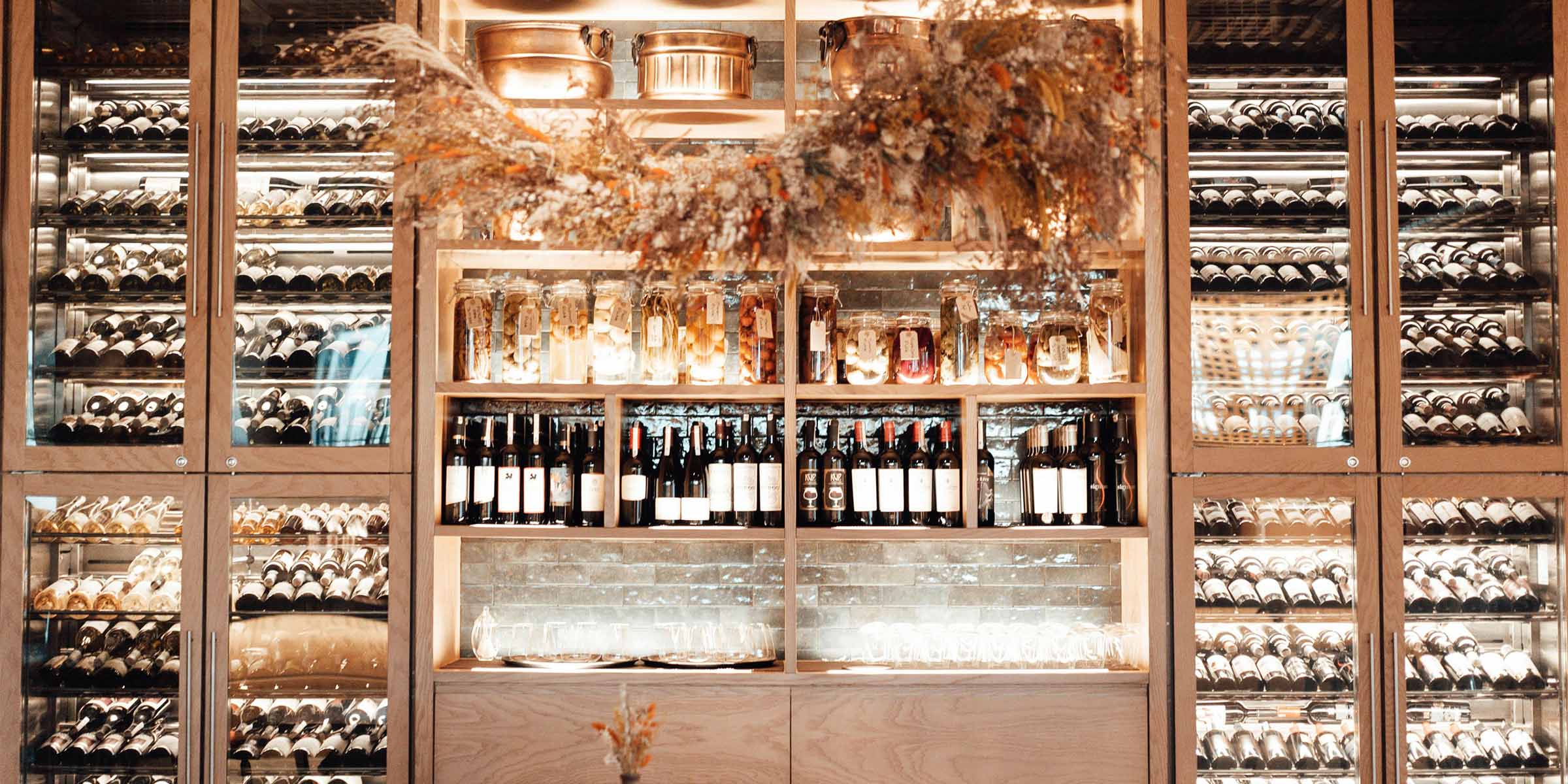
On a long or very structured bookshelf, a discreet LED strip can follow the lines of the furniture and create more even lighting across several shelves. It can be used to enhance the furniture’s readability without necessarily drawing attention to the fixture itself.
The advantage of linear lighting is its consistency. It can avoid harsh contrasts between multiple spotlights, especially when aiming for a sober and uniform look. However, care must be taken not to create lighting that is too flat. A bookshelf often benefits from retaining some relief and depth.
Linear lighting can be placed above the bookshelf, under a shelf, at the top of the furniture, or in a niche, depending on the setup. In all cases, electrical supply, mounting, and maintenance must be planned.
Installing a wall light around a bookshelf

The wall light is often an underestimated solution for lighting a bookshelf. It doesn’t always serve to directly illuminate the books, but it can create a softer atmosphere around the furniture. In a living room, office, or bedroom, it helps avoid light coming only from the ceiling.
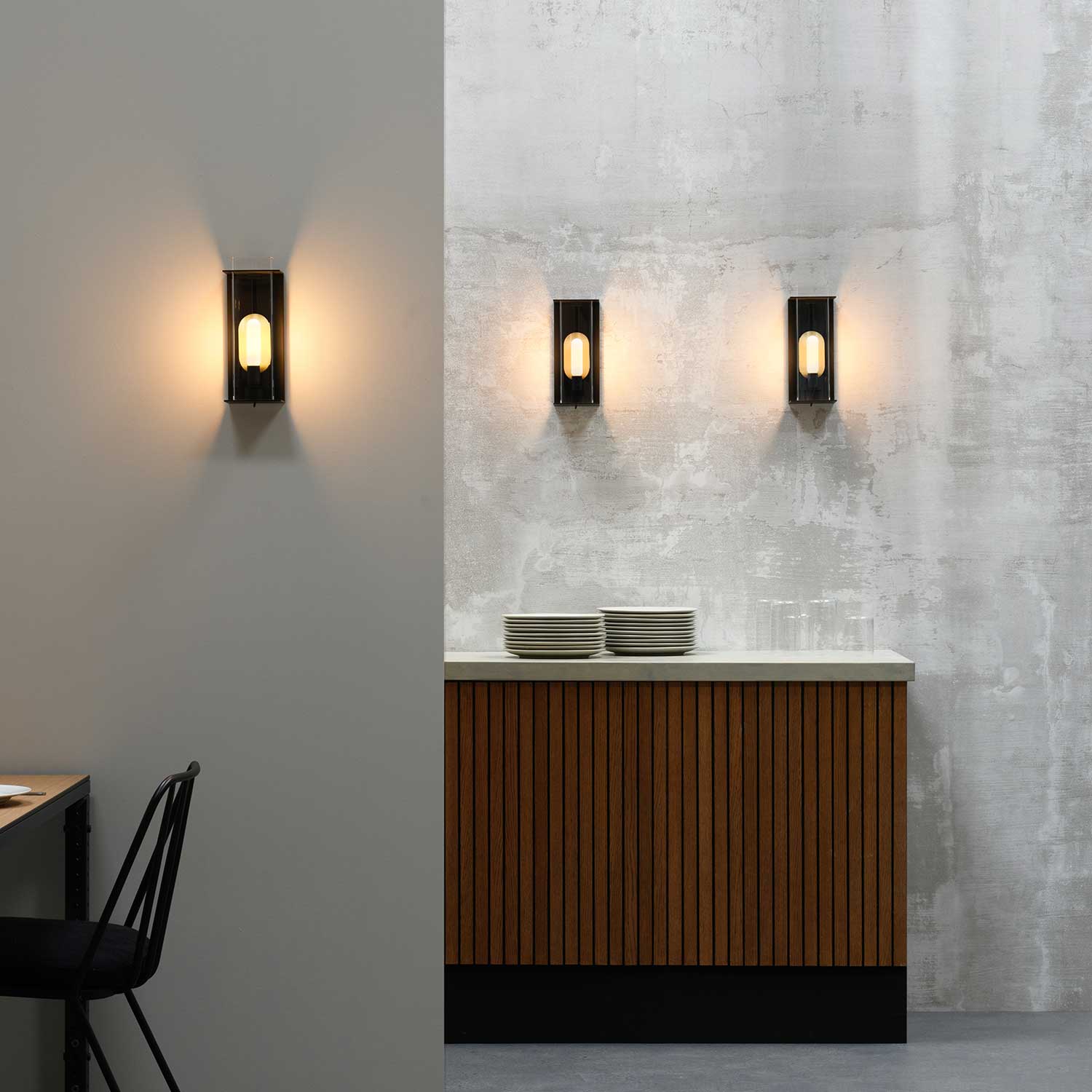
A decorative wall light can be installed near a bookshelf to create softer ambient lighting, especially in a living room, office, or reading nook. It adds a luminous presence on the wall and can make the whole space feel warmer.
Wall lights are especially useful when a bookshelf frames a sofa, a fireplace, a door, or a reading area. They can serve as a visual marker, highlight the wall composition, and complement overly uniform general lighting.
The choice of the wall light should remain consistent with the bookshelf. A wall light that is too bulky can interfere with the furniture's readability. A wall light that is too decorative can compete with the books and displayed objects. Ideally, choose a model that provides light without unbalancing the composition.
Lighting a reading corner near a bookshelf
A bookcase is often associated with a reading corner. In this case, it is not enough to light the shelves: you also need to provide comfortable light for reading. This light should be more focused, well-directed, and soft enough not to tire the eyes.
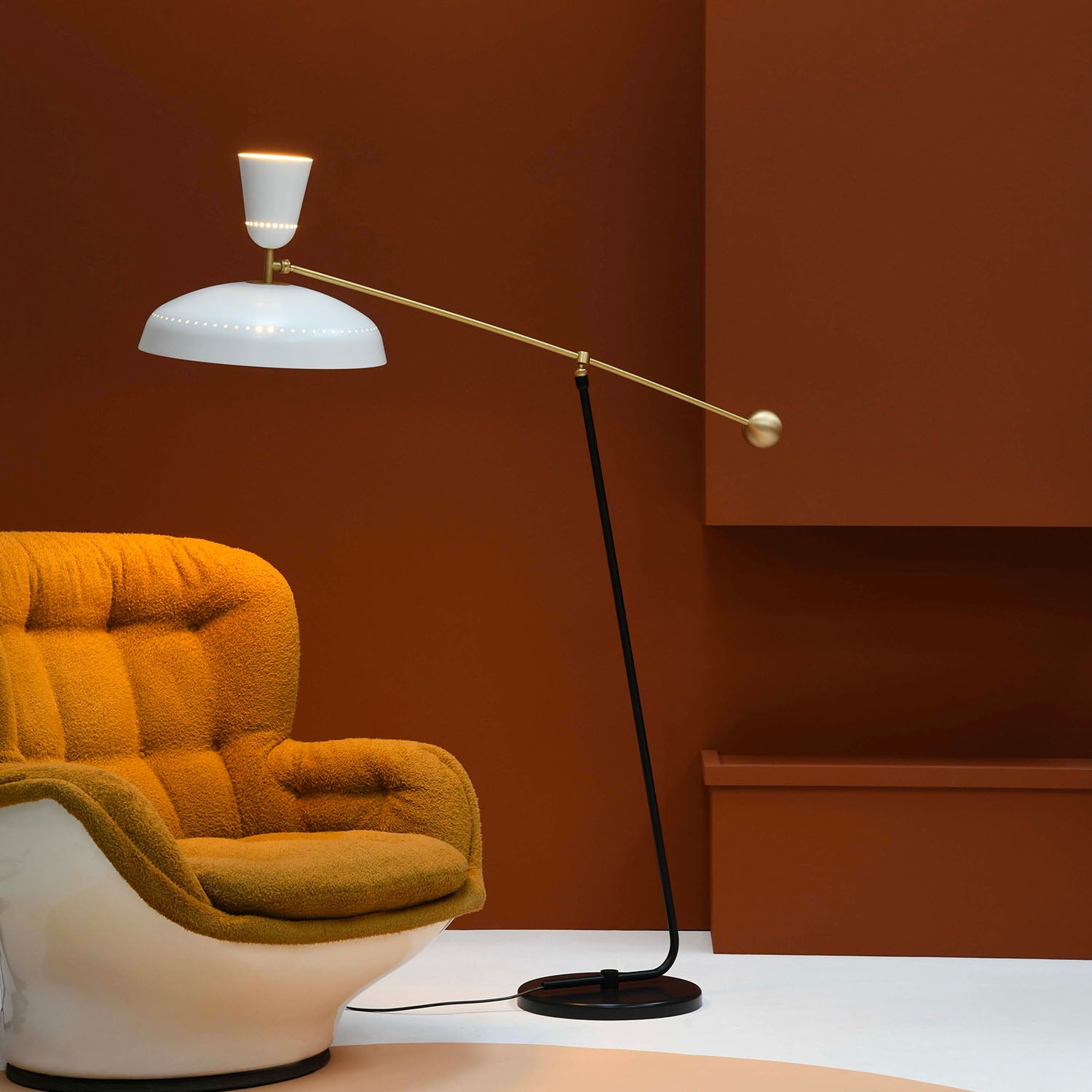
A reading corner light can be provided by a table lamp, an adjustable wall light, or a floor lamp. The goal is to create a bright area around the armchair, sofa, or desk without excessively lighting the entire room.
The height of the source is important. A lamp that is too low may illuminate too small a part of the book. A source that is too high can create shadows on the pages. Ideally, position the light slightly to the side to illuminate the reading area without causing glare.
In a living room, the reading corner lighting can be combined with that of the bookcase. The shelves provide ambient light, while the reading lamp offers more functional light. This layering creates a more comfortable and elegant atmosphere.
Which color temperature should you choose?
Color temperature plays a crucial role in lighting a bookcase. Light that is too cool can make the space feel harsh and unwelcoming, especially if the bookcase is in a living room or bedroom. Light that is too warm can create a pleasant ambiance, but it must remain readable enough to distinguish books and objects.
For a residential bookcase, warm or slightly warm light is often preferable. It enhances wood, bindings, papers, decorative objects, and natural materials. It also helps create a more intimate atmosphere around the bookcase.
In an office or a very functional library, a more neutral light can be considered, especially if books or documents are frequently consulted. However, it is important to avoid light that is too white, which can appear cold and less comfortable.
The most important thing is to maintain consistency with the rest of the room. If the living room is lit with warm light, a bookcase with very cool light will seem disconnected from the overall atmosphere.
How to avoid shadows and glare?
Shadows are common in a bookcase, especially when the shelves are deep or heavily loaded. Books, objects, and vertical dividers can block light and create dark areas. To avoid this, you need to choose a well-placed source adapted to the depth of the furniture.
A shelf lighting that is too frontal can produce harsh light, while lighting that is too vertical can leave the lower shelves in shadow. The right solution depends on the shape of the furniture: ceiling-mounted spotlights, linear light, integrated LED strip, or additional wall lights.
Glare must also be anticipated. A source visible directly from the sofa, armchair, or desk can become annoying. Spotlights should be directed toward surfaces, not the eyes. LED strips should be hidden or diffused to avoid overly visible bright spots.
In a bookshelf with glass doors, reflections must also be watched. Poorly positioned light can reflect on the glass and interfere with seeing the books. In this case, softer, better diffused, or slightly offset light can give a better result.
Common mistakes in bookshelf lighting
The first mistake is lighting the bookshelf with only one general source. A central ceiling light can illuminate the room, but it doesn’t necessarily highlight the shelves. The bookshelf may then remain in the background, especially if placed against a dark wall.
The second mistake is choosing light that is too strong. A bookshelf doesn’t always need to be brightly lit. Too much light can flatten textures, create glare, or give a too technical look. Well-balanced lighting is often more elegant.
The third mistake is forgetting the actual use. A purely decorative bookshelf has different needs than a working bookshelf. A reading nook requires different lighting than a display shelf. So, lighting fixtures must be adapted to how the bookshelf is used.
The fourth mistake is neglecting color temperature. Light that is too white can make the bookshelf feel cold, especially if it’s made of wood or integrated into a warm living room. Softer light can better enhance materials and create a more pleasant atmosphere.
Finally, avoid multiplying lighting effects. Spotlights, strips, sconces, and lamps can work together, but only if each source has a clear role. Bookshelf lighting should remain readable and coherent.
Choosing your bookshelf lighting with La Lumiere
To properly light a bookshelf, you first need to understand its role in the room. Is it for storing books, displaying objects, creating an ambiance, or accompanying a reading nook? The answer helps choose between adjustable spotlights, LED strips, wall sconces, reading lamps, or a combination of several sources.
A successful bookshelf depends not only on the furniture or the books it holds. Light gives it depth, guides the eye, and makes the space more comfortable. Well placed, it transforms a simple shelf into a true architectural element.
At La Lumiere, we offer lighting fixtures suited for interior projects: spotlights, wall sconces, linear lighting, table lamps, or floor lamps. The goal is to choose a solution that fits coherently with your bookshelf, your room, and the atmosphere you want to create.

Leave a comment
This site is protected by hCaptcha and the hCaptcha Privacy Policy and Terms of Service apply.