
How to light a mezzanine?
Lighting a mezzanine requires a different approach than a classic room. With variable ceiling height, an open volume, stairs, a guardrail, and sometimes a darker low area, the light must be considered as a whole. It is not enough to install a light fixture high up: access points, uses, and areas likely to remain in shadow must also be illuminated.
Good mezzanine lighting must create comfortable, well-distributed light adapted to the function of the space. A mezzanine can serve as a bedroom, office, reading nook, relaxation area, or storage. Each use requires different lighting, but always with the same goal: to make the space pleasant, readable, and easy to live in.
In this article, we explain how to light a mezzanine taking into account the main volume, the space under the mezzanine, the stairs, low areas, and the most suitable light fixtures.
Summary
- Why is mezzanine lighting special?
- Illuminate the main volume without overwhelming the space
- Adapting the lighting to the use of the mezzanine
- Lighting the lower part under the mezzanine
- Light the staircase and mezzanine access points
- Install spots to target specific areas
- Add table lamps for a cozier atmosphere
- Using wireless lamps in a mezzanine that is hard to connect
- What color temperature should you choose for a mezzanine?
- Mistakes to avoid when lighting a mezzanine
- Choosing your lighting fixtures with La Lumiere

Why is mezzanine lighting special?
A mezzanine creates an unusual volume. It often combines an open high space and a lower area underneath. This configuration makes lighting more complex because light does not distribute as it does in a closed, regular room.
In a mezzanine, some areas can be very exposed to light, while others remain in shadow. The upper part may lack light if no light point is planned nearby, while the area under the mezzanine can seem darker due to the low available height.
A mezzanine light fixture must therefore be chosen according to several criteria: ceiling height, space usage, outlet locations, electrical access, presence of stairs, wall color, materials, and desired light level.
Visual comfort must also be considered. From below, a light source placed too high or too directly visible can cause glare. From the mezzanine, poorly positioned lighting can create dark areas or light that is too weak for reading, working, or moving around.
Illuminate the main volume without overwhelming the space
The first challenge is to illuminate the overall volume. In a room with a mezzanine, the height is often one of the main assets. The lighting must therefore accompany this verticality, without overwhelming the space or creating light that is too harsh.
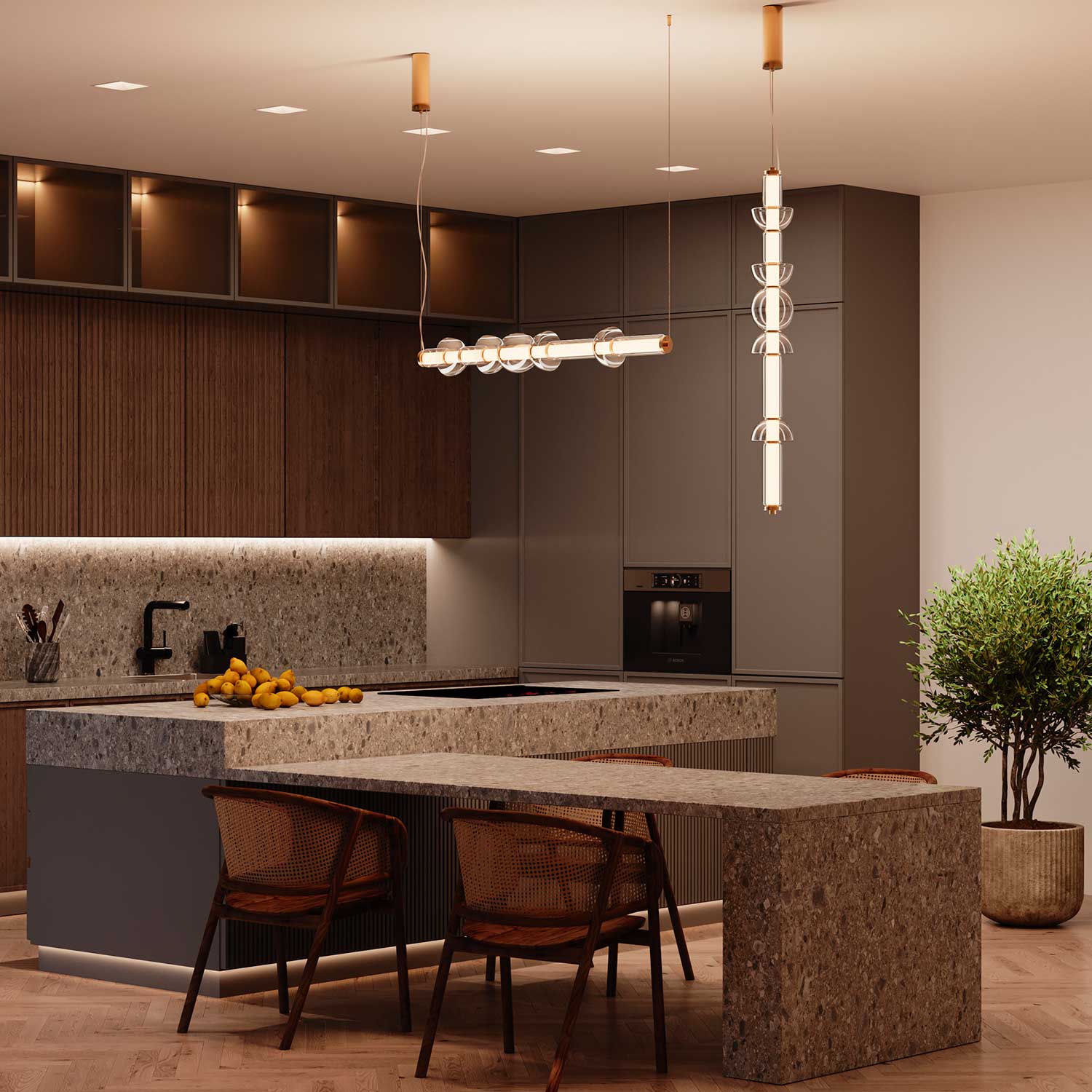
If the ceiling height is significant, a pendant light can highlight the volume. But it must be well sized. A fixture that is too small can disappear in the space, while a model that is too large can hinder visual circulation or seem disproportionate.
In some cases, it is better to complement the main lighting with secondary sources. The mezzanine should not rely on a single light point placed in the center of the volume. By multiplying sources, a more balanced and pleasant light is achieved.
Good high ceiling lighting should create a luminous presence without concentrating everything in one place. The walls, ceiling, stairs, and lower part can each contribute to the diffusion of light.
Adapting the lighting to the use of the mezzanine

A mezzanine can have several functions. It can become a bedroom, an office, a library, a relaxation corner, a play area, or storage. The type of lighting should therefore be chosen according to the actual use of the space.
For a mezzanine used as a bedroom, soft lighting should be favored, with sources accessible from the bed or resting area. For an office, the light should be more precise to limit visual fatigue. For a reading corner, a well-placed supplementary light source will be essential.
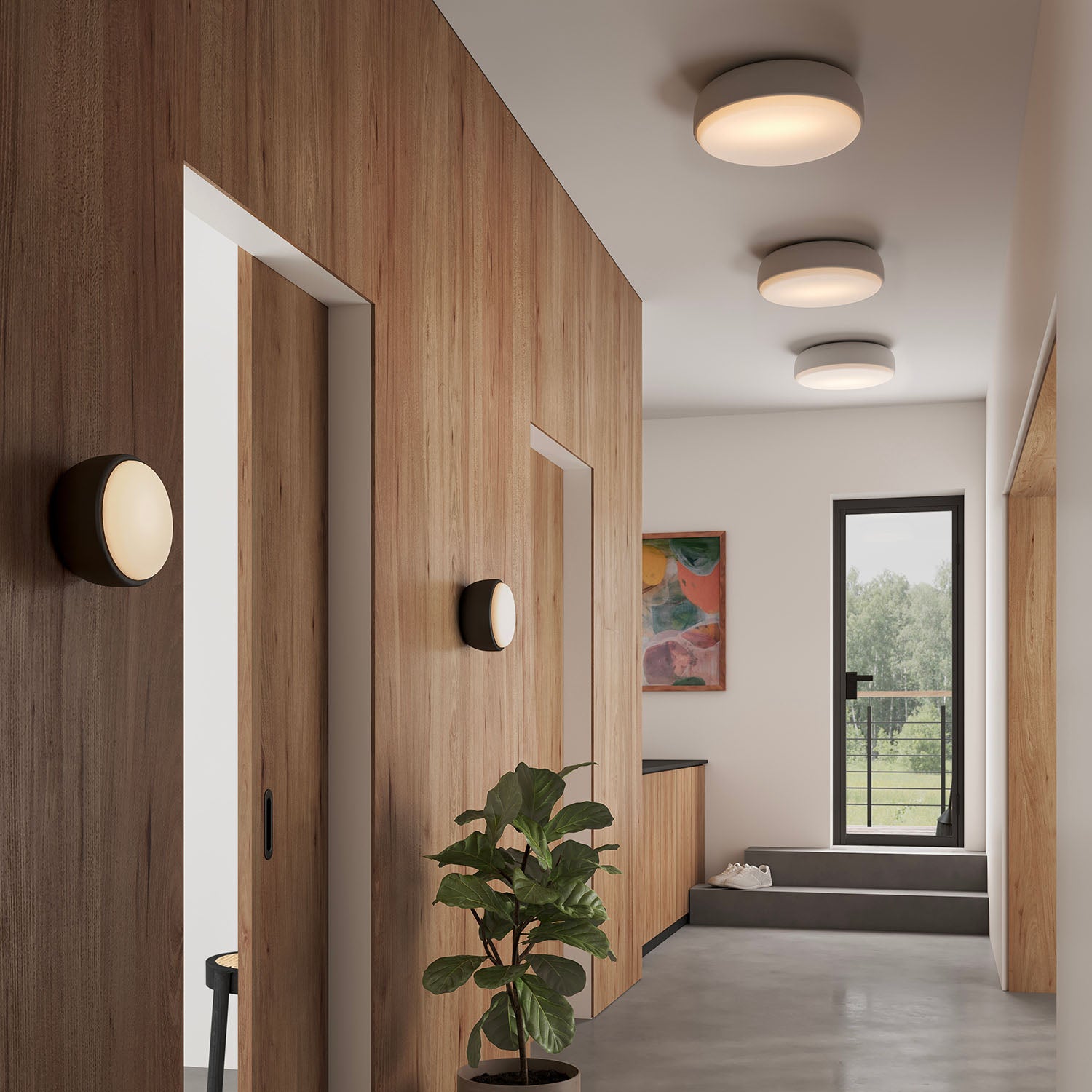
In a low mezzanine, bulky or hanging fixtures that are too low should be avoided. Compact lamps, adjustable spotlights, wall lights, or cordless lamps can then be more practical than a large central fixture.
The goal is to create lighting suited to daily life. A pleasant mezzanine is not only well lit: it must be comfortable depending on the time of day and the activity being done.
Lighting the lower part under the mezzanine
The area under the mezzanine is often the most delicate to light. It rarely benefits from the full height of the main volume and can quickly seem dark, especially if the mezzanine structure absorbs the light.
A lighting under mezzanine must be sufficiently present to make the space pleasant, but it should not give the impression of a ceiling that is too low. Therefore, discreet, well-integrated fixtures adapted to the available height should be favored.
This area can accommodate a sofa, a desk, a dining corner, storage, or an entrance. In each case, the lighting should suit the use. For a desk under the mezzanine, functional lighting is needed. For a relaxation corner, softer light will suffice.
It’s often useful to combine subtle general lighting with a supplementary source. This avoids overly dark areas while maintaining a comfortable atmosphere.
Light the staircase and mezzanine access points
The staircase is a key point in mezzanine lighting. It must be clearly visible because it connects two levels and can be hazardous if the steps are poorly lit.
A mezzanine staircase lighting should clearly identify the steps, handrail, and level changes. The light shouldn’t be too dim, but it also shouldn’t cause glare when going up or down.
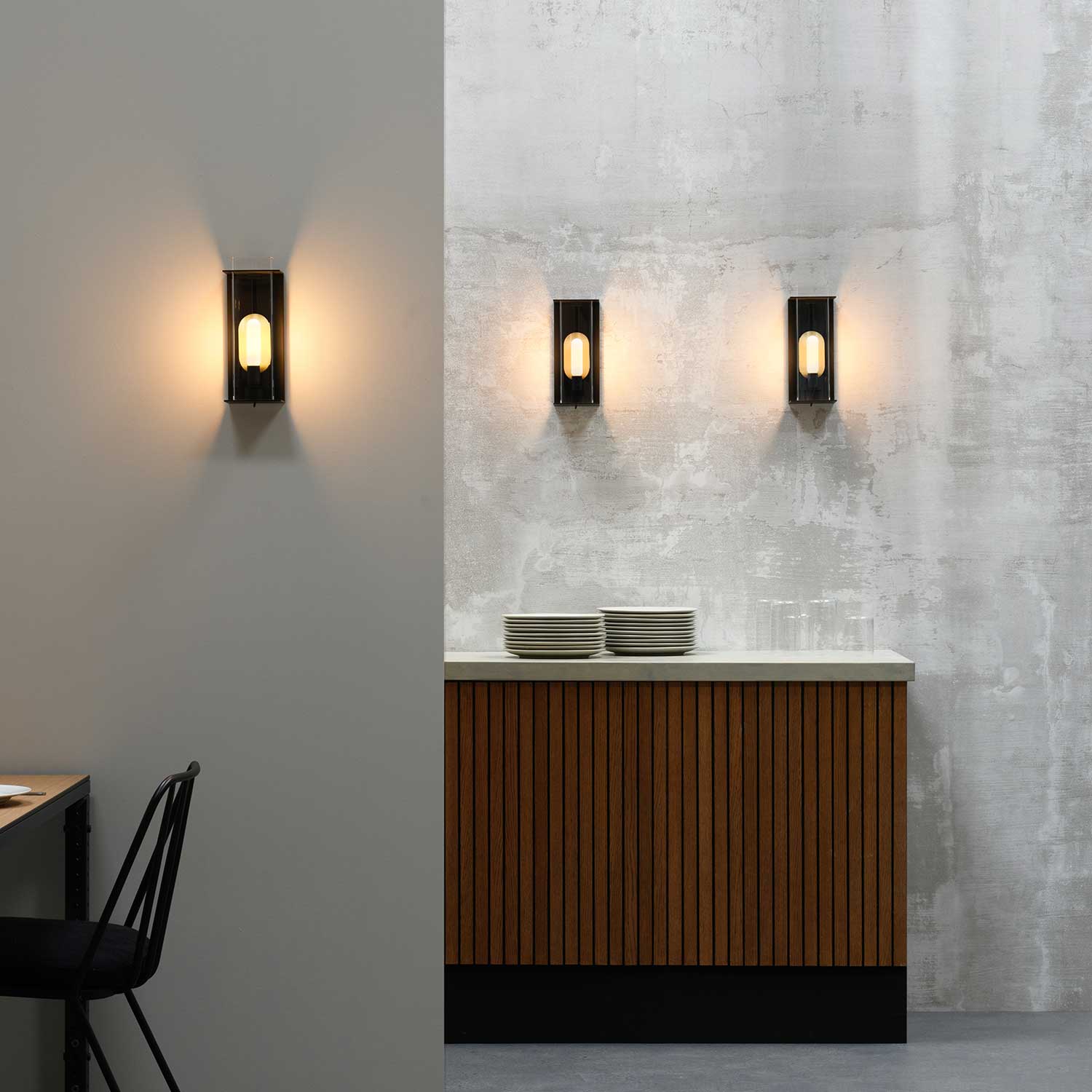
Several options can be considered: wall lighting along the stairs, spots aimed at the steps, indirect lighting, or a source near the landing. The choice depends on the layout and available electrical outlets.
In an open space, staircase lighting also contributes to the overall ambiance. It can highlight the mezzanine’s structure, emphasize a railing, or create a subtle light path between the two levels.
Install spots to target specific areas

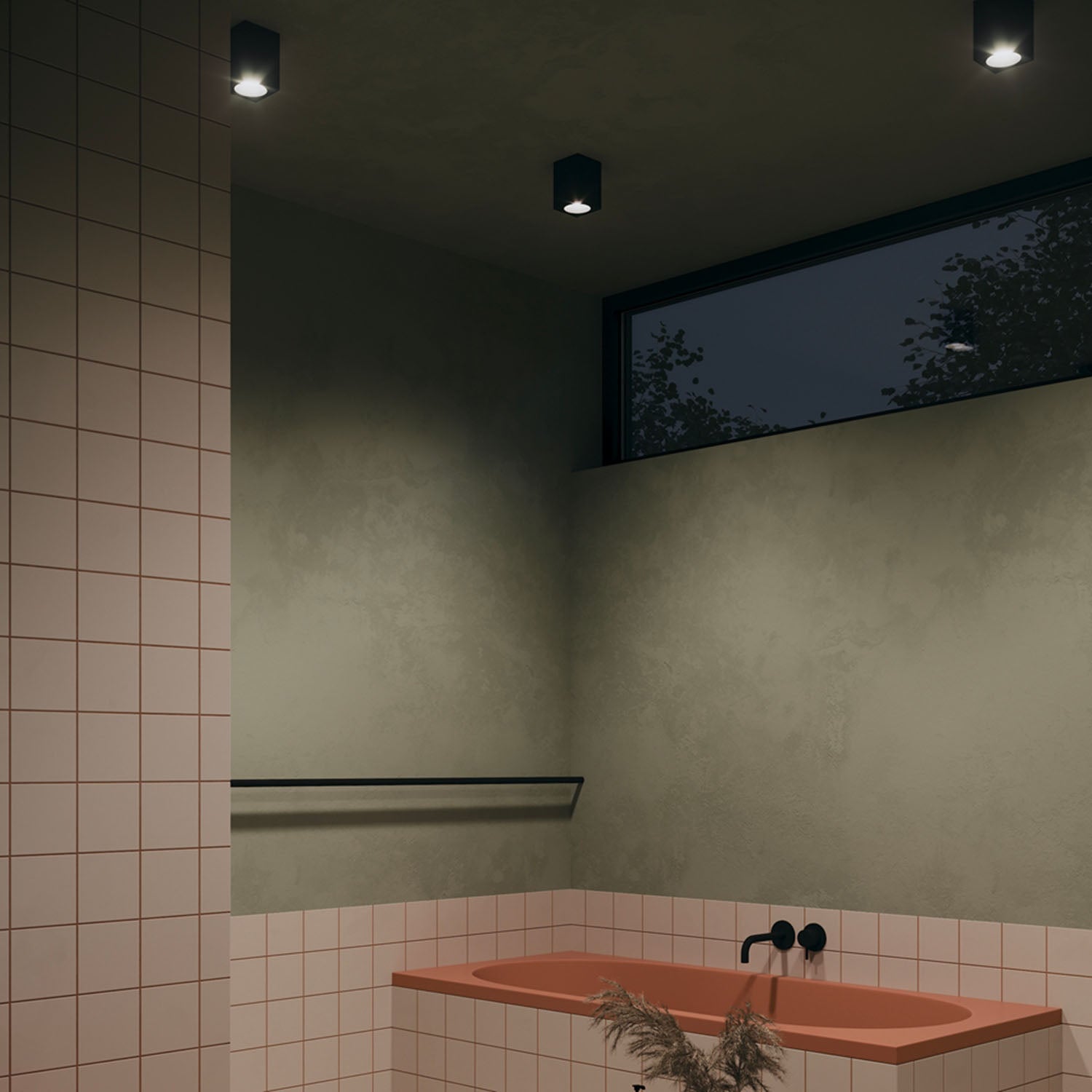
Spots are particularly useful in a mezzanine because they direct light to specific areas. They can illuminate a staircase, a desk, a bookshelf, a space under the mezzanine, or a wall to highlight.
Adjustable spots for mezzanines allow you to adapt the light to the room’s layout, especially when the space has height differences or hard-to-light angles.
A mezzanine spot must be well oriented to avoid glare. In an open space, a direct source can be visible from below or from the mezzanine. So, consider the diffusion angle and the users’ positions.
Spots are also useful when it’s not possible to install a large fixture. They offer a discreet, precise, and adjustable solution, especially in spaces with limited ceiling height.
Add table lamps for a cozier atmosphere
In a mezzanine, table lamps are very useful for creating a more intimate and accessible light. They allow you to add a light point without changing the entire electrical installation, while bringing a warmer ambiance.
A table lamp for mezzanine can be placed on a bedside table, desk, shelf, or low piece of furniture. It provides ideal supplementary light for reading, working, or creating a softer atmosphere in the evening.
Table lamps are especially suitable for mezzanines used as bedrooms or reading corners. They allow you not to rely solely on general lighting, which is often too far away or too intense for relaxing moments.
They are also practical when the mezzanine is low. Instead of installing a hanging fixture, you can create several small light points at usable height, which are more comfortable and easier to control.
Using wireless lamps in a mezzanine that is hard to connect
In some mezzanines, electrical connections are limited. It can be difficult to add a wall light, ceiling light, or light point without work. In this case, wireless lamps can provide a simple and flexible solution.
Wireless lamps for mezzanines allow you to add a light source where there is no outlet or direct electrical connection. They are useful on a bedside table, shelf, desk, or reading corner.
A successful mezzanine light must be practical for everyday use. If you have to cross the space in the dark to reach a switch, the lighting is not really suitable. Wireless lamps allow you to bring the light closer to where it’s needed.
They are also suitable for mezzanines added later, where electricity was not planned from the start. They help improve comfort without requiring major work.
What color temperature should you choose for a mezzanine?
The color temperature depends on the use of the mezzanine. For a bedroom or relaxation area, warm light is often preferable. It creates a softer, more comfortable atmosphere, especially in the evening.
For an office or workspace, a slightly more neutral light may be more suitable. It helps to better distinguish details, reduce eye strain, and maintain good concentration.
Avoid strong contrasts between the mezzanine and the rest of the room. If the mezzanine’s light is very cool while the living room is lit with warm light, the whole can seem less coherent.
In an open volume, light visually flows from one space to another. The color temperature should therefore be chosen with some harmony so that the mezzanine naturally integrates with the rest of the room.
Mistakes to avoid when lighting a mezzanine
The first mistake is lighting only the main volume, without considering the mezzanine itself. A large pendant light can be aesthetic, but it does not always suffice to light an office, bedroom, or reading nook located up high.
The second mistake is forgetting the area under the mezzanine. This part can quickly become dark if no specific lighting is planned. It should be treated as a true separate space.
The third mistake is choosing a fixture that is too low or too bulky. In a mezzanine, the available height may be limited. A poorly proportioned fixture can hinder movement or visually weigh down the space.
The fourth mistake is neglecting the stairs. The steps must be clearly visible, especially if the mezzanine is used daily. Too little lighting can make access less comfortable.
Finally, avoid light that is too direct or too dazzling. In an open volume, a poorly directed source can be visible from several angles. Visual comfort must remain a priority.
Choosing your lighting fixtures with La Lumiere
Lighting a mezzanine requires thinking about the space as a whole: main volume, upper part, lower area, access, stairs, and daily uses. A single light source rarely suffices to create comfortable and well-distributed lighting.
At La Lumiere, we offer lighting fixtures suited for mezzanines, open volumes, and atypical spaces: spotlights, table lamps, cordless lamps, and supplementary solutions to better distribute light according to needs.
To choose well, you first need to define the use of the mezzanine. A bedroom, an office, or a reading nook do not require the same lighting. By combining several sources, it becomes possible to create a pleasant, practical space perfectly integrated with the rest of the room.

Leave a comment
This site is protected by hCaptcha and the hCaptcha Privacy Policy and Terms of Service apply.