
Which floor lamp provides the best lighting?
Choosing a floor lamp is not just about finding a beautiful light fixture to complement a decoration. The real question is often more practical: which floor lamp lights a room, a living room, an office, or a reading corner best? Not all models diffuse light in the same way, even when they appear similar.
A floor lamp that lights best is not necessarily the tallest, most powerful, or most visible. It is the one that matches the intended use: lighting an entire room, providing auxiliary light, reading comfortably, highlighting a sofa, complementing a ceiling light, or creating a softer ambiance.
To choose well, you need to consider several criteria: luminous power, diffusion, height, orientation, color temperature, type of lampshade, and the room in which the floor lamp will be installed.
Summary
- Can a floor lamp light an entire room?
- Luminous power: an important criterion, but not sufficient
- The indirect lighting floor lamp: the most effective for general lighting
- Which floor lamp should you choose to properly light a living room?
- The reading floor lamp: ideal for reading without tiring the eyes
- Which floor lamp to choose for an office?
- The industrial floor lamp: powerful, decorative, and functional
- Why does the direction of the light change everything?
- What color temperature should you choose for a floor lamp?
- Mistakes to avoid for proper lighting with a floor lamp
- Choosing your floor lamp with La Lumiere

Can a floor lamp light an entire room?
A floor lamp can effectively light a room, but it all depends on its design. Some models are designed to create a soft ambiance, while others can truly complement or replace general lighting in a reasonably sized room.
To light an entire room, it is best to choose a floor lamp capable of widely diffusing light. Models directed towards the ceiling, powerful LED floor lamps, or floor lamps with very diffusing lampshades are generally more suitable than a decorative model with very localized light.
A floor lamp to light a room must also be well placed. Installed in a dark corner, near a light wall, or close to a sofa, it can transform the perception of the space. On the other hand, a floor lamp that is too low, too enclosed, or too oriented towards the floor will have a more limited impact.
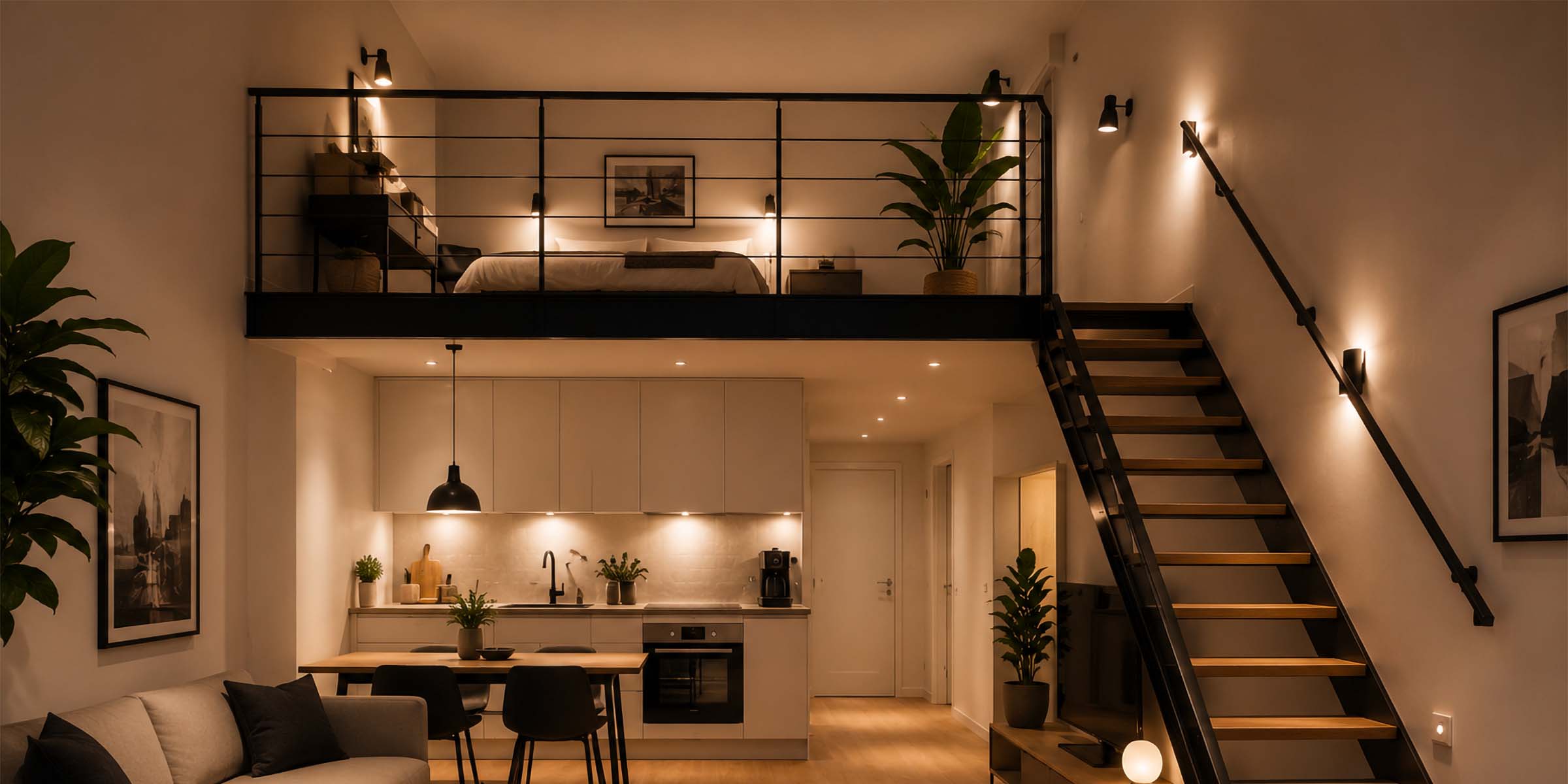
It is also important to keep in mind that a floor lamp rarely works alone in a large room. In a living room, for example, it is often more effective when it complements a ceiling light, a pendant, wall sconces, or auxiliary lamps. The goal is to create multiple levels of light.

Luminous power: an important criterion, but not sufficient
Luminous power is often the first criterion looked at by customers. It is important because a floor lamp that is too weak will not be able to properly light a dark room. But it is not enough to determine if the light fixture illuminates well.
A powerful floor lamp can produce a lot of light, but if that light is poorly directed, too concentrated, or too dazzling, the result can be uncomfortable. Conversely, a less powerful but better diffused model can seem more pleasant and more effective in a living room.
The shape of the diffuser, the height of the floor lamp, the direction of the light source, and the color of the walls all play a major role. A floor lamp that lights toward the ceiling can give the impression of more expansive light, while a model directed downward mainly lights a specific area.
Before choosing, you should ask yourself what you really expect from the floor lamp: lighting the entire room, creating ambiance, reading, working, highlighting an armchair, or compensating for a dark area. The best choice always depends on the intended use.
The indirect lighting floor lamp: the most effective for general lighting
To widely illuminate a room, the indirect lighting floor lamp is often one of the most effective solutions. It directs light toward the ceiling or a wall, and then this light reflects throughout the room. The result is softer, more even, and less harsh than a direct source.
A indirect lighting floor lamp is particularly interesting in a living room, bedroom, office, or room without a ceiling light. It creates comfortable general lighting without multiplying visible spots or sources.
This solution works very well when the walls or ceiling are light-colored, as they reflect light better. In a room with dark walls, the effect will be more subdued but sometimes less bright. You will then need to choose a sufficiently powerful model or supplement it with another source.
The indirect floor lamp is also appreciated for its visual comfort. Since the light source is not directly in the line of sight, glare is limited. It’s a good choice for rooms where you want enveloping, pleasant light on a daily basis.

Which floor lamp should you choose to properly light a living room?
In a living room, the floor lamp often needs to meet several needs: lighting a sofa, creating ambiance, supporting reading, complementing a ceiling fixture, or highlighting a corner of the room. The choice therefore depends on the living room’s layout.
A bright living room floor lamp can be used near a sofa, in a corner, next to an armchair, or behind a coffee table. It provides very useful additional light, especially when the main lighting is insufficient.
For a living room, a bright living room floor lamp should ideally emit a pleasant light, neither too dim nor too harsh. A lamp that is too decorative may lack effectiveness, while one that is too technical can disrupt the atmosphere. It’s important to find a balance between style and lighting performance.
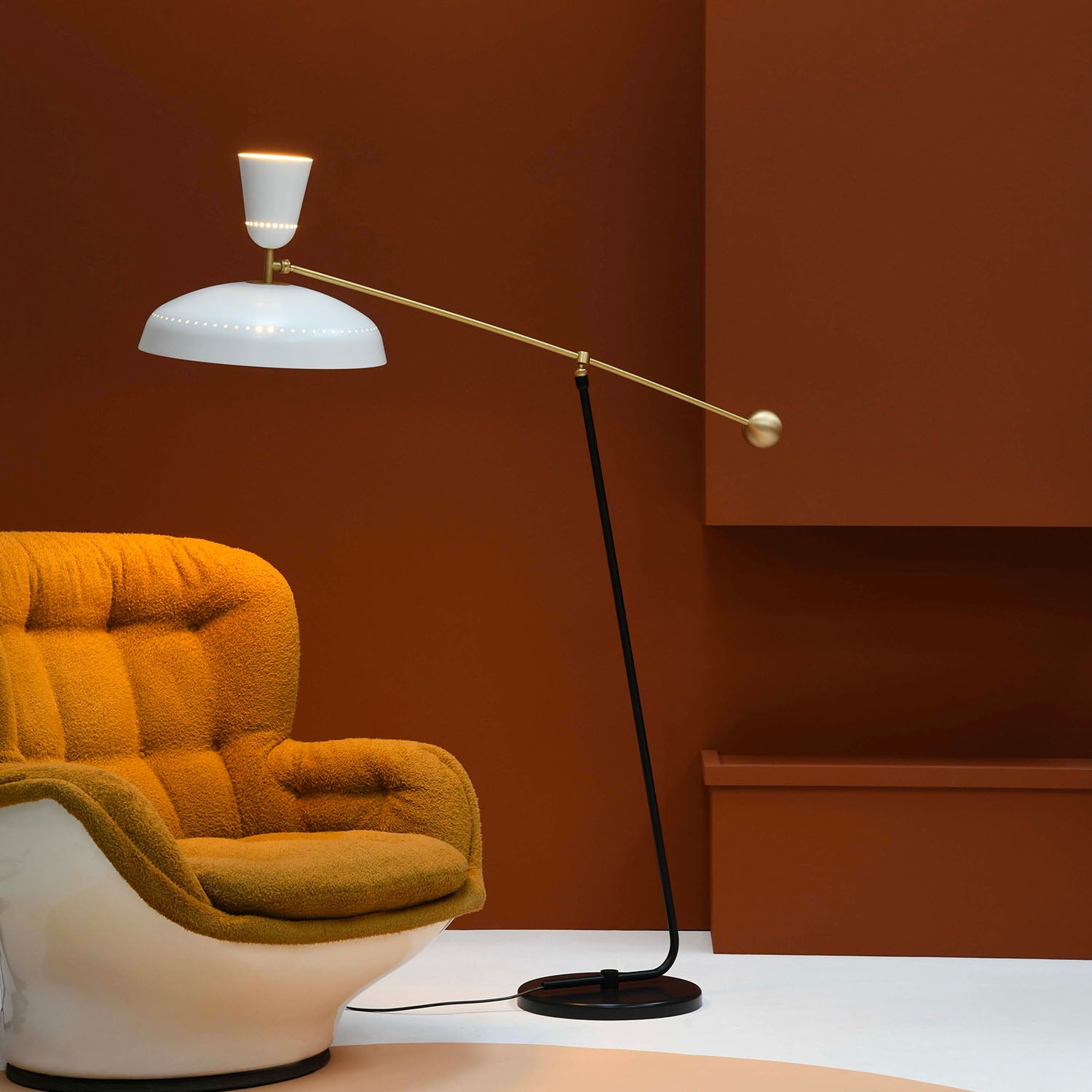
Arc floor lamps are great for lighting a coffee table or sofa without installing a ceiling fixture. Straight floor lamps are easier to place in a corner. Floor lamps with multiple light sources allow you to vary the ambiance depending on the time of day.
In a living room, the floor lamp that lights best is often the one that intelligently complements the other lights. It does not necessarily have to light everything alone, but it should improve comfort and add depth to the room.
The reading floor lamp: ideal for reading without tiring the eyes
For reading, the best floor lamp is not the one that lights the entire room. Rather, it needs directed, precise, and comfortable light. This is the role of the reading floor lamp, often equipped with an adjustable arm or head.
A reading floor lamp allows you to direct light toward a book, an armchair, or a reading area without unnecessarily lighting the entire room. It is especially suitable near a sofa, armchair, bed, or reading nook.
To read comfortably, the light must be strong enough but not dazzling. It should fall on the page or work area without creating direct glare in the eyes. The ability to adjust the lamp head is therefore very important.
Some floor lamps combine indirect light for general ambiance and an integrated reading light. This type of model is very practical because it meets two different needs with a single fixture.
Which floor lamp to choose for an office?
In an office, the floor lamp should help work comfortably. It can complement a desk lamp, soften contrasts in the room, or compensate for insufficient main lighting. The goal is to avoid eye strain, annoying shadows, and screen glare.
A desk floor lamp for reading and working adds a vertical light source, useful for balancing the lighting around the workstation.
A desk floor lamp must be chosen carefully. Too weak a light can tire the eyes, while too direct a light can create glare on a screen. Ideally, the light should be directed indirectly or laterally, depending on the desk layout.
In a workspace, it is also important to avoid a room that is too dark around the screen. A strong contrast between a bright screen and a dimly lit room can become uncomfortable. A well-placed floor lamp helps balance the overall lighting atmosphere.
For a home office, an adjustable model, indirect light, or one equipped with a dimmer can be very useful. It allows you to adapt the light according to the moment: focused work, reading, video conferencing, or a softer ambiance at the end of the day.

The industrial floor lamp: powerful, decorative, and functional
The industrial floor lamp is often sought after for its distinctive style: metal, simple lines, articulated arms, technical lampshade or workshop-inspired. But it can also be a very good choice to effectively light a room, provided you choose the right model.
An industrial floor lamp to light a characterful room can suit a living room, office, library, or workspace, especially when you want light that is both decorative and functional.
An industrial floor lamp often lights more directly than a very diffusing model. It is therefore interesting for lighting a specific area: armchair, desk, side table, reading corner, or decorative space. Some adjustable models allow you to direct the light precisely.
However, you need to be careful about glare. A metal lampshade or a too visible source can create harsh light if the floor lamp is poorly positioned. For daily use, it is better to choose a suitable bulb and place the fixture to avoid direct light in the eyes.
The industrial floor lamp is therefore a good choice when you are looking for a strong, useful, and decorative light. It lights well when used for a specific area, rather than as the sole light source in a large room.
Why does the direction of the light change everything?
The direction of the light is one of the most important criteria to know if a floor lamp lights well. Two models with similar power can give very different results depending on whether they light upwards, downwards, sideways, or in multiple directions.
A floor lamp directed upwards creates a more general and softer light. It is suitable for lighting a room or complementing a main light source. A floor lamp directed downwards illuminates a specific area, such as an armchair, table, or reading corner.
An adjustable model offers more flexibility. It allows you to change the direction of the light according to your needs: reading, ambiance, work, or highlighting a piece of furniture. It’s an interesting solution in multifunctional rooms.
You should also consider the height of the floor lamp. A very low model will have a limited light range. A taller model can better distribute light throughout the room, especially if it has a wide diffuser or a head directed towards the ceiling.

What color temperature should you choose for a floor lamp?
Color temperature strongly influences visual comfort. A floor lamp can be powerful, but if the light is poorly chosen, the ambiance can become cold, tiring, or unpleasant.
For a living room, bedroom, or relaxation corner, warm light is often more suitable. It creates a comfortable atmosphere, pleasant in the evening and more welcoming. For an office or reading area, a slightly more neutral light can be useful to better distinguish details.
A powerful LED floor lamp can be very effective, but it must offer light suited to the use. Light that is too white in a living room can feel technical, while light that is too warm in an office may lack precision.
When possible, a dimmer or adjustable bulb can be a real advantage. It allows you to adapt the intensity depending on the moment: strong light for reading or working, softer light for watching a movie or creating an end-of-day ambiance.
Mistakes to avoid for proper lighting with a floor lamp
The first mistake is choosing a floor lamp solely for its style. A beautiful model can be very decorative but may not provide enough light. Before buying, check its actual function: ambient light, reading light, general light, or targeted lighting.
The second mistake is neglecting diffusion. A lampshade that is too closed, a source that is too low, or light that is too concentrated can greatly limit the floor lamp’s effectiveness. To light a room, you need wider diffusion.
The third mistake is placing the floor lamp in the wrong spot. A very bright model installed in an already well-lit area is less useful than a floor lamp placed in a dark corner, near a wall, or close to a living space.
The fourth mistake is choosing light that is too cold or too strong. A floor lamp should provide comfort. If it dazzles or makes the ambiance too harsh, it will not fulfill its role properly.
Finally, avoid trying to light everything with a single floor lamp in a large room. In a spacious living room, it is often better to combine several light sources to create more balanced lighting.
Choosing your floor lamp with La Lumiere
The best floor lamp depends on the room, the use, and how the light is distributed. For general lighting, an indirect or powerful model will be more suitable. For reading, a reading or adjustable floor lamp will be more comfortable. For a living room, you need to find the right balance between ambiance, style, and efficiency.
At La Lumiere, we offer floor lamps designed for different uses: living room, office, reading corner, decorative space, or a more pronounced ambiance. The goal is to choose a model that is not only aesthetic but truly suited to your lighting needs.
Before choosing, it is useful to ask yourself a simple question: should the floor lamp illuminate the entire room, a specific area, or simply create an ambiance? The answer helps select a more appropriate, pleasant, and effective lighting fixture for everyday use.

Leave a comment
This site is protected by hCaptcha and the hCaptcha Privacy Policy and Terms of Service apply.