
How to Light a Room Without a Window?
Lighting a room without windows requires more thought than a naturally bright room. Without an opening to the outside, the light doesn’t vary throughout the day, doesn’t come from any specific direction, and doesn’t naturally create relief. The room can then seem dark, flat, stifling, or artificial, even with a powerful ceiling light.
To successfully light a room without windows, it’s not enough to just add more light. You need to create a real lighting strategy, with multiple sources, an appropriate color temperature, well-enhanced walls, and distribution that adds depth. The goal is to make the room comfortable, readable, and pleasant to live in, even without natural light.
In this article, we explain how to light a windowless room, whether it’s a bathroom, hallway, entrance, dressing room, office, spare bedroom, or basement.
Summary
- Why does a room without windows often feel uncomfortable?
- Multiply light sources rather than relying solely on a ceiling light
- Create soft and even general lighting
- Add indirect lighting to give depth
- Using walls and ceilings to reflect light
- What color temperature should you choose in a room without windows?
- Lighting a bathroom without windows
- Lighting a hallway, entryway, or dressing room without windows
- Lighting an office without natural light
- Mistakes to avoid in a room without a window
- Choosing your lighting fixtures with La Lumiere

Why does a room without windows often feel uncomfortable?
A room without windows lacks natural light, but that’s not its only problem. It also lacks variation, direction, and depth. In a room with windows, light enters from one side, changes throughout the day, creates soft shadows, and naturally gives volume relief. In a windowless room, all of this must be artificially recreated.
That’s why a single central light source can quickly produce disappointing results. Even if the ceiling light is powerful, the room can remain cold or unpleasant. The light falls from the ceiling, illuminates everything uniformly, but doesn’t necessarily create a sense of space.
A room without natural light can also highlight decoration flaws: dark walls, low ceilings, unclear corners, bulky furniture, or lack of a focal point. Lighting should therefore help visually open the space, soften contrasts, and make the room more welcoming.
The right goal is not to turn the room into a very bright space at all costs, but to create well-distributed, comfortable, and believable lighting. A successful windowless room is one where you don’t immediately notice the lack of an opening.

Multiply light sources rather than relying solely on a ceiling light
In a room without windows, the first mistake is to think that a single powerful light fixture is enough. In reality, the more the light comes from a single source, the flatter or more artificial the effect can seem. To create a comfortable atmosphere, you need to multiply light points and give them different roles.
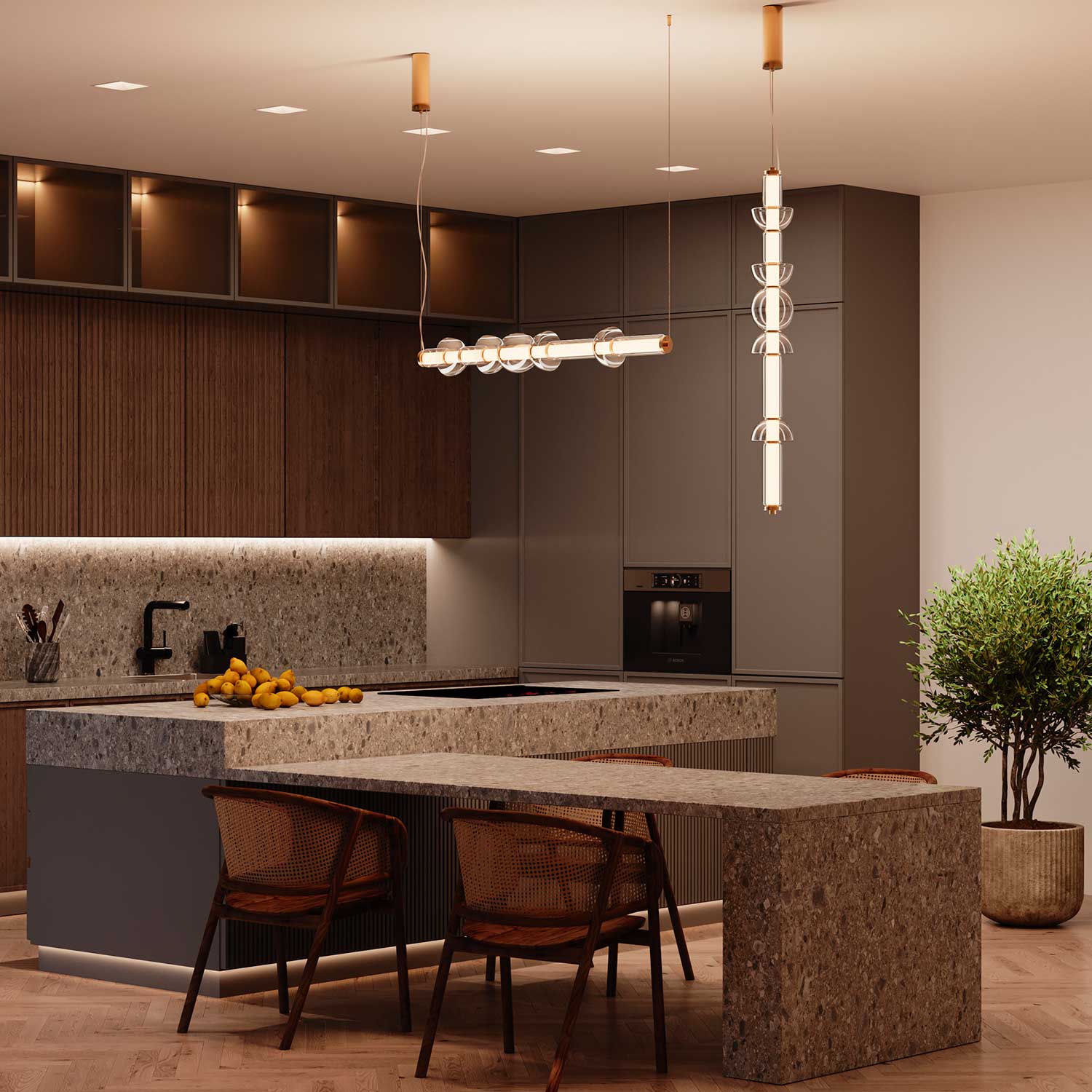
Successful lighting can combine general ceiling light, accent lighting in a corner, wall lighting, indirect lighting, or a lamp near a piece of furniture. This layering helps recreate a sense of depth, even in a windowless room.
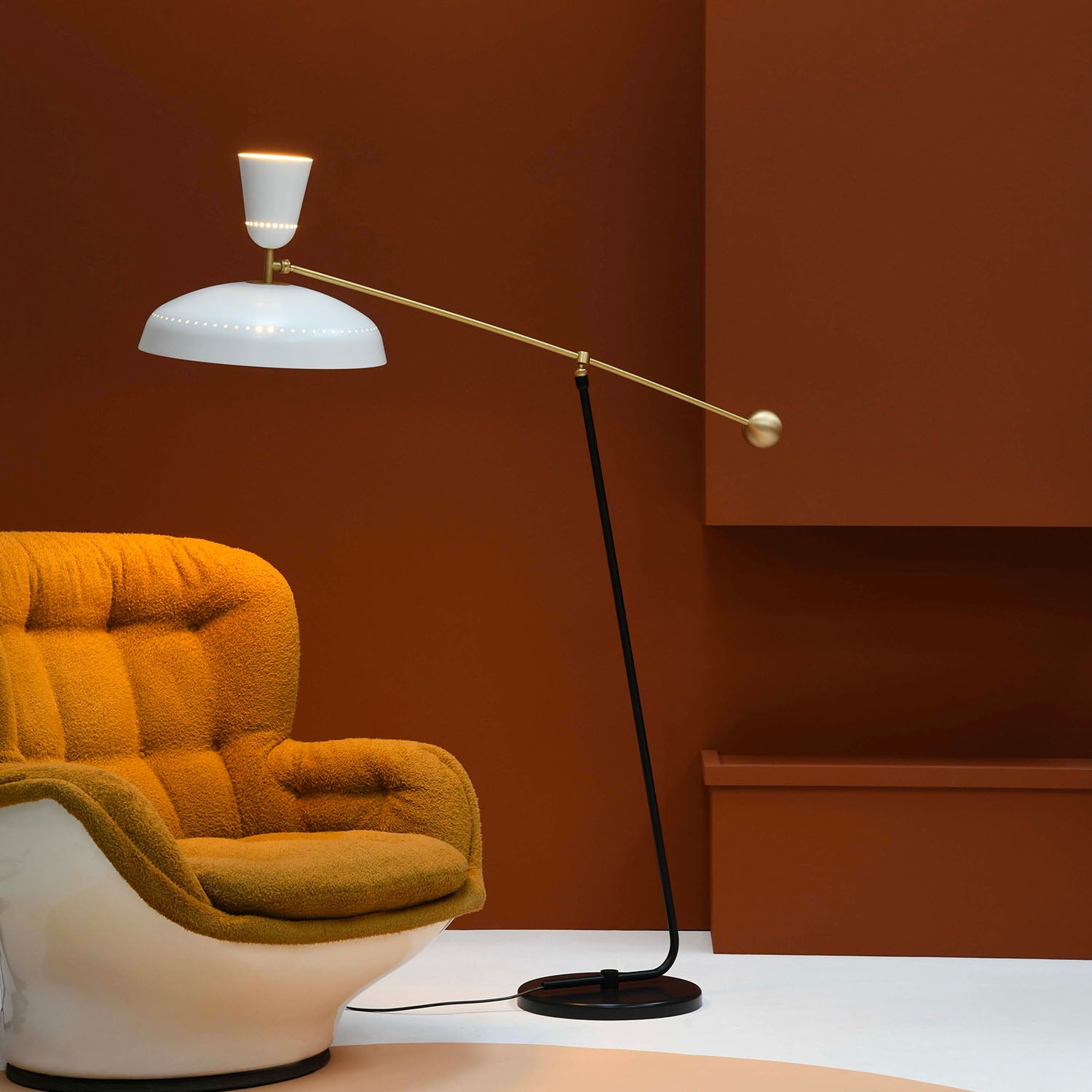
A modern floor lamp for a windowless room adds a vertical light source, ideal for giving depth to a living room, office, or spare bedroom without natural light.
The floor lamp is particularly useful in a windowless room because it lights at human height. It doesn’t just diffuse downward light from the ceiling: it creates a bright spot in the space, draws the eye, and makes the room more lively.

Create soft and even general lighting
General lighting remains essential in a windowless room. It allows easy movement, visibility of the entire space, and avoids overly dark areas. But it must be soft and well diffused to prevent a cold or overly technical feeling.
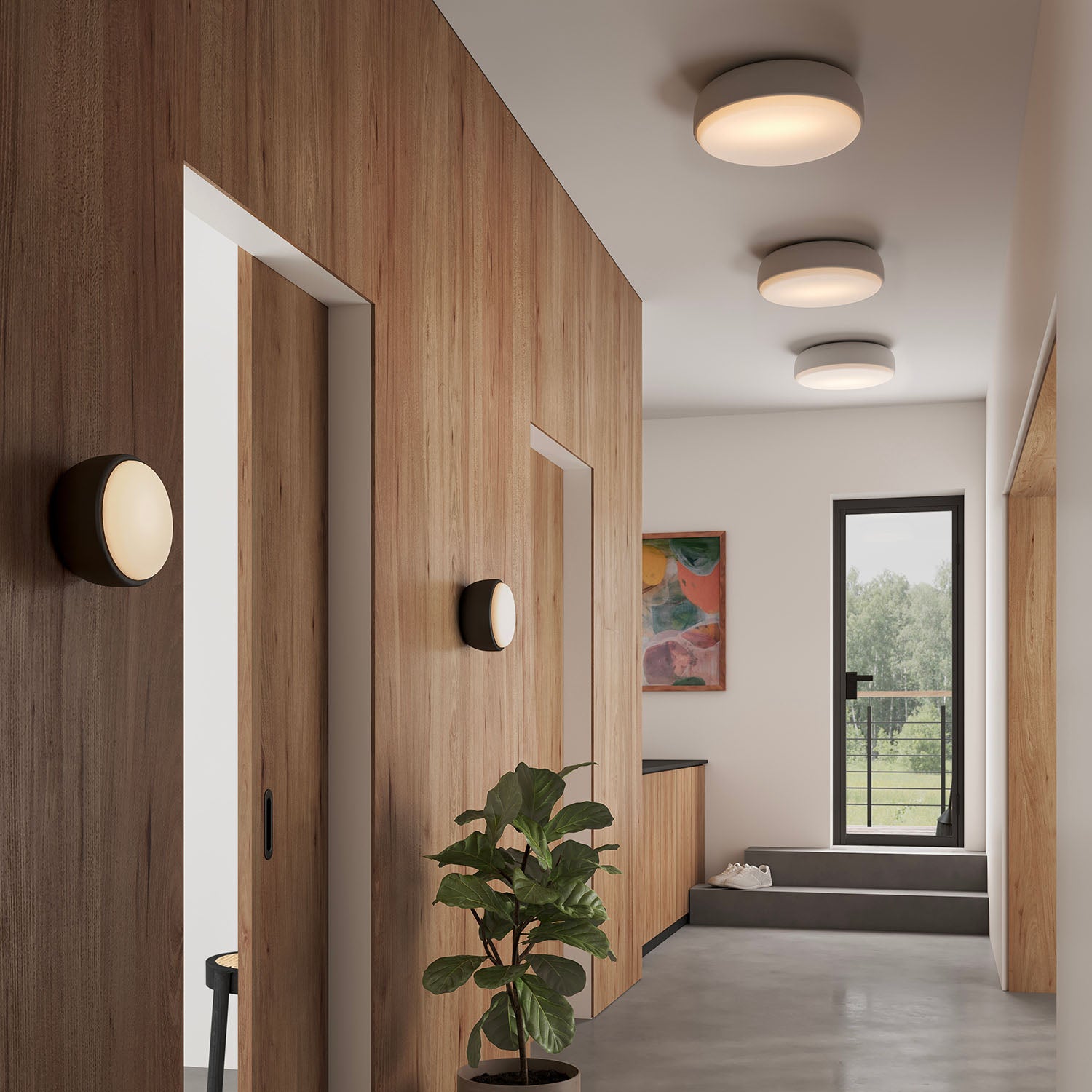
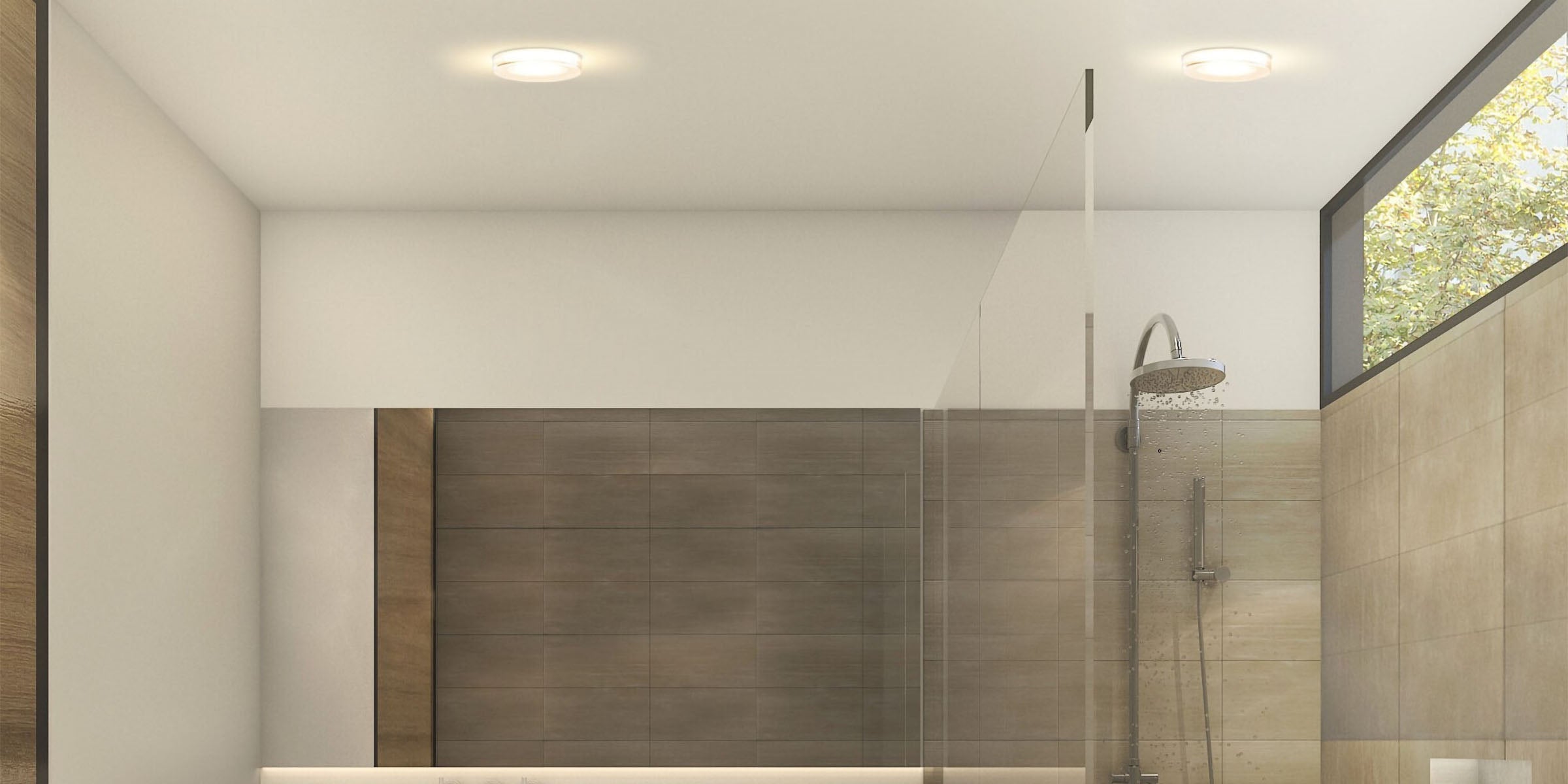
To create a comfortable light base, a designer ceiling light for a dark room can provide general lighting, provided the light is well diffused and soft enough to avoid a harsh effect.
The ceiling light should be chosen according to the size of the room, ceiling height, and use. In an entrance, hallway, or laundry room, a simple and effective solution can be favored. In an office, spare bedroom, or relaxation area, more attention should be paid to visual comfort.
Too direct general lighting can create harsh shadows under the eyes, harden shapes, and give an unwelcoming impression. Softer, better-distributed light or combined with other sources is often more pleasant.

Add indirect lighting to give depth
Indirect lighting is one of the best solutions to improve a windowless room. It involves directing light towards a wall, ceiling, niche, or reflective surface rather than directly towards the center of the room. The light then diffuses more softly and creates a more enveloping atmosphere.
In a windowless room, indirect lighting helps break the closed-box effect. It can highlight a wall, illuminate a dark corner, showcase a piece of furniture, or create a sense of height if the light is directed towards the ceiling.
This solution is particularly effective in hallways, entrances, spare bedrooms, windowless bathrooms, or offices without natural light. It avoids relying solely on a central ceiling light and provides a more subtle effect.
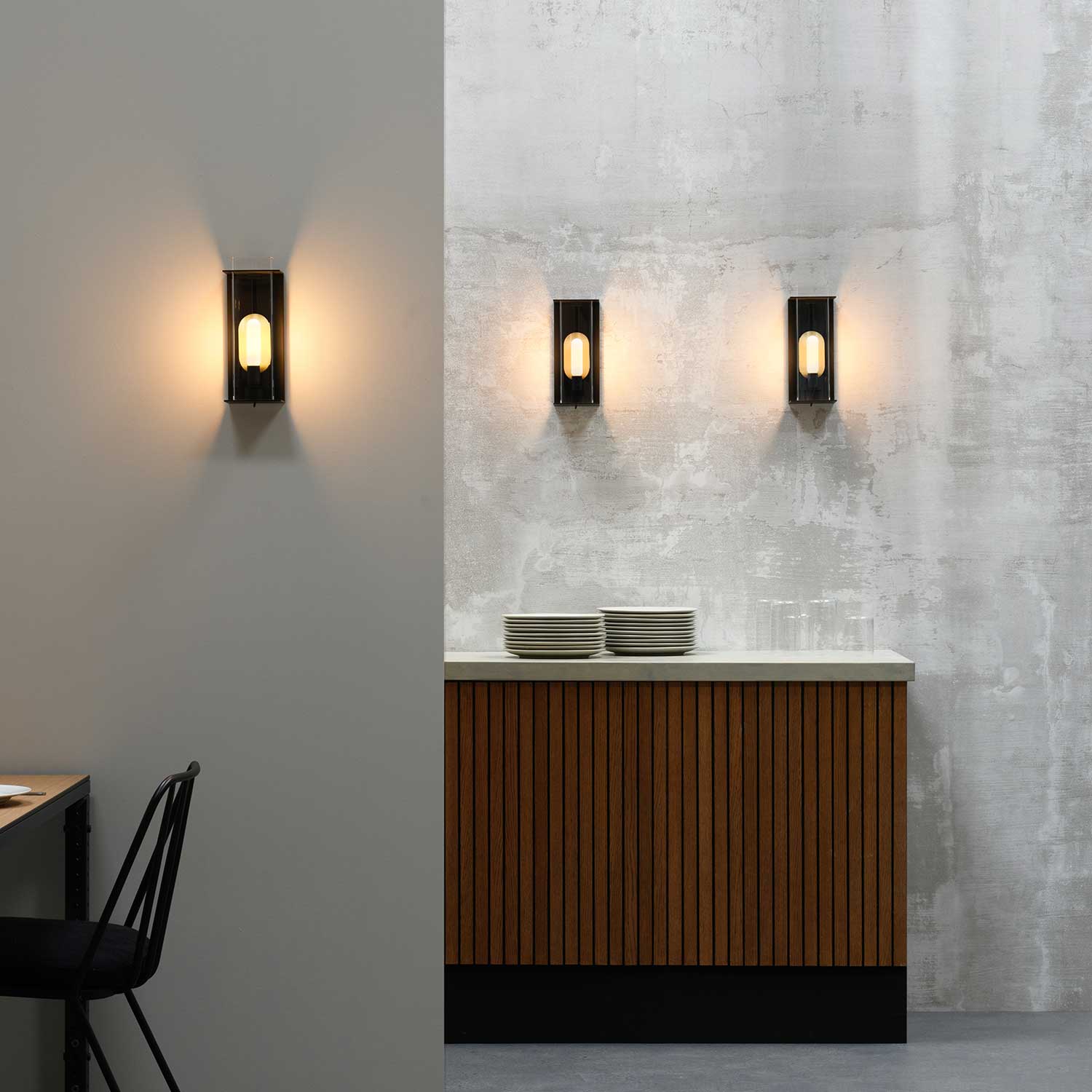
Indirect lighting can be achieved with a wall sconce, a floor lamp directed towards the wall, an integrated LED strip, a light behind a piece of furniture, or a diffusing ceiling light. The most important thing is to create light that visually enlarges the space instead of crushing it.
Using walls and ceilings to reflect light
In a room without windows, the walls and ceiling play an essential role. Since there is no natural light, interior surfaces become the main supports for diffusion. A light wall, a white ceiling, or a slightly satin finish can help distribute light better.
Conversely, very dark walls, a dark ceiling, or matte materials can absorb a large part of the light. This doesn’t mean you should avoid deep colors, but you need to compensate with better lighting design.
A dark room light fixture should not be chosen in isolation. You need to consider the colors, materials, furniture, and the room’s level of reflectivity. The same bulb will not produce the same effect in a white room as in a room painted dark green or terracotta.
To visually enlarge the space, it can be useful to light the walls rather than just the floor. Light directed at a wall creates a sense of openness and makes the room feel less closed off. The ceiling can also be used as a reflective surface to diffuse softer light.
What color temperature should you choose in a room without windows?
Color temperature is crucial in a room without windows. Since there is no natural light to balance the ambiance, the choice of light tone strongly influences the perception of the room.
Too cold a light can reinforce the feeling of an artificial space. It may be suitable in a technical room, but it risks making a living room, guest bedroom, or entrance feel unwelcoming. Conversely, too yellow a light can visually darken the space or give a less clear impression.
For a dark room without windows, warm or slightly neutral light is often preferable. It should be comfortable enough to create a pleasant atmosphere but bright enough not to emphasize the lack of natural light.
In a windowless office, a more neutral light can be useful to promote concentration. In a bathroom, balanced lighting helps maintain a natural appearance in front of the mirror. In a hallway or entrance, warm light can make the space feel more welcoming.
Lighting a bathroom without windows
Bathroom lighting without windows must be particularly well thought out, as this room requires both functional light and a pleasant ambiance. Without windows, the bathroom can quickly feel cold or closed off if the lighting is only central.
You need to provide sufficient general lighting, but also good lighting around the mirror. The mirror is an essential area for applying makeup, shaving, styling hair, or performing daily tasks. Poorly placed lighting can create shadows on the face and make use less comfortable.
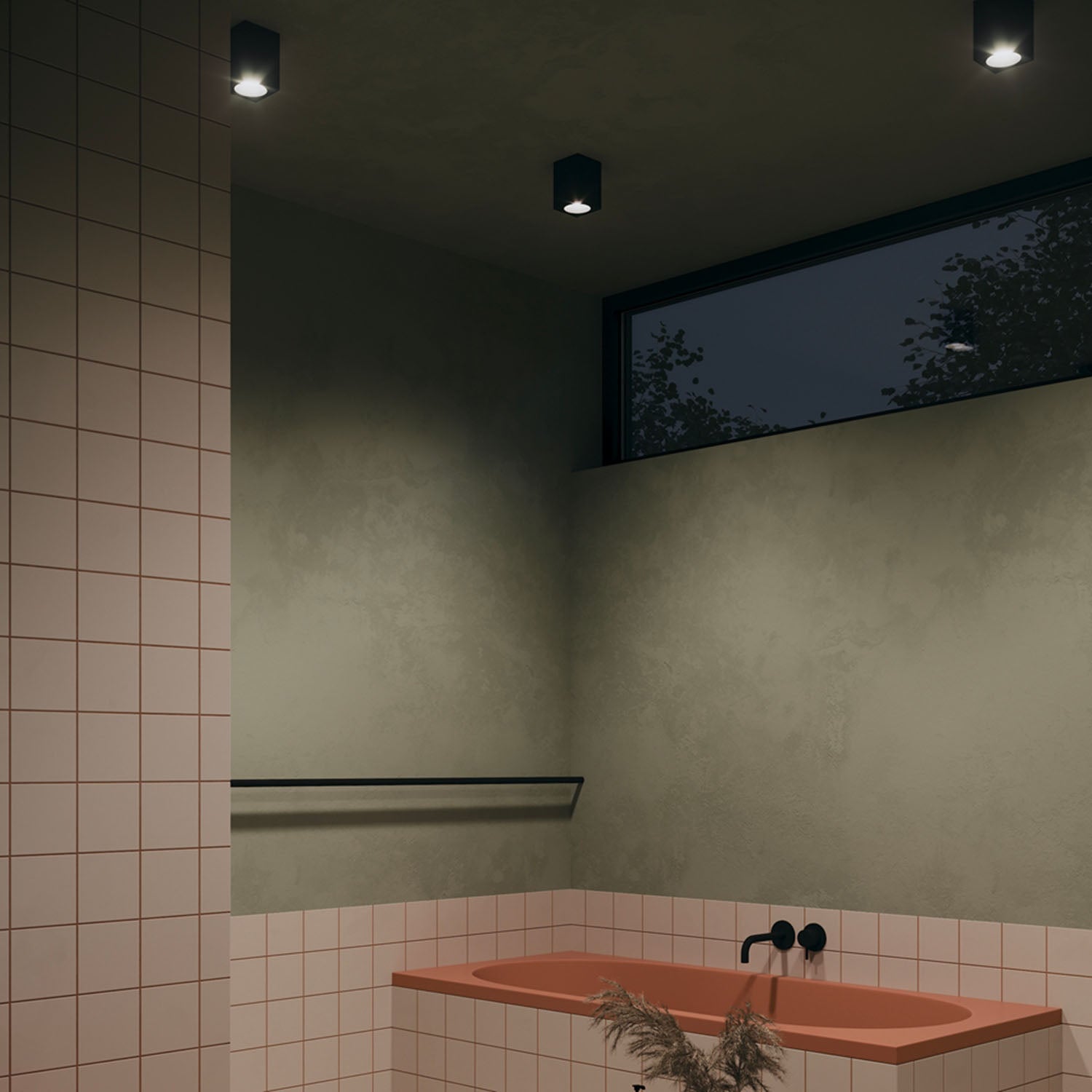
In a windowless bathroom, it is also interesting to add softer lighting for ambiance: indirect lighting, wall sconces, integrated lighting under a cabinet, or a discreet spotlight near a niche. This additional light avoids a too technical atmosphere.
Humidity must also be taken into account. Fixtures must be suitable for the bathroom, especially near the shower, bathtub, or sink. Safety and protection ratings should always be checked according to the location.
Lighting a hallway, entryway, or dressing room without windows
A windowless hallway lighting should make the passage clear without creating a too cold effect. In a long or narrow hallway, a single central source can emphasize the length and leave the ends in shadow. It is often better to distribute the light over several points or illuminate the walls.
In a windowless entryway, the lighting should be welcoming. It’s the first impression when entering the home. Too dim a light can feel unpleasant, while too white a light can make the space harsh. A well-diffused ceiling light, complemented by a wall light or floor lamp if space allows, can create a better balance.
In a windowless dressing room, the objective is more functional. You need to see clothes clearly, distinguish colors, and avoid shadowed areas in the closets. General lighting can be complemented by integrated lights or spotlights directed at the storage.
In these passage or storage areas, the lighting should be simple, effective, and comfortable. The goal is to make use smooth, without necessarily creating a highly decorative atmosphere.
Lighting an office without natural light
A windowless office lighting requires special attention. Working in a room without natural light can be tiring if the lighting is poorly designed. Strong contrasts, screen glare, and shadowed areas on the work surface should be avoided.
General lighting should be sufficient to avoid a feeling of confinement. But it should not be too harsh. Additional lighting on the desk is often necessary to create a more precise work area.
In a windowless office, it is interesting to create an artificial light direction. For example, light coming from one side, a wall, or a floor lamp can partly replace the feeling a window provides. This makes the space less flat than a simple central ceiling light.
The color temperature can be slightly more neutral than in a relaxation room to promote concentration. But avoid overly white light if the desk is used for long periods, as it can make the atmosphere uncomfortable.

Mistakes to avoid in a room without a window
The first mistake is choosing a very powerful fixture thinking it will compensate for the lack of a window. Too much direct light can make the room harsh, tiring, and artificial. It is better to distribute several sources rather than concentrate everything on the ceiling.
The second mistake is neglecting the walls. In a windowless room, walls can help reflect light and add depth. If you only light the floor or the center of the room, the space can remain visually closed off.
The third mistake is choosing an inappropriate color temperature. Light that is too cool can emphasize the technical room effect. Light that is too warm may lack clarity. The light tone should be adapted to the use: relaxation, passage, work, grooming, or storage.
The fourth mistake is forgetting accent lighting. A floor lamp, a table lamp, or indirect light can transform the perception of a windowless room. It is often these secondary sources that make the space more pleasant.
Finally, avoid uniform lighting everywhere. A room without a window needs depth. By varying sources, heights, and light directions, you achieve a more natural and comfortable result.
Choosing your lighting fixtures with La Lumiere
To properly light a room without a window, lighting should be considered as a composition. General lighting provides the base, indirect lighting adds depth, and complementary sources allow you to adapt the ambiance to the actual use of the room.
At La Lumiere, we offer ceiling lights, floor lamps, and fixtures suitable for dark rooms, windowless spaces, and renovation projects. The goal is to choose solutions that are consistent with the size of the room, its function, its colors, and the desired atmosphere.
A room without a window can become pleasant, comfortable, and elegant if the lighting is well thought out. The most important thing is not to increase the power, but to create balanced, well-distributed light that can add depth to the space.

Leave a comment
This site is protected by hCaptcha and the hCaptcha Privacy Policy and Terms of Service apply.