
DIY Lighting: Ideas, Tips, and Safety for Creating Your Custom Lighting
Creating your own lighting fixtures is a process that is both creative, economical, and decorative. DIY lighting allows you to customize the lighting according to your style, favorite materials, and the atmosphere you want in each room. Well-designed, they become true decorative elements while providing functional and pleasant light on a daily basis.

Why create a DIY lighting fixture?
Making your own lighting fixture offers complete creative freedom. Unlike a standardized product, homemade lighting perfectly adapts to your interior decoration, space constraints, and the desired lighting atmosphere.
Beyond the aesthetic aspect, DIY also allows you to value recycled materials, control your budget, and design a truly unique piece. This approach appeals increasingly to decoration enthusiasts seeking authenticity and personalization.
Find inspiration for a DIY project

Inspiration can come from many sources: nature, architecture, everyday objects, or decorating trends. Visual platforms are also an excellent starting point to imagine an original lighting fixture suited to your world.
It is recommended to first define the desired style: minimalist, industrial, bohemian, or contemporary. This choice will guide the materials, shapes, and color temperature of the light to ensure decorative coherence.
Materials needed to make a lighting fixture
The design of a DIY lighting fixture relies on a few essential elements: a suitable socket, a secure electrical cable, a compatible light source, and a decorative structure serving as a lampshade. Depending on the project, this structure can be made of wood, glass, metal, or recycled materials.
Simple tools are usually enough: screwdriver, wire cutters, wire strippers, and possibly a drill. Choosing a decorative LED bulb is recommended to obtain efficient, energy-saving, and long-lasting light.
Electrical safety and standards to follow
Safety remains a fundamental point when making a lighting fixture. All work must be done with the power off, using components that comply with current electrical standards. Connections must be properly insulated and securely fixed to avoid any risk of short circuit.
If in doubt, calling a professional is always preferable. A secure electrical assembly guarantees not only the protection of occupants but also the longevity of the created lighting fixture.
Adapt a DIY lighting fixture to each room

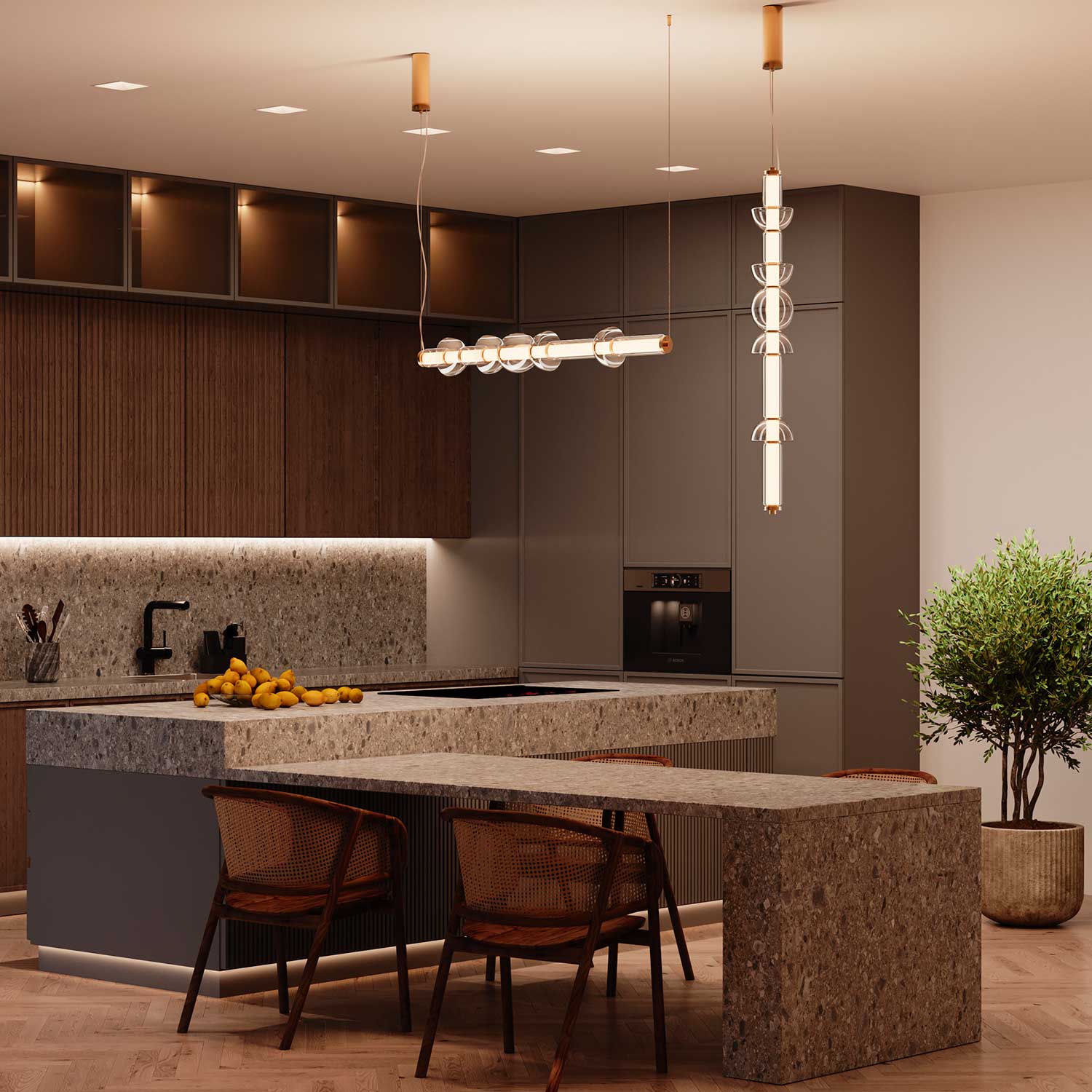
Each space in the home has specific lighting needs. In a kitchen, lighting must remain functional and precise, while a bedroom will favor softer, more enveloping light. The living room often benefits from a balance between ambient lighting and accent lighting.
Designing a DIY lighting fixture adapted to the room optimizes visual comfort while enhancing the decorative identity of the space. Color temperature, light intensity, and light diffusion must therefore be considered from the design phase.
Conclusion
DIY lighting fixtures are an ideal solution to personalize your interior while exploring your creativity. By combining material choices, lighting considerations, and safety rules, it is possible to design a unique, aesthetic, and functional lighting fixture.
Whether it is a simple first project or a more ambitious creation, DIY lighting opens the way to custom decoration where light becomes a true element of expression.


Leave a comment
This site is protected by hCaptcha and the hCaptcha Privacy Policy and Terms of Service apply.