
Which lighting to choose for a dressing room? Practical solutions and advice
The dressing room is a space where visual precision is essential. Unlike a living room or bedroom, it’s not just about creating a pleasant atmosphere but achieving functional lighting that is true to colors and evenly distributed. Poor lighting can create shadows, distort the perception of fabrics, and make daily use uncomfortable. Conversely, well-designed dressing room lighting transforms this space into a truly organized, practical, and elegant room.

Why lighting is essential in a dressing room
Choosing an outfit, matching colors, or distinguishing fabrics requires even and precise light. Functional interior lighting allows you to properly see all the clothes, even in the deep parts of shelves or wardrobes.
Poorly lit dressing rooms often lead to multiple improvised light sources. It’s better to plan from the start a global strategy combining general lighting and targeted lighting.
General lighting: the essential foundation
The first step is to ensure uniform light throughout the room. Ideally, choose several light points rather than a single central source, which creates shadows when you stand in front of your storage.
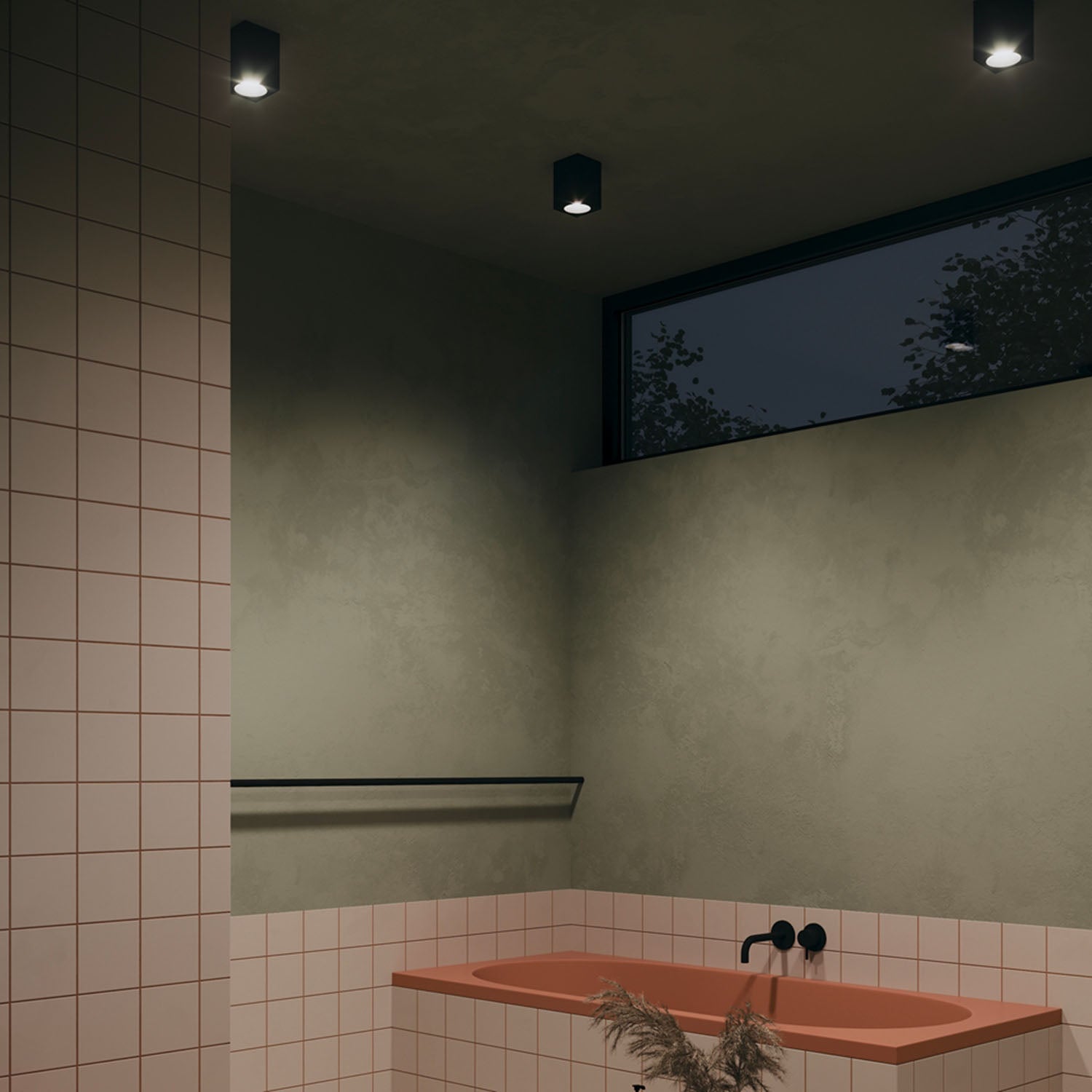
Dressing room spotlights are particularly suitable because they provide even diffusion and can be directed toward strategic areas. A regular ceiling layout guarantees balanced lighting.
You can, for example, include suitable models from our spotlights collection, which offer both precision and visual discretion.

Lighting storage areas
Beyond general lighting, it’s essential to add LED lighting for dressing rooms directly at the wardrobes and shelves. This avoids dark spots and greatly improves daily comfort.
LED strips integrated under shelves, lighted rods, or recessed lighting in vertical supports provide direct light on clothes without glare.
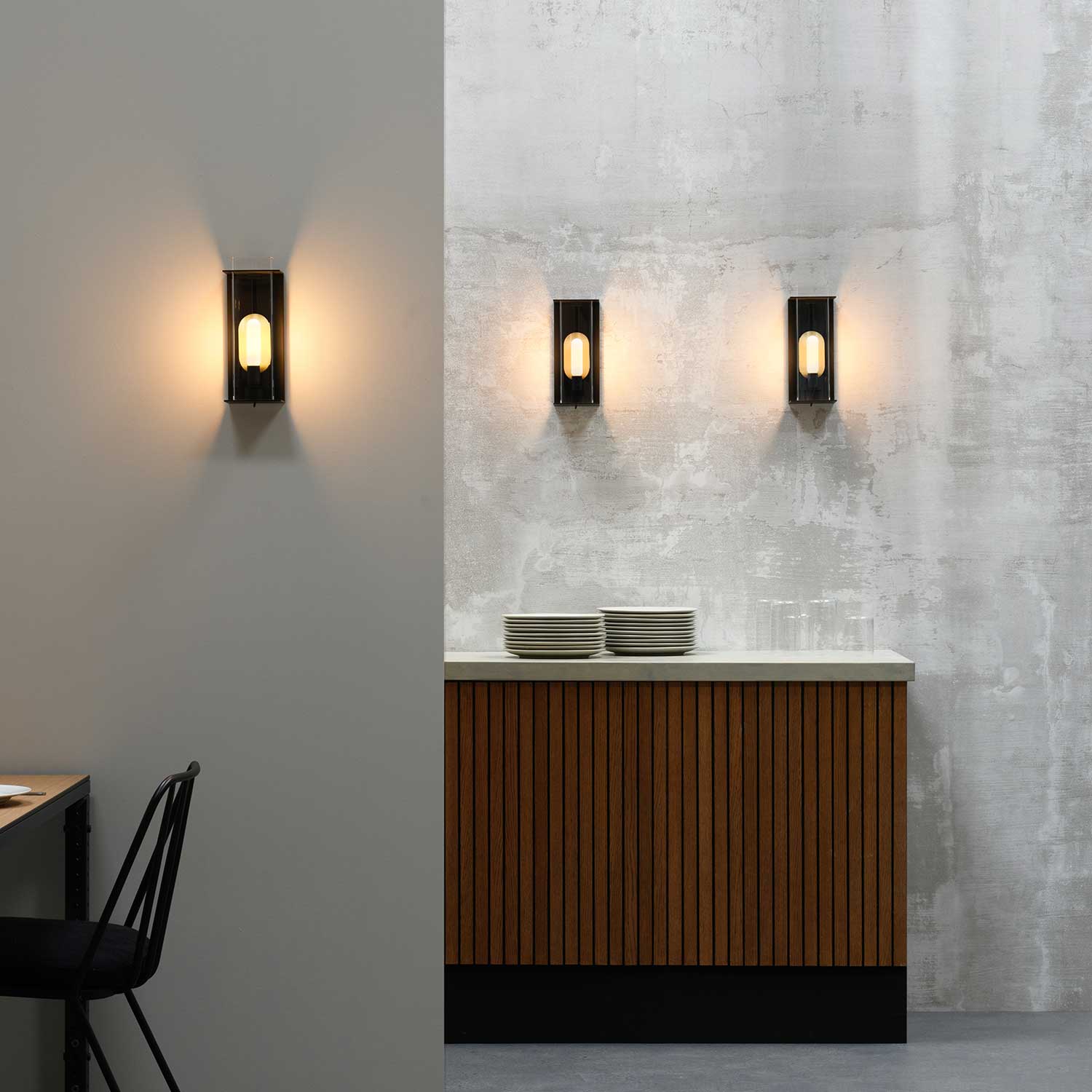
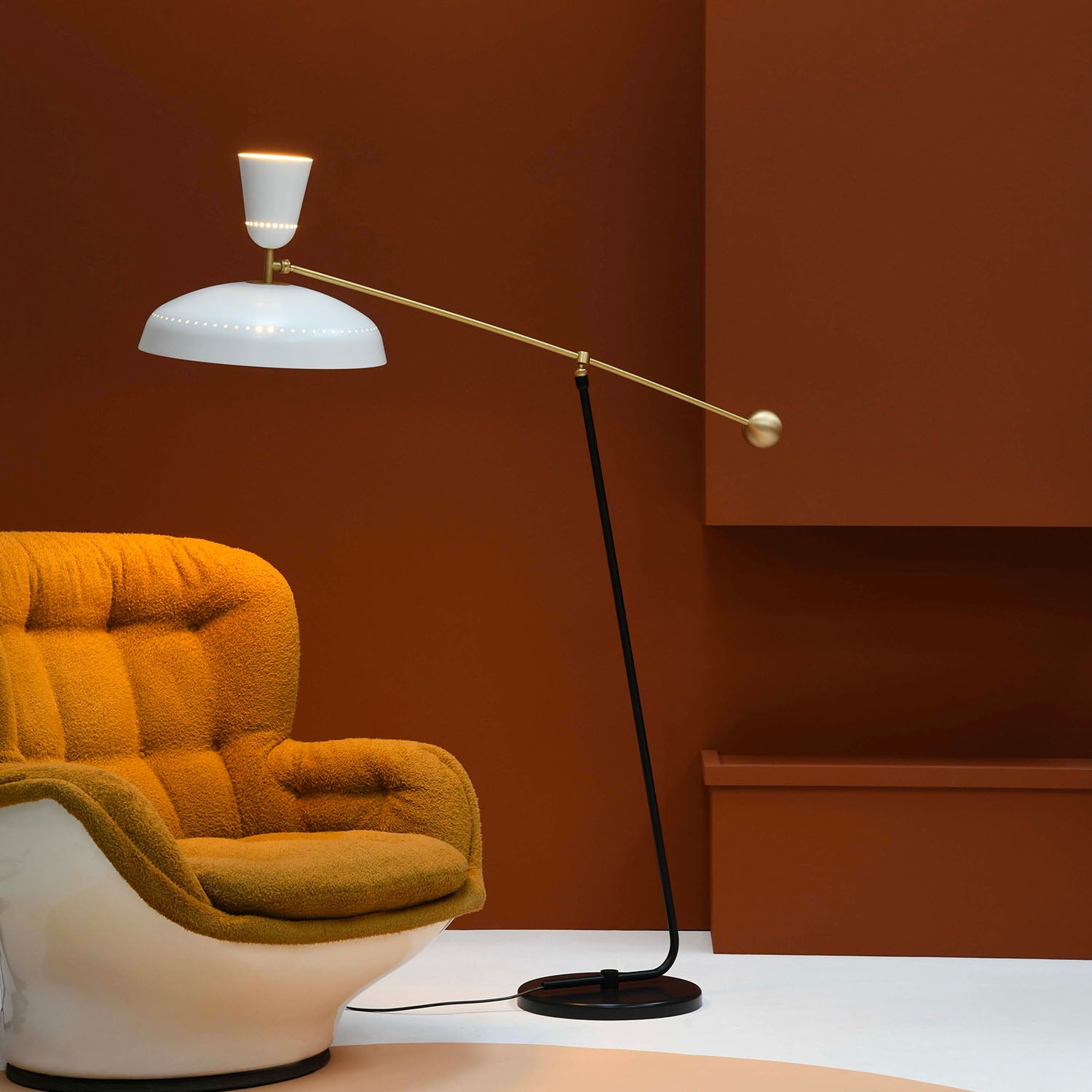
For a dressing room open to a bedroom, a minimalist pendant like the Privé wall light can also visually structure the space while maintaining great simplicity.
Which color temperature to choose?
Color temperature is crucial. Light that is too warm (2700K) can alter color perception. Conversely, light that is too cool (4000K and above) can make the space feel clinical.
The ideal range is between 3000K and 3500K. Neutral white lighting respects fabric shades while maintaining a pleasant atmosphere.
It is also recommended to choose a high color rendering index (CRI) to ensure faithful color reproduction of clothes.
Open or closed dressing room: what are the differences?
A closed dressing room requires autonomous and complete lighting. In this case, general lighting must be especially effective, as no natural light will compensate.
An open dressing room connected to the bedroom can partially benefit from the main room lighting. However, targeted lighting remains essential to avoid shadows in the wardrobes.
In small spaces or under sloped ceilings, it’s recommended to multiply discreet light sources rather than install a bulky fixture.
Mirror and fitting lighting
If your dressing room includes a mirror, its lighting must be carefully considered. The goal is to achieve frontal, even light without shadows on the face or silhouette.
Two vertical light sources on either side of the mirror are ideal. They provide balanced and comfortable lighting.
Precise and uniform lighting is essential to avoid any visual distortion when trying on clothes.

Sensors and smart solutions
Motion sensor systems are particularly suitable for dressing rooms. They allow the light to turn on automatically when a door opens or when entering the room.
These solutions improve user comfort while optimizing energy consumption. Integrating automatic lighting is now a very relevant option in contemporary projects.
Mistakes to avoid
A poorly lit dressing room can quickly become uncomfortable to use. Some mistakes are common and harm both functionality and aesthetics of the space.
- Installing a single central ceiling source, which creates shadows as soon as you stand in front of the storage.
- Choosing light that is too warm (2700K), which alters color perception and distorts the appearance of clothes.
- Neglecting the deep areas of wardrobes and shelves, which require integrated lighting.
- Multiplying light sources without consistency in temperature or style.
- Forgetting mirror lighting, essential for precise and comfortable fitting.
A well-lit dressing room always relies on a global plan combining general and targeted lighting.
A well-lit dressing room always depends on a hierarchy of light sources.
Conclusion
Choosing the right lighting for a dressing room means combining general light, targeted lighting, and the right color temperature. Functional and structured lighting improves daily comfort and enhances interior design.
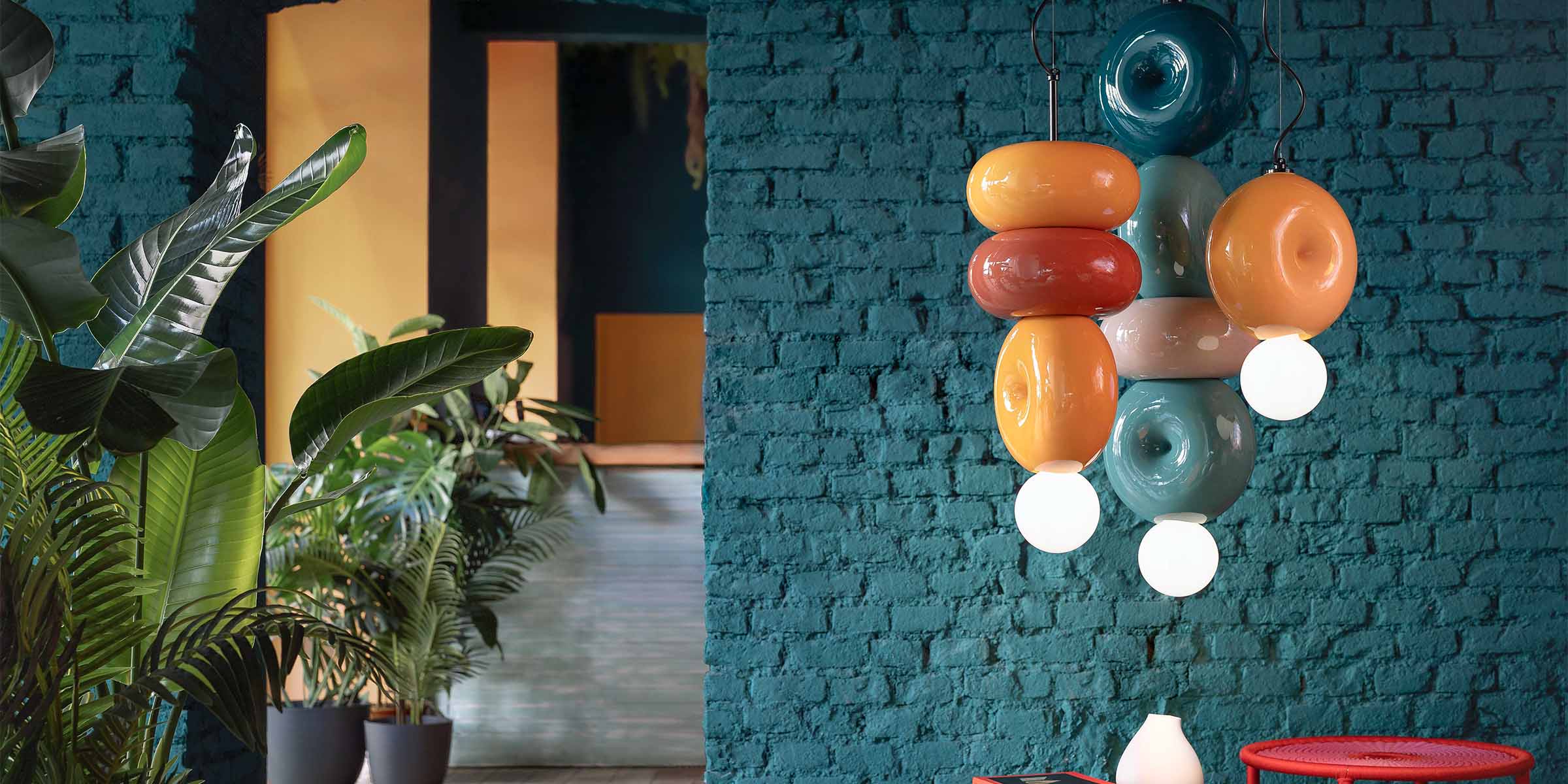
By balancing spotlights, integrated lighting, and possibly a decorative touch, your dressing room becomes a bright, organized space perfectly suited to your needs.


Leave a comment
This site is protected by hCaptcha and the hCaptcha Privacy Policy and Terms of Service apply.