
Professional LED Relamping: Public Lighting, Industry, Sports, Commerce… Who Is Concerned?
Professional LED relamping is not just about replacing old bulbs with LED sources. In a B2B project, it is a true lighting modernization operation, with energy, technical, economic, and sometimes regulatory challenges. An industrial building, a tennis court, a street, a parking lot, a hotel, or a shop do not have the same lighting needs or installation constraints.
A professional LED relamping project must therefore be designed according to the sector involved, the actual uses of the place, lighting schedules, mounting height, expected safety level, required light quality, and desired energy savings. This usage-based approach helps avoid replacements that are too quick, poorly sized, or not durable.
In this article, we review the main sectors concerned by relamping: public lighting, sports fields, industry, warehouses, offices, stores, hotels, restaurants, parking lots, condominiums, schools, and healthcare spaces. The goal is to understand where LED renovation has the most impact and which criteria to check before replacing your luminaires.
Summary
- What is professional LED relamping?
- Why is relamping approached differently depending on the sector?
- Public lighting relamping: streets, streetlights, and urban spaces
- Tennis court and sports equipment relamping
- Industrial relamping: workshops, factories, and production areas
- Warehouse relamping: high ceilings and storage areas
- Relamping for offices and tertiary spaces
- Relamping for shops and boutiques
- Relamping of hotels, restaurants, and cafes
- Relamping of indoor and outdoor parking lots
- Relamping of condominiums and common areas
- Relamping of schools, gymnasiums, and public buildings
- Relamping of pharmacies, medical offices, and health spaces
- How to prioritize a relamping project?
- What criteria should be checked before replacing your lighting fixtures?
- Getting support for a professional LED relamping project

What is professional LED relamping?
Relamping refers to replacing an existing lighting system with a more efficient solution, generally LED. In a professional context, this operation can involve bulbs, fluorescent tubes, spotlights, light panels, industrial luminaires, wall lights, outdoor bollards, street lamps, or complete lighting systems.
Unlike a simple bulb replacement, professional relamping must take into account several parameters: electrical consumption, luminous power, color temperature, color rendering index, glare, installation height, use of the place, safety constraints, and maintenance costs.
A good relamping project therefore does not only aim to consume less. It must also improve light quality, adapt lighting to current uses, reduce maintenance interventions, and modernize the image of the place. In some sectors, it can also contribute to safety, user comfort, or enhancing spaces.
Why is relamping approached differently depending on the sector?
Each sector has its own constraints. A tennis court requires uniform, well-directed, and low-glare lighting to follow the ball. A warehouse must ensure good visibility between shelves, often at great heights. A store must highlight products and respect colors. A hotel must create a comfortable atmosphere in rooms, corridors, and reception areas.
That’s why relamping should not be treated as a standard operation. Replacing all old fixtures with more powerful LEDs may seem effective, but it can create other problems: overlit areas, glare, poor ambiance, inappropriate color temperature, or aesthetic inconsistency.
The right approach is to analyze the site by zones. It’s important to understand which parts of the building are most used, which fixtures consume the most energy, which areas lack light, where maintenance is difficult, and which spaces need better light quality.
Public lighting relamping: streets, streetlights, and urban spaces

Public lighting relamping concerns streets, squares, municipal parking lots, pedestrian paths, parks, residential areas, secondary roads, and public building surroundings. For communities, the main challenge is often twofold: reduce energy consumption while maintaining a sufficient level of safety and comfort for users.
Old streetlights equipped with sodium, metal halide, or other energy-intensive technologies can be replaced by more efficient LED fixtures. This modernization generally allows better direction of the light beam, reduces light loss toward the sky, improves visibility, and lowers maintenance costs.
City streetlight relamping must be approached with caution. Light that is too white or too intense can create an aggressive atmosphere, disturb residents, or contribute to light pollution. The goal is not to light more, but to light more appropriately, with lighting suited to nighttime uses.
In some projects, modernization can also include dimming systems, power reduction at certain times, or detection systems. These solutions allow lighting to be adapted according to actual area usage while maintaining a consistent level of safety.
Tennis court and sports equipment relamping
Tennis court relamping is a very specific topic because it’s not just about replacing old spotlights with LEDs. On a tennis court, the lighting must allow players to track the ball, anticipate trajectories, and play comfortably, even in the evening.
The main challenges are uniform lighting, glare limitation, spotlight orientation, and visibility quality across the entire playing surface. A field may seem sufficiently lit from the outside, yet be uncomfortable for players if some areas are too dark or if the spotlights obstruct vision.
Relamping a tennis court must also consider the level of use: leisure, club, regular training, or competition. The more demanding the use, the more precise the light quality must be. It is especially important to avoid strong contrasts between the back of the court, the net, and the playing lines.
Larger sports facilities, such as gyms, multisport fields, stadiums, or training rooms, follow the same logic. LED lighting reduces consumption, but sizing remains essential. A poorly chosen or misdirected floodlight can lower energy costs while degrading the sports experience.
Industrial relamping: workshops, factories, and production areas

Industrial relamping is among the most strategic projects in B2B. In a factory, workshop, or production area, lighting directly affects safety, work precision, operator movement, and visual comfort. Insufficient or poorly distributed light can create risk zones, handling errors, or increased fatigue.
Old fluorescent tube systems, energy-consuming floodlights, or industrial domes can be replaced by LED solutions adapted to high ceilings, technical environments, and long operating hours. The savings can be significant, especially in buildings where lighting runs for several hours a day or even continuously.
In industry, relamping must consider ceiling height, type of activity, presence of machines, dust, humidity, heat, or vibrations. It is also necessary to ensure that the chosen fixtures are suitable for the environment, with the required protection ratings.
A good industrial project does not replace fixtures one by one without analysis. It identifies critical areas: workstations, traffic aisles, quality control zones, loading docks, storage spaces, and maintenance areas. Each space may require a different approach.
Warehouse relamping: high ceilings and storage areas
Warehouse relamping addresses specific constraints. Logistics buildings often have high ceilings, shelving, long aisles, preparation zones, docks, and vehicle traffic areas. The lighting must be powerful enough but, above all, well distributed.
In a warehouse, shadowed areas can cause problems. They hinder reading labels, order preparation, operator movement, and cart traffic. LED lighting improves visibility, but the choice of beam, mounting height, and layout remains crucial.
Industrial LED high bays, LED strips, floodlights, or linear luminaires can be considered depending on the building layout. In some cases, adding motion detectors or dimming zones also helps reduce consumption in less frequented areas.
The goal is to modernize lighting without creating excessive contrasts. A well-lit warehouse is not necessarily a warehouse that is very bright everywhere. It is a space where each zone receives the light necessary for its actual use.
Relamping for offices and tertiary spaces
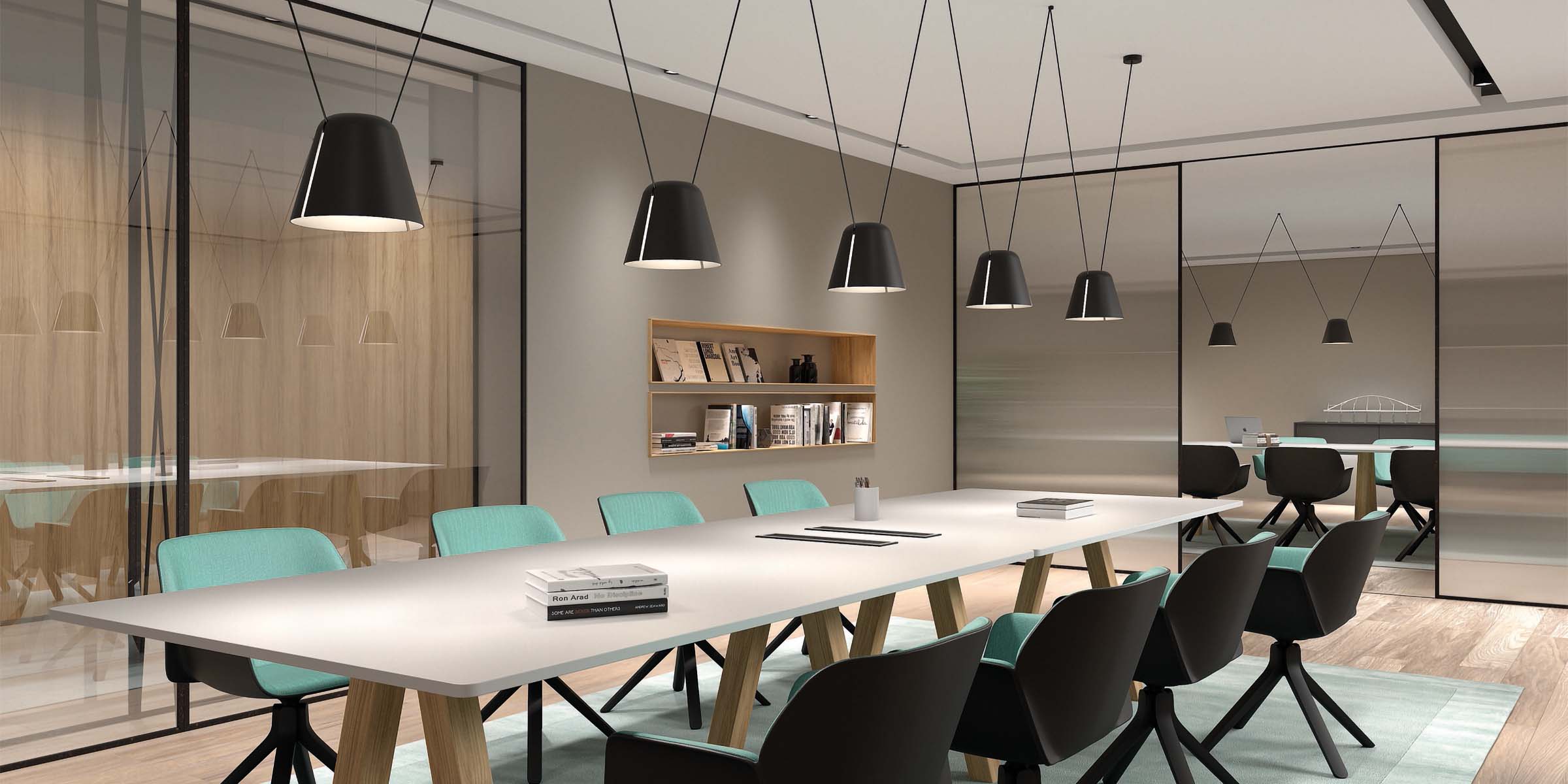
Office relamping concerns open spaces, individual offices, meeting rooms, receptions, corridors, break areas, and circulation zones. In the tertiary sector, the challenge is not only energy-related: it is also linked to visual comfort and work quality.
Old fluorescent panels or neon tubes can produce tiring, uneven, or unpleasant light. Switching to LED modernizes the atmosphere, improves space perception, and reduces consumption, provided the color temperature and diffusion are well chosen.
In offices, attention must be paid to screen glare, dazzling, contrasts between work areas and passage zones, as well as the consistency of lighting with natural light. Light that is too cold can make the space feel impersonal. Light that is too dim can harm concentration.
Tertiary relamping can also be an opportunity to integrate motion detectors, dimming, or zone management. Meeting rooms, for example, do not always require the same light level depending on whether they host a presentation, a video conference, or an informal discussion.
Relamping for shops and boutiques
Commercial relamping has a very specific dimension: light is not only used to illuminate, it directly contributes to the shopping experience. In a shop, showroom, bookstore, gallery, concept store, or sales area, lighting guides the eye, highlights products, and influences the perception of quality.
Replacing old halogen spots, tubes, or floodlights with LEDs reduces consumption and heat output, but also improves product presentation. The color rendering index becomes essential here. A garment, a light fixture, a decorative object, jewelry, or a food product should not be distorted by poor-quality light.
Relamping a commercial space must also distinguish several zones: display window, entrance, customer path, shelving, fitting rooms, checkout, and decorative areas. A display window may require more focused lighting, while circulation areas should remain comfortable.
A common mistake is to replace old spotlights with equivalent LEDs without rethinking the atmosphere. However, a business can use relamping to modernize its visual identity, review its lighting contrasts, and better prioritize important areas.
Relamping of hotels, restaurants, and cafes

Hotel relamping involves very diverse spaces: rooms, corridors, reception, restaurant, bar, seminar rooms, restrooms, spa, parking, or technical areas. These places are often lit for long periods, making LED modernization particularly relevant.
In hospitality, lighting must remain comfortable and consistent with the establishment’s image. It’s not just about optimizing consumption but also preserving a warm, high-quality, and welcoming atmosphere. Relamping can be an opportunity to replace old sources with more efficient LEDs without necessarily changing the entire decorative installation.
In restaurants and cafes, the challenge is even more sensitive. Too strong a light can break the intimacy of a place. Too weak a light can hinder reading the menu or perceiving the dishes. A poor color temperature can make materials, plates, or faces less flattering.
Good relamping in the hospitality industry must respect the existing atmosphere while improving energy efficiency. Rooms may require soft, adjustable lighting, corridors reassuring guidance lighting, reception a welcoming light, and technical areas more functional lighting.
Relamping of indoor and outdoor parking lots
Parking relamping is a very practical topic for businesses, condominiums, shops, hotels, office buildings, and communities. Parking lots are often lit for long periods, sometimes continuously, with old installations that consume a lot and require regular maintenance.
In an indoor parking lot, relamping can improve safety, traffic visibility, space readability, access identification, and user comfort. Aging fluorescent tubes or fixtures can be replaced with LED strips, technical ceiling lights, or solutions suited for humid and dusty environments.
In an outdoor parking lot, you also need to consider the IP rating, mechanical resistance, exposure to rain, wind, and temperature variations. LED floodlights or outdoor fixtures must be carefully chosen to avoid dazzling drivers and limit light pollution.
Motion detectors or zone management systems can be particularly useful in parking lots that are rarely used at certain times. They help maintain a level of security while avoiding permanent maximum lighting.
Relamping of condominiums and common areas
Condominium relamping covers entrance halls, staircases, corridors, landings, basements, technical rooms, parking lots, gardens, outdoor paths, and common areas. For property managers and administrators, the goal is often to reduce costs while improving residents’ daily comfort.
Common areas are sometimes lit for very long periods with old, inefficient, or hard-to-maintain fixtures. Switching to LED can reduce consumption and limit frequent replacements, especially in areas where access to fixtures is difficult.
Relamping can also improve movement safety. A staircase that is too dark, a poorly lit parking lot, or an unwelcoming lobby can give occupants a negative impression. Better distributed, more stable, and better adapted lighting immediately improves the perception of the building.
In condominiums, it is often relevant to combine LED relamping with motion detection, especially in hallways, basements, staircases, and parking lots. Lighting then adapts to actual use, without staying unnecessarily on all day.
Relamping of schools, gymnasiums, and public buildings

Schools, middle schools, high schools, universities, town halls, media libraries, cafeterias, gymnasiums, and public buildings can also benefit from professional LED lighting renovation. These places often combine energy-saving, visual comfort, safety, and maintenance challenges.
In a classroom, lighting should promote attention, reading, writing, and comfort for both students and teachers. Light that is too dim or unevenly distributed can cause eye strain. Light that is too cold or too intense can make the space less pleasant.
In hallways, staircases, and restrooms, lighting must be robust, easy to maintain, and suited to heavy use. In gymnasiums, you need to consider height, sports activities, potential impacts, and uniform light distribution.
For communities, relamping can be part of a broader energy renovation strategy. But it must remain adapted to each space: you don’t light a classroom like a gymnasium, an outdoor courtyard, or a library.
Relamping of pharmacies, medical offices, and health spaces
Pharmacies, medical offices, laboratories, care centers, dental offices, or paramedical spaces have specific lighting needs. The light must inspire confidence, ensure good visibility, and meet the precision requirements specific to certain professional tasks.
In a pharmacy, relamping can improve product presentation, shelf readability, and team comfort. In a medical office, lighting must be reassuring for patients while remaining functional for professionals. In a treatment room, visual precision can become an essential criterion.
Color temperature and color rendering index must be chosen carefully. Light that is too cold can create a clinical, unwelcoming atmosphere. Light that is too warm may lack precision in certain technical areas.
Relamping healthcare spaces must therefore find a balance between comfort, visual hygiene, efficiency, and professional image. It is not just about replacing tubes or ceiling lights but creating lighting adapted to the patient journey and the daily work of the teams.
How to prioritize a relamping project?
In a professional building, it is not always necessary to replace everything at once. A relamping project can be prioritized according to several criteria: current consumption, operating time, fixture age, maintenance difficulties, visual discomfort, or the strategic importance of certain areas.
The first areas to study are often those that remain lit for long periods. A parking lot, lobby, corridor, production area, or store open all day can generate significant consumption. The return on investment is generally faster there than in a less used area.
Next, look at areas where lighting causes comfort or safety issues. A dark zone, a poorly lit workstation, a warehouse aisle that is hard to read, or a glaring sports field should be addressed as a priority, even if consumption is not the only concern.
Finally, some areas have a strong image impact: reception, front desk, display window, restaurant, meeting room, showroom, or main entrance. In these spaces, relamping can improve the perception of the place and strengthen its professional positioning.
What criteria should be checked before replacing your lighting fixtures?
Before starting a relamping project, several criteria must be analyzed. The first is the power consumed by the current installation. It is necessary to identify the existing fixtures, their number, their operating time, and their general condition. This baseline allows for assessing the potential savings and defining priority areas.
The second criterion is the expected illumination level. It’s not enough to replace an old source with a more economical LED. You need to check if the amount of light produced is suitable for the activity. An office, an outdoor walkway, a restaurant dining room, a loading dock, or a gym do not have the same needs.
The color temperature must also be chosen according to the use. Warm light may suit a hotel, restaurant, or reception area. A more neutral light may be preferable in an office, workshop, or work zone. The wrong choice can completely change the atmosphere of a place.
The color rendering index is important in shops, hotels, restaurants, showrooms, medical offices, or spaces where materials need to be well perceived. Poor color rendering can devalue products, materials, or even the image of the place.
You also need to check glare, beam angle, installation height, compatibility with sensors, dimming, IP or IK ratings, future maintenance, and aesthetic integration. A successful relamping combines energy performance, visual comfort, and coherence with the project.
Getting support for a professional LED relamping project
A professional LED relamping project may seem simple at first, but it requires precise analysis to be truly effective. Replacing old fixtures with LEDs is not always enough. You need to understand the building, the uses, technical constraints, operating hours, and the desired atmosphere.
At La Lumière, we support professionals in choosing lighting solutions adapted to their projects: offices, shops, hotels, restaurants, condominiums, outdoor spaces, professional buildings, or public venues. The goal is to offer fixtures consistent with the location’s constraints, lighting needs, and desired image.
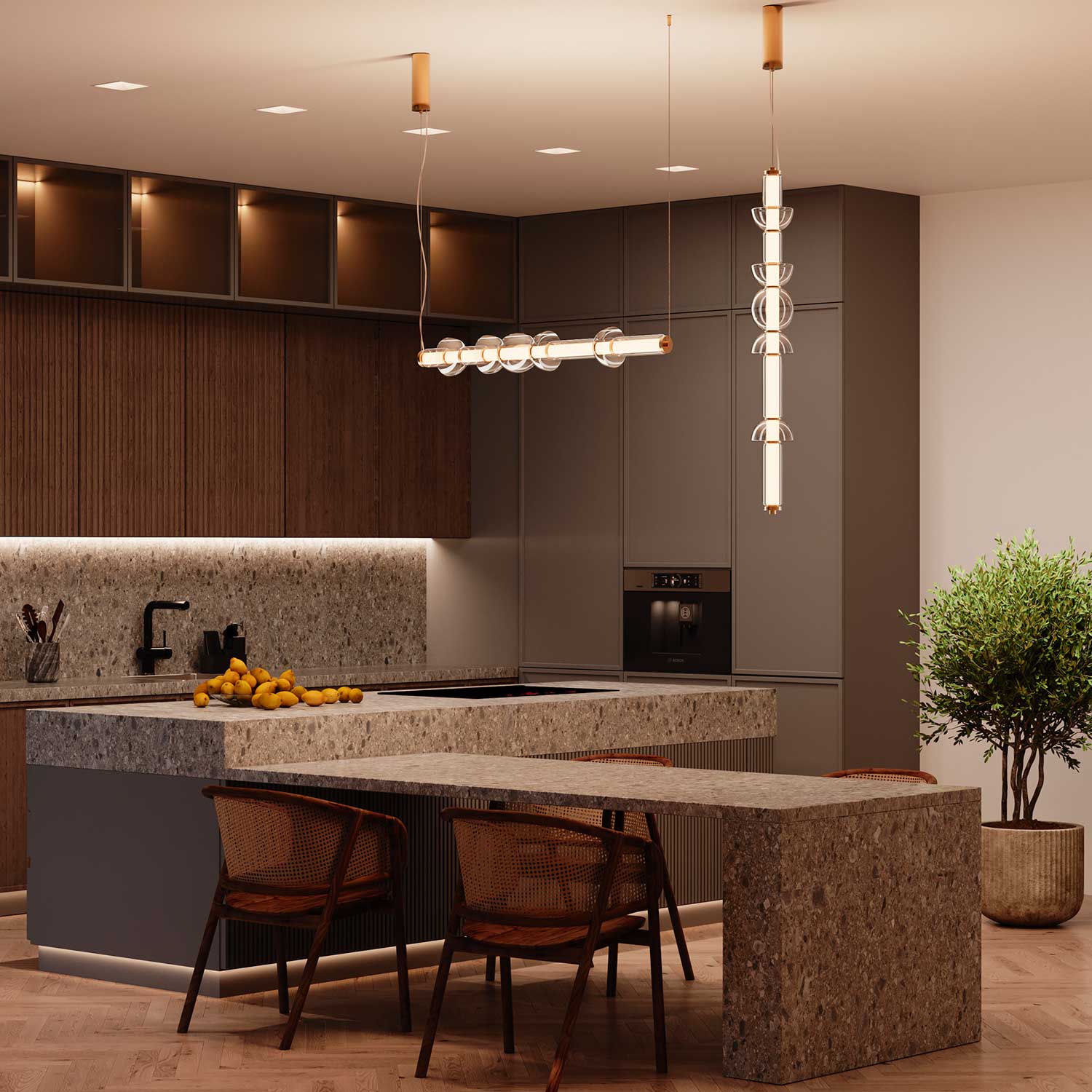
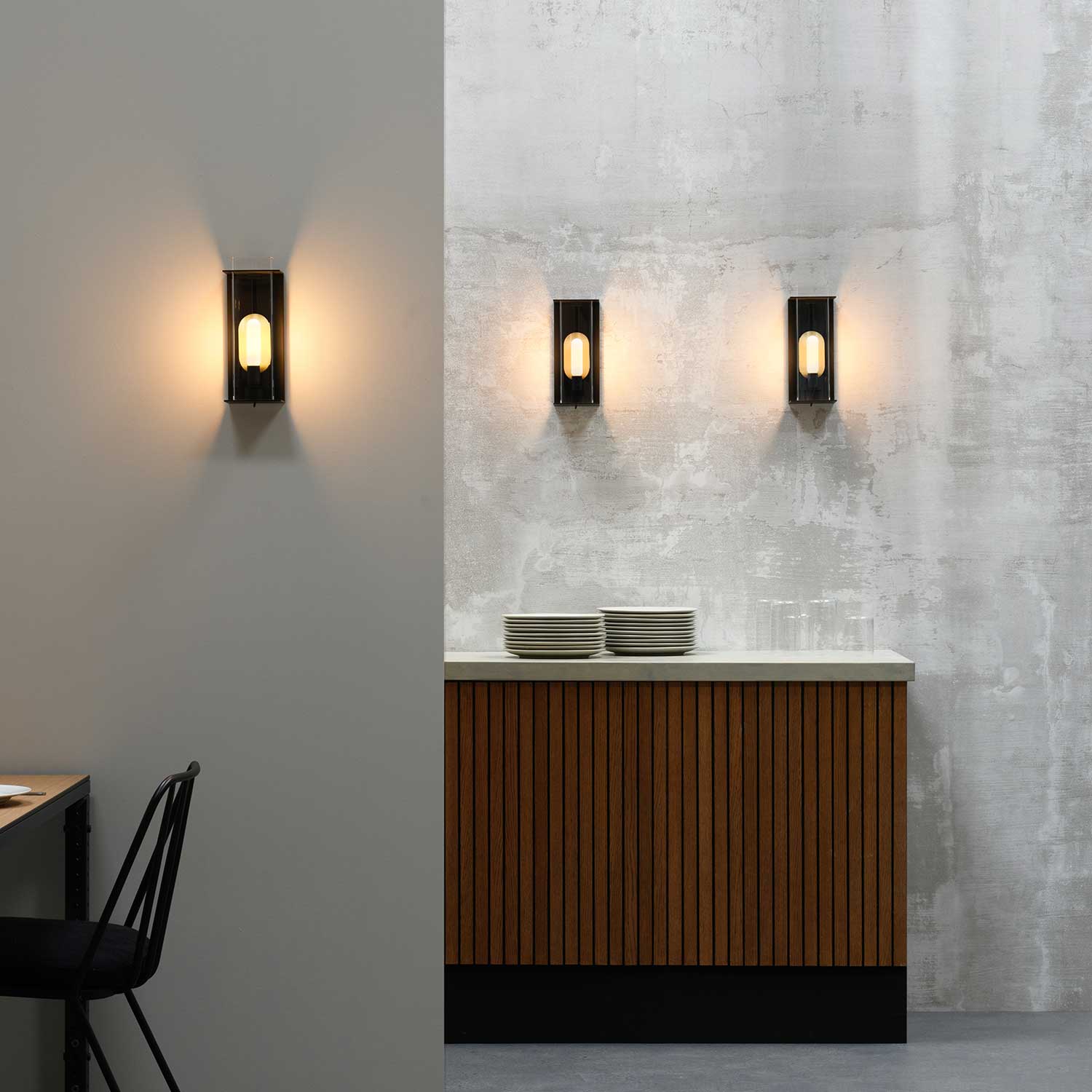
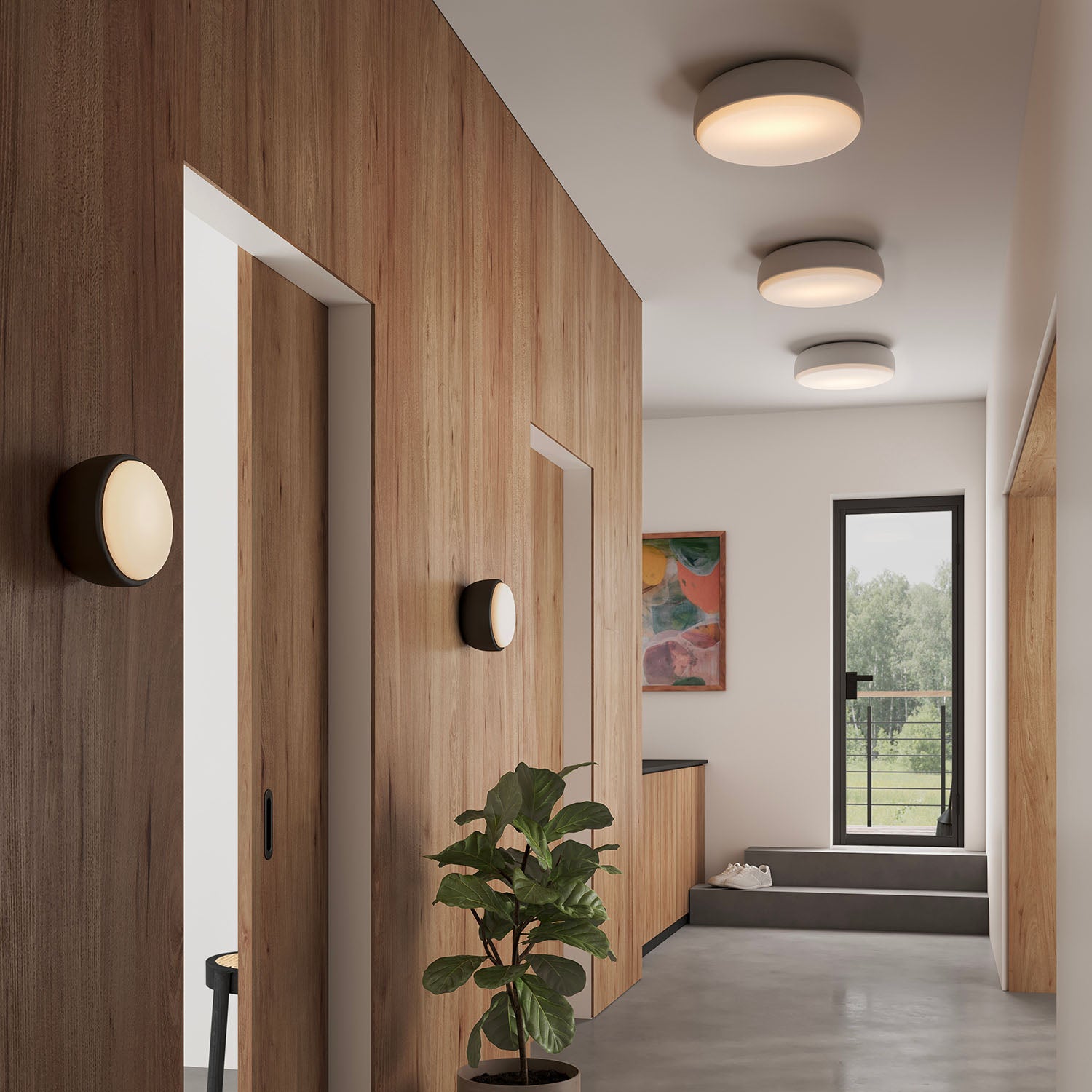
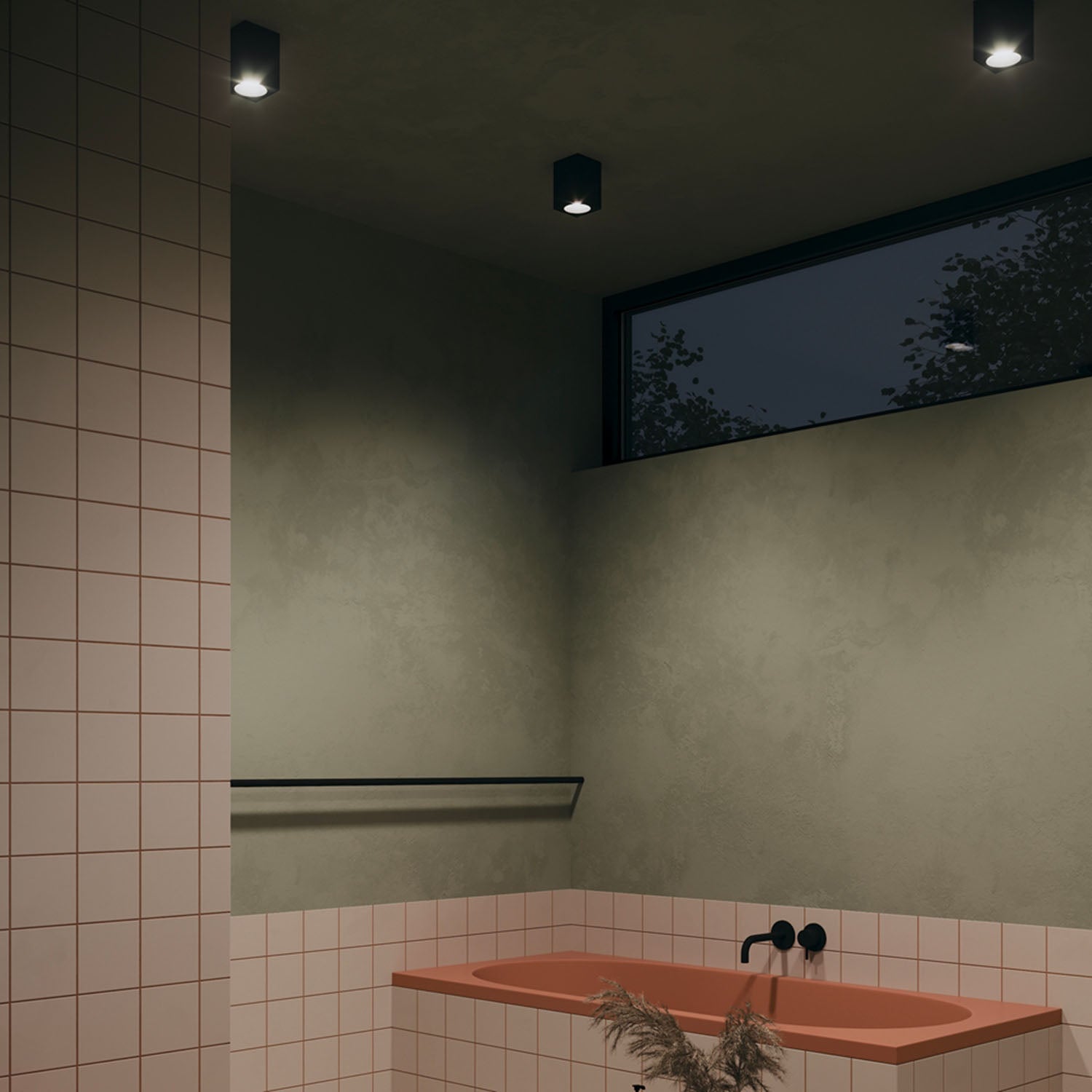
Our approach is to guide the choice towards the right types of fixtures: pendants, ceiling lights, wall lights, spotlights, floodlights, outdoor lighting, or technical solutions depending on the uses. Each project must be studied according to its specific constraints, because a successful relamping is not only measured by energy savings but also by comfort, light quality, and durability.
Do you have a professional relamping project? Send us your plans, photos, or the constraints of your space: our team will help you identify the lighting solutions best suited to your building. Contact us!


Leave a comment
This site is protected by hCaptcha and the hCaptcha Privacy Policy and Terms of Service apply.